Why Local AI Struggles to Catch On: The Math Makes It Clear

Local AI is costly, has a high barrier, and delivers weaker results; it currently only suits enthusiasts, and its future lies in OS-level hybrid routing.
Based on a YouTube tech blogger's testing and analysis, the article discusses why local AI struggles to replace cloud subscriptions. The author first clarifies the difference between local AI and open-weight AI, noting that top open-source models have enormous parameter counts that consumer hardware cannot handle. He then does the math with a cost-quality chart: a $4,000 computer amortizes to about $144 per month, with speed and intelligence lagging behind Claude Haiku 5.5 at $27 per month; high-end options like the RTX 5090 and Mac Studio are similarly poor value, and the Pareto frontier is almost entirely occupied by closed-source models. The structural reasons are that data centers crowd out GPU capacity and drive up graphics card prices, while open-source AI companies lack a sustainable business model, relying on NVIDIA and Chinese government subsidies. The conclusion is that local AI currently only serves enthusiasts with skills, money, and time, and its future hope lies in invisible hybrid AI and local routing led by OS vendors.
Title
Why Local AI Struggles to Catch On: The Math Makes It Clear
Meta Description
Why is local AI hard to popularize? A tech blogger crunches the numbers: high-end GPU hardware costs far exceed a ChatGPT subscription, and speed and parallelism are limited. Local AI currently only suits enthusiasts. The article also explores the future path of OS-level hybrid AI and local routing.
Article Content
Discussion around local AI remains heated, but a sharp question confronts us: if you advised an ordinary user to cancel their ChatGPT subscription and run models at home instead, you'd basically be joking. Local AI is expensive, has a high setup barrier, and its results can't match frontier closed-source models. A YouTube tech blogger who has long followed AI recently released a video offering the same conclusion with detailed data and personal experience—even though he himself wants local AI to succeed more than anyone.

Local AI vs. Open-Source AI: Clarifying the Concepts First
The blogger first emphasizes that local AI is not the same as open-source AI. Open-weight models refer to models whose weights are public and freely usable by anyone, but which typically run in large data centers like AWS and Google and serve users via API. Local AI requires the model to actually run on your own computer or home device, still answering questions after the internet is disconnected.
Today's top open-weight models are indeed powerful, but their parameter counts are enormous—often in the trillions—far beyond what ordinary consumer hardware can run. To achieve near-frontier intelligence locally, you'd essentially need to build a small data center yourself.
Open Weights refers to model parameter files that are publicly downloadable and free for anyone to use, modify, or redistribute, but training data, training code, and the full training pipeline are not necessarily public, so it is not equivalent to fully open-source software. Typical examples include the Llama, Qwen, and DeepSeekAd series. After obtaining the weights, users can either deploy them locally or host them on cloud servers to provide API services externally—the latter is precisely the business model of many cloud providers. Understanding this distinction is crucial: model "open-sourcing" only addresses copyright and access barriers; it does not reduce the VRAM, compute, and engineering maintenance costs required to run it. This is also one of the fundamental reasons the economics of local deployment don't work out, as discussed later.
The Allure of Local AI: Data Sovereignty and Autonomous Control
The blogger lists several core attractions of local AI. First is data sovereignty—when using ChatGPT or Claude, data is sent to the cloud. Although most people are already accustomed to handing data to big tech companies, local processing is more reassuring in sensitive scenarios. Second is not being subject to platform rules: AI labs can change terms at any time and restrict what you can do with your subscription quota. Additionally, offline availability still has value for users with special needs (such as field workers or emergency preppers).
A deeper motivation is "owning your own intelligence." The blogger admits that one of his biggest concerns is excessive concentration of AI power—if everyone's intelligence depends on a few frontier labs, the degree of power concentration would be unsettling. Local AI can disperse this power.
But ideals are lofty while reality requires doing the math first.

The Economic Math: Hardware Costs Far Exceed Subscription Fees
The blogger uses a cost-quality chart to show the harsh reality. Taking Qwen 3.8 27B as an example, assuming a $4,000 computer used for three years, that's about $144 per month amortized, at about 50 tokens per second, scoring around 34 on the Artificial Analysis Intelligence Index. By contrast, Claude Haiku 5.5 costs only $27 per month, reaches 235 tokens per second, and scores about 10 points higher on the intelligence index.
The situation with higher-end hardware is similarly unoptimistic. The RTX 4090 now costs close to $5,000, running compact models at about 25-40 tokens/sec—at the lower limit of usability; the RTX 5090 sells for about $8,500, reaching 40-70 tokens/sec on the same model, but can only run single-threaded—unable to launch multiple agents in parallel. The RTX 6000 Ada is similarly priced, reaching 50-130 tokens/sec on CodeCoder Next, also without parallel support. And the RTX Pro 6000 Blackwell costs about $16,000.
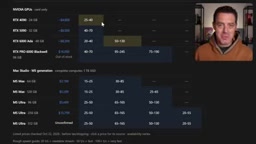
The Mac Studio route is no exception: the 256GB memory version costs about $10,000, the 512GB about $15,000, running frontier models at only 20-55 tokens per second. The blogger emphasizes that on the Pareto frontier of the cost-quality chart, almost everything is closed-source models—cheaper, faster, ready out of the box, synced across devices, continuously evolving—while local AI requires you to tinker with configuration and maintenance yourself.
The Artificial Analysis Intelligence Index is a third-party aggregate model evaluation metric that standardizes and weights scores from multiple benchmarks such as MMLU-Pro, GPQA Diamond, Humanity's Last Exam, and LiveCodeBench to compare the overall capabilities of different models. A higher index indicates stronger average performance on tasks like reasoning, knowledge, and coding. Note that such composite indices cannot reflect actual experience in specific scenarios, such as long-context handling, tool-calling reliability, or multi-turn conversation stability. The comparison in this article between local models and closed-source APIs regarding "cost-effectiveness" illustrates that at the same intelligence level, the output per dollar of local solutions is significantly lower—not that local models are worse at every task.
Why the Math for Local AI Doesn't Work Out
The blogger analyzes several structural reasons. AI labs building data centers at scale have snapped up GPU and memory capacity, driving up consumer graphics card prices—the 5090, originally $3,000-4,000, now sells for nearly $7,000-8,000, at least doubling local AI's hardware costs, yet model quality and generation speed haven't doubled accordingly.
Second, the business model of open-source AI companies is hard to sustain in the US. After investing billions of dollars to train a model and releasing it for free, hyperscale cloud providers and neoclouds take it and directly offer services, pocketing pure profit. The only "white knight" is NVIDIA, which has invested billions to support open-weight models and acquired companies like Hugging Face and Reflection AI, providing VCs with an exit expectation. China's open-source models are supported by government subsidies, and the commercial logic is equally not self-sustaining. The blogger mentions rumors that NVIDIA may acquire more companies, further indicating that open-source AI lacks an independent, sustainable business model.

Pareto Frontier originally refers to the set of solutions in multi-objective optimization where no objective can be improved without sacrificing another. In the cost-quality chart in this article, the horizontal axis is cost per unit of intelligence and the vertical axis is model capability; the frontier line represents "the highest intelligence level achievable at a given price." A solution on the frontier means you cannot trade lower cost for the same capability, nor trade the same cost for stronger capability. The blogger notes that the frontier is almost entirely closed-source models—meaning the market has been saturated by cloud APIs on the dimension of "cheap and smart," and local solutions lie inside the frontier overall, making them dominated choices.
Who Is Local AI Really For Today?
The answer is somewhat resigned: enthusiasts. The blogger includes himself in this group—he has ample compute, technical background, time, and a desire for data control, but when it comes to actually getting work done, he still opens ChatGPT and Claude. He compares today's local AI to "overclocking": what people enjoy is the process of tinkering with configuration, getting the largest model running, and squeezing out the highest token speed—not using those results to complete actual work.
To be this type of user, you need extremely strong technical skills, ample disposable income, plenty of free time, and a genuine interest in the field. All four conditions are indispensable.
The Future of Local AI: Invisibility and Hybrid Routing
Despite the sharp criticism, the blogger explicitly states he wants local AI to succeed and offers the path he favors. The first step is for OS vendors—Microsoft, Apple, Google—to truly step up. They control both hardware and operating systems and are best positioned for hybrid AI. The key: users shouldn't know they're using local AI. The system should automatically determine what to keep local for sensitive data and important documents, seamlessly fall back to local when the cloud is unavailable, and the user remains completely unaware.
The second step is local routing. As small models become stronger, faster, and smaller, and chips become more efficient, more tasks can be completed locally. Most tasks handled by everyday AI assistants don't require the strongest models—do what can be done locally, and send what exceeds its capability to the cloud. This "ambient AI" integrated into the operating system interface is the form in which local AI truly becomes widespread.
The blogger finally reminds that cloud agent environments (like Muse, Grokbot) are attractive because they are 24/7 persistent, isolated from each other, and securely controllable—local AI has a long way to go to replicate these experiences. He still hopes local AI succeeds; it's just that today, he still can't see how.
Hybrid Routing refers to systems automatically deciding whether a request is handled by a local small model or a cloud large model based on task type, data sensitivity, and current network and compute conditions. Common strategies include: forcing local inference for requests containing personal privacy or confidential documents; prioritizing local processing for lightweight tasks like simple Q&A, summarization, and error correction; forwarding complex reasoning, long-form generation, or requests requiring the latest knowledge to the cloud; and falling back to local when the cloud is unavailable to ensure availability. The engineering challenges lie in the accuracy of routing decisions, consistency in output style between local and cloud models, and cross-device context synchronization. This approach aligns with the direction of on-device AI and ambient computing, and is also why OS vendors have an advantage over third-party applications.
One-line Summary
Local AI is costly, has a high barrier, and delivers weaker results; it currently only suits enthusiasts, and its future lies in OS-level hybrid routing.
Paragraph Summary
Based on a YouTube tech blogger's testing and analysis, the article discusses why local AI struggles to replace cloud subscriptions. The author first clarifies the difference between local AI and open-weight AI, noting that top open-source models have enormous parameter counts that consumer hardware cannot handle. He then does the math with a cost-quality chart: a $4,000 computer amortizes to about $144 per month, with speed and intelligence lagging behind Claude Haiku 5.5 at $27 per month; high-end options like the RTX 5090 and Mac Studio are similarly poor value, and the Pareto frontier is almost entirely occupied by closed-source models. The structural reasons are that data centers crowd out GPU capacity and drive up graphics card prices, while open-source AI companies lack a sustainable business model, relying on NVIDIA and Chinese government subsidies. The conclusion is that local AI currently only serves enthusiasts with skills, money, and time, and its future hope lies in invisible hybrid AI and local routing led by OS vendors.
Related articles

OpenAI Partners with Shield: How the Astra Agent Revolutionizes IT Troubleshooting
OpenAI and Shield launch the Astra agent, which autonomously logs into computers and legacy systems to fix IT issues in real time, 35-40% faster than traditional models, with humans involved only when judgment is needed.

iPhone Duo Battery Life Tested: One Charge a Day Is Unavoidable, and the Large Screen Is the Culprit
iPhone Duo battery test: heavy use needs at least one charge a day, and about 30% remains after 6.5 hours of screen-on time. How often the large screen is unfolded is key; a MagSafe battery pack helps, and long-term degradation is also worth watching.

Kimi K3.1 Pro Open-Sourced: 2.8 Trillion Parameters Close In on Opus
Moonshot releases the open-source MoE model Kimi K3.1 Pro, with 2.8T total parameters and 104B activated, trailing Opus 5.5 by under 1 point on Terminal Bench 4.0.