Why Professionals Shouldn't Use Personal Gmail: A Guide to Custom Domain Email
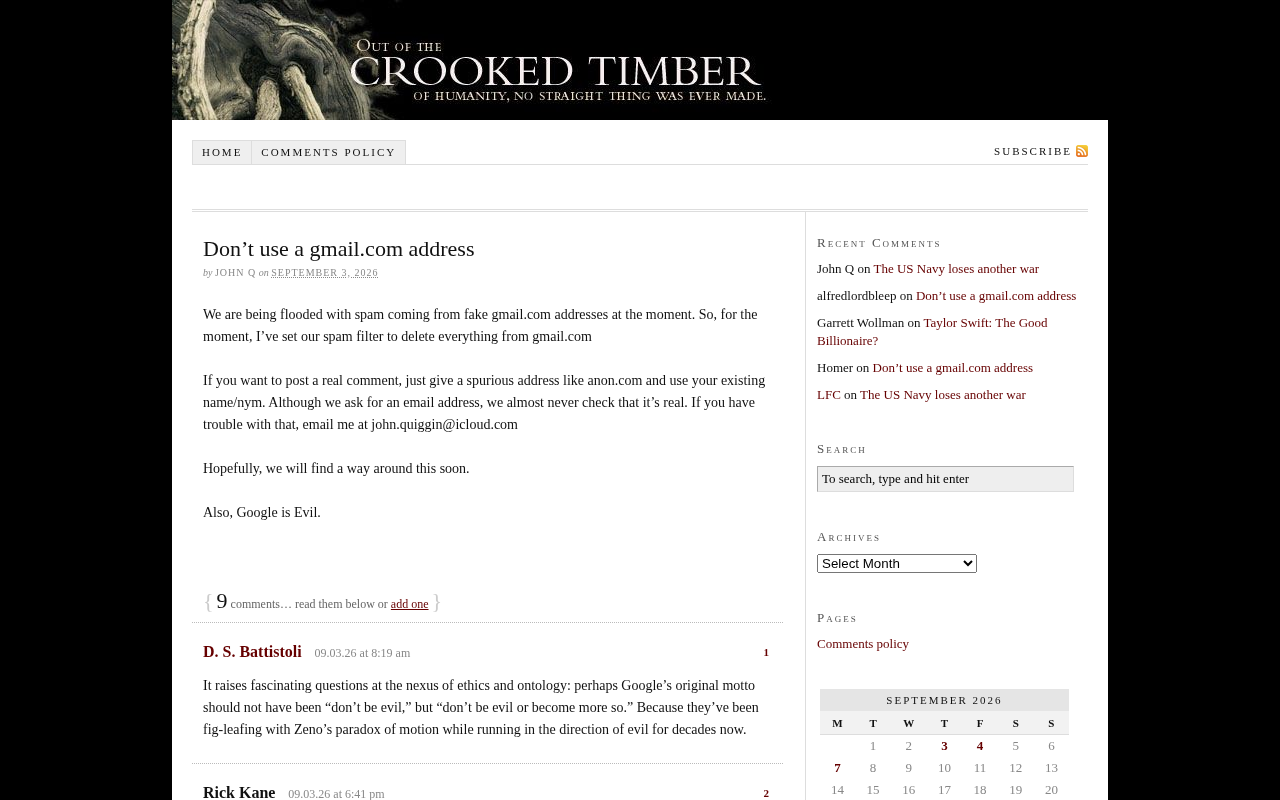
Why professionals should switch from Gmail to custom domain email and how to do it affordably.
Using a personal Gmail address for professional communication can undermine your credibility and brand image. This guide explains the advantages of custom domain email — including brand consistency, professional trust, and full control over your digital identity — and walks through three setup approaches (hosted services, email forwarding, and self-hosting) with cost estimates and a step-by-step migration plan.
Why a Personal Gmail Address Can Hurt Your Professional Image
In today's professional landscape, using an email address with a gmail.com suffix is a choice worth reconsidering. This topic, which sparked heated discussion on Hacker News, touches on the core issues of professional image, brand building, and digital identity management.
Since Ray Tomlinson invented email in 1971, it has evolved from a simple communication tool into a core vehicle for digital identity. When Gmail launched in 2004 with 1GB of free storage, it disrupted the industry and quickly became the world's largest free email service, now boasting over 1.8 billion active users. However, with growing awareness of personal branding and the rise of remote work, the symbolic significance of an email address has become increasingly important. Studies show that email domain is one of the first details hiring managers notice when screening resumes, and job candidates using professional domain email addresses tend to receive higher initial trust scores.
For professionals and businesses, an email address is more than just a communication tool — it's a vital component of personal or corporate branding. When you use yourname@gmail.com to communicate with clients, partners, or potential employers, the message you convey may noticeably diverge from the professional image you're aiming to project.
How Custom Domain Email Outperforms Gmail
Using a custom domain email (such as name@yourcompany.com or name@yourdomain.com) offers benefits across multiple dimensions:
Brand Consistency
A custom domain reinforces the recognizability of your personal or business brand. Every email you send is an opportunity for brand exposure, while a Gmail suffix only reinforces Google's brand and has nothing to do with your own business.
Professional Credibility
In business contexts, a custom domain email signals stronger professionalism and stability. It shows you care enough about your professional image to invest resources in it. Think about it — which inspires more trust: an email from contact@smith-consulting.com or one from smith12345@gmail.com?
Control and Independence
Using your own domain means you have greater control over your email service. You don't need to worry about platform policy changes, account suspensions, or service terminations. Even if you switch email service providers, your email address can remain the same — a point that's especially important for long-term career planning.
The technical foundation for this flexibility lies in DNS MX records (Mail Exchange Records). An MX record is a type of DNS resource record that specifies the mail server responsible for receiving email sent to a particular domain. When you switch email providers, you simply update your domain's MX records to point to the new server, and all email sent to your domain is automatically routed to the new provider — your email address remains completely unchanged to the outside world. Additionally, modern email systems require configuring SPF, DKIM, and DMARC authentication records to prevent email spoofing and spam flagging. These security mechanisms are one of the technical reasons why custom domain email is more trustworthy than free email services.
How to Set Up Custom Domain Email (Three Approaches)
The technical barrier to setting up custom domain email has dropped significantly. Here are three mainstream approaches:
Option 1: Hosted Email Services
Google Workspace, Microsoft 365, Zoho Mail, and similar providers offer complete business email solutions, including email hosting, anti-spam filtering, and generous storage. This is the most hassle-free option and suits most users.
Specifically, Google Workspace (formerly G Suite) starts at $6 per user per month, offering 30GB of storage, the Gmail interface, Google Drive collaboration suite, and Google Meet video conferencing. Its strengths lie in its cloud-native experience and powerful search capabilities. Microsoft 365 Business Basic also starts at $6 per user per month, providing 50GB of mailbox storage, the Outlook client, OneDrive, and the Teams collaboration platform — making it a better fit for teams already deeply embedded in the Windows ecosystem. Zoho Mail stands out as the budget-friendly option with a free plan (up to 5 users) and a paid entry plan starting at just $1 per user per month. All three support custom domains, mobile apps, and 99.9%+ SLA availability guarantees.
Option 2: Email Forwarding Services
For individual users, you can register a domain and set up email forwarding to your existing Gmail account. This lets you keep the familiar Gmail interface and experience while presenting a professional external email address — making it the most cost-effective transitional solution.
Email forwarding works by pointing MX records in DNS to the forwarding service's servers. When an email arrives, the service automatically redirects it to your designated existing mailbox. Popular email forwarding services include Cloudflare Email Routing (completely free), ImprovMX, and ForwardEmail. Cloudflare Email Routing is particularly popular because it's free and deeply integrated with Cloudflare DNS. Combined with Gmail's "Send mail as" feature (configured via SMTP settings), you can send emails directly from the Gmail interface using your custom domain email address, achieving unified send-and-receive functionality without paying any additional email hosting fees.
Option 3: Self-Hosted Email Server
Users with strong technical skills can use open-source email server software (such as Postfix or Mailcow) for fully self-managed control. However, this requires significant maintenance effort and is best suited for technical professionals with operations experience.
It's worth noting that while self-hosting an email server offers the highest degree of control and privacy protection, it comes with numerous real-world challenges. First is the IP reputation issue: new server IP addresses often lack sending history and are easily flagged as suspicious sources by major email providers like Gmail and Outlook, causing emails to land directly in recipients' spam folders. Building good IP reputation typically takes weeks or even months. Second is the security maintenance burden: email servers are high-value targets for hackers, requiring ongoing attention to security patches, brute-force protection, encrypted transmission (TLS), and more. Open-source projects like Mailcow and Mail-in-a-Box have greatly simplified installation through Docker containerized deployment, but the time cost of daily operations remains significant. For most people, hosted services are the more pragmatic choice.
Cost Estimate
Domain registration typically costs just $10–20 per year, and basic email hosting runs around $5–10 per month. If you opt for the combination of Cloudflare Email Routing + Zoho Mail's free plan, you can even keep annual total costs within the domain registration fee alone. Relative to the boost in professional image, this is a very worthwhile investment.
When Gmail Is Still a Good Choice
It's important to note that Gmail isn't inappropriate for every scenario. For the following use cases, Gmail remains an excellent choice:
- Personal daily communication with family and friends
- Social media account registration
- Online shopping and subscription services
- Other informal personal matters
Gmail's powerful spam filtering, generous free storage, and convenient mobile experience still offer tremendous advantages for personal use.
The key is to distinguish between use cases: separating professional business communication from personal matters and using different email addresses to manage different types of contacts and information flows is itself a good digital identity management practice. This concept originates from the information security principles of "least privilege" and "separation of duties." Many security experts recommend maintaining at least three tiers of email: a domain email for core professional communication, a mainstream email (like Gmail) for everyday personal matters, and a "disposable" email for registering with various online services. This layered strategy not only enhances your professional image but also effectively limits the blast radius of data breaches — when an online service is compromised, only your registration email is exposed, not your core professional email. Services like Apple's Hide My Email and Firefox Relay also provide email alias generation features, further enhancing the practicality of this strategy.
Four-Step Guide to Migrating from Gmail to a Domain Email
If you're considering upgrading your professional image, follow these steps:
- Register a domain: Choose a domain related to your name or business — keep it short and memorable. Recommended registrars include Cloudflare Registrar, Namecheap, or Google Domains (now operated by Squarespace), which typically offer transparent pricing with no hidden renewal markups
- Configure your email service: Choose a suitable email hosting service (Google Workspace or Zoho Mail are recommended), or set up email forwarding as a transitional step. During configuration, you'll need to add MX records, SPF records, and DKIM records in your domain's DNS settings — most email providers offer detailed step-by-step guides
- Update your public information: Uniformly update your new email address on business cards, resumes, personal websites, and social media profiles
- Transition smoothly: During the transition period, monitor both mailboxes simultaneously and gradually notify important contacts of your new address. It's recommended to set up an auto-reply on your old Gmail account informing senders of your new email address — a transition period of 3–6 months is generally advised
In the digital age, your email address is your digital business card. Choosing an email address that accurately represents your professional image is a smart investment in your career. Rather than letting every email serve as free advertising for Google, let it speak for your own brand.
Key Takeaways
Related articles
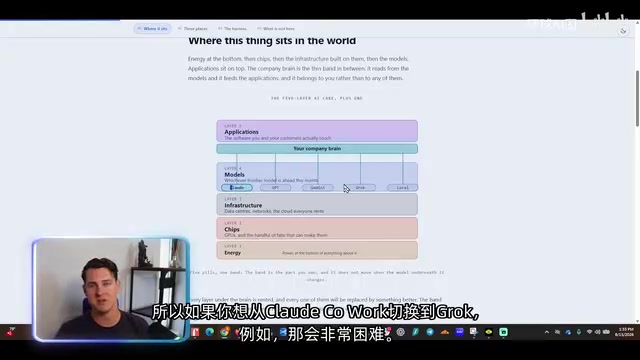
Enterprise AI Operating System Implementation Guide: Complete Analysis of 7 Core Tool Stacks
In-depth analysis of 7 core tool stacks for enterprise AI operating systems, covering VS Code framework layer, n8n automation, Paperclip agent management, Bitchat communication, secure key management, and data warehouses to help enterprises truly implement AI systems.
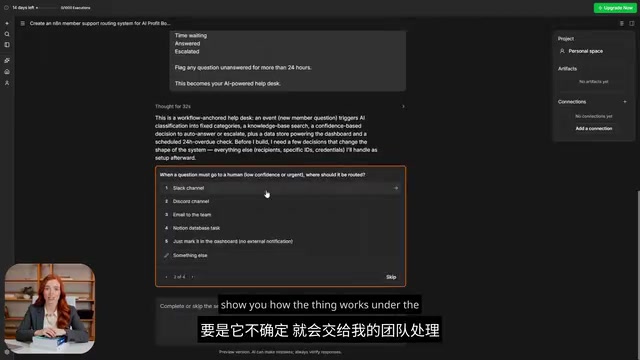
Building an AI Customer Support Assistant with n8n: No-Code Workflow Automation
Learn how to build an AI customer support assistant with n8n using zero code. Automate repetitive questions, integrate 400+ tools, and self-host for data control.
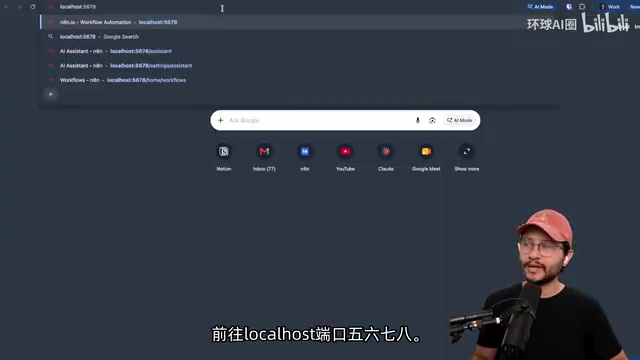
n8n Local Deployment Tutorial: Self-Hosting + AI Assistant with a Single Command
Deploy n8n locally with one Docker command and use its built-in AI assistant to build automation workflows in natural language. Covers OpenRouter, permissions, and debugging.