Wiz CTO Warns: Legacy Internet Code Is Heading for a 'Vulnpocalypse'

Wiz's CTO warns that the internet's legacy code will see clustered vulnerability outbreaks, and the PHP incident is just a preview.
Wiz's CTO introduces the concept of 'Vulnpocalypse,' warning that the internet's long-accumulated legacy code is pushing the industry to a tipping point of clustered vulnerability outbreaks. Using two critical PHP vulnerabilities as an example—an open-source language underpinning about 70% of websites—the article shows how many organizations were forced to take sites offline while awaiting fixes, exposing structural risks of highly concentrated underlying dependencies, insufficient maintenance, and difficult replacement. It notes that the danger of legacy code is not that it is 'old,' but that it is widely depended upon, lacks ongoing maintenance, and is hard to replace, so vulnerabilities may be discovered faster than they can be fixed. The recommendation: incorporate legacy dependencies into routine asset inventories, assess maintenance status and replacement costs, and agree in advance on which systems can tolerate downtime for remediation.
Two recently disclosed high-severity PHP vulnerabilities forced a large number of websites built on this open-source language to be taken offline for emergency fixes. Although the uproar has gradually faded from news feeds, the cleanup work is far from over. In a recent statement, Wiz's CTO offered a broader assessment: the internet's long-accumulated legacy code is pushing the entire industry toward a "Vulnpocalypse."
A PHP Scare That Exposed Structural Problems
According to the original report, the two critical vulnerabilities appeared in an open-source language that underpins roughly 70% of websites. For many organizations, this was not a routine patch update but an emergency that required temporarily shutting down sites while awaiting fixes. The way researchers handled the disclosure also laid bare an uncomfortable reality: the internet's underlying dependencies are highly concentrated, with a handful of open-source projects carrying far more traffic and trust than they can maintain.
This concentration means a flaw at the level of a single language can quickly escalate into an industry-wide emergency. Wiz's CTO warning stems from exactly this perspective—the PHP incident is not an isolated case but a replicable template that will play out in different forms across more legacy code stacks in the future.
PHP is an open-source server-side scripting language created by Rasmus Lerdorf in 1994. It was originally used to maintain personal homepages and, after several rewrites, evolved into a general-purpose programming language. Its design goal was rapid development of dynamic web pages, and its loose syntax and low barrier to entry made it the mainstream choice for building early websites. A large number of CMS platforms (such as WordPress, Drupal, and Joomla) and e-commerce frameworks (such as WooCommerce and Magento) are built on PHP, giving it a deployment footprint covering about 70% of websites worldwide. However, PHP iterates quickly, and older versions are often still used by many sites long after official security support ends, creating a long-term exposure surface. This combination of "low barrier, high installed base, slow upgrades" is precisely the technical soil that allows a single language-level vulnerability to escalate into an industry-wide emergency.
Why 'Vulnpocalypse' Is Not Alarmism
The problem with legacy code is not that it is "old," but that it often simultaneously exhibits three traits: it is widely depended upon, it lacks ongoing maintenance, and it is difficult to replace. Many systems have run stably since they went live years ago, their original teams have long since moved on, documentation is missing, and upgrade paths are unclear. When security researchers begin examining this code en masse, vulnerabilities may be discovered faster than they can be fixed.
The term "Vulnpocalypse," used by Wiz's CTO, points precisely to this imbalance in tempo. Defenders must investigate, test, and deploy one by one, while the attack surface and vulnerability disclosures pour in from multiple directions at once. For an internet built on open-source languages, this asymmetry will keep amplifying risk.
"Vulnpocalypse" is a portmanteau of vulnerability and apocalypse, a hyperbolic rhetorical device common in the security industry used to describe a situation in which vulnerabilities erupt in clusters and defenders struggle to keep up. Related concepts include "patch apocalypse" and "dependency hell." Such terms are not rigorous academic definitions but are meant to convey a sense of tempo: the pace of vulnerability disclosure exceeds an organization's remediation throughput. In the open-source ecosystem, this imbalance is especially pronounced, because once vulnerability information is public, attackers and defenders gain the clues at almost the same moment—while defenders still have to complete the lengthy processes of investigation, testing, change approval, and deployment. That time gap constitutes the actual risk window.
Practical Implications for Enterprises and Development Teams
The handling of the PHP incident shows that, while temporary shutdowns can limit the damage, they are costly and unsustainable. A more pragmatic approach is to incorporate legacy dependencies into routine asset inventories: know what you use, which versions are no longer maintained, and how much replacement or isolation would cost. Security and engineering teams need to agree in advance on "which systems can tolerate downtime for remediation," rather than making ad hoc decisions only after a vulnerability is disclosed.
The open-source ecosystem itself also needs healthier maintenance models. If widely used projects depend on a small number of maintainers over the long term, risk will accumulate systematically. Wiz's CTO warning is essentially reminding the industry that clustered vulnerability outbreaks are not accidents but the result of a long-standing mismatch in maintenance responsibility.
A Software Bill of Materials (SBOM) is a machine-readable inventory of the components, dependencies, and versions in a software product, analogous to a bill of materials in manufacturing. After the Log4Shell incident in 2021, the United States pushed for SBOM to become a foundational practice in supply chain security. Its core value is enabling organizations to quickly answer "Am I using the affected component, which version, and in which systems?" For legacy code stacks, an SBOM can transform the vague state of "not knowing what you use" into a queryable asset ledger, thereby supporting assessments of dependency maintenance status, isolation decisions, and replacement scheduling. Without an SBOM, a single vulnerability disclosure often requires days or even weeks of manual investigation—one of the key reasons defenders fall behind in the Vulnpocalypse narrative.
FAQ
What exactly does "Vulnpocalypse" mean? It is the term Wiz's CTO uses to describe a wave of security vulnerabilities erupting in clusters across the internet's legacy code, emphasizing the imbalance between vulnerability discovery and remediation.
How does the PHP vulnerability incident relate to this warning? PHP underpins about 70% of websites, and two critical vulnerabilities forced some sites offline for remediation, making it a real-world example of legacy code risk.
What should teams prioritize? Inventory legacy dependencies, assess maintenance status and replacement costs, and prepare contingency plans in advance for systems that may need downtime.
One-line Summary
Wiz's CTO warns that the internet's legacy code will see clustered vulnerability outbreaks, and the PHP incident is just a preview.
Paragraph Summary
Wiz's CTO introduces the concept of "Vulnpocalypse," warning that the internet's long-accumulated legacy code is pushing the industry to a tipping point of clustered vulnerability outbreaks. The article uses two critical PHP vulnerabilities as an example: after problems emerged in this open-source language that underpins about 70% of websites, many organizations were forced to take sites offline while awaiting fixes, exposing structural risks of highly concentrated underlying dependencies, insufficient maintenance, and difficult replacement. The article notes that the danger of legacy code is not that it is "old," but that it is widely depended upon, lacks ongoing maintenance, and is hard to replace—so vulnerabilities may be discovered faster than they can be fixed. The recommendation for enterprises: incorporate legacy dependencies into routine asset inventories, assess maintenance status and replacement costs, and agree in advance on "which systems can tolerate downtime for remediation."
Related articles
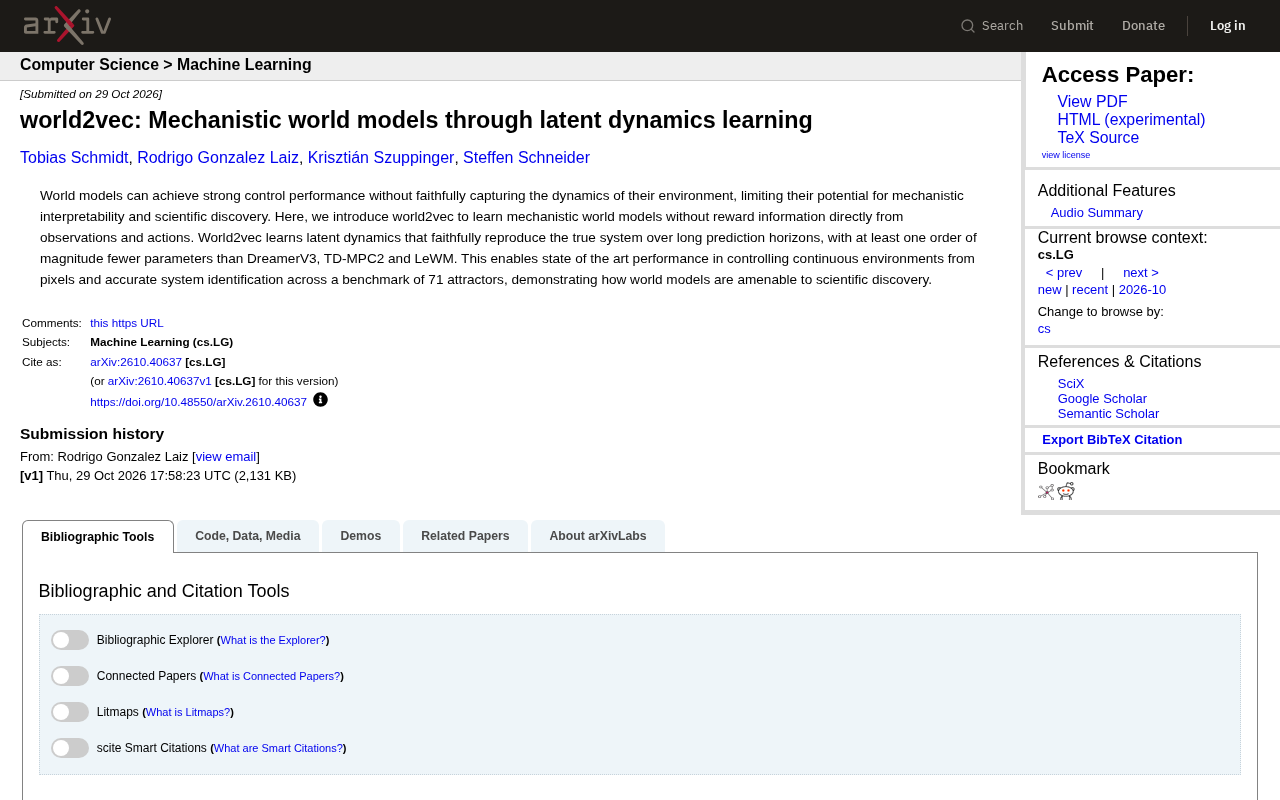
world2vec: Building Mechanistic World Models with Latent Dynamics Learning
world2vec proposes a reward-free method for learning mechanistic world models via latent dynamics, faithfully reproducing systems over long horizons with at least an order of magnitude fewer parameters than DreamerV3, TD-MPC2, and LeWM, and achieving accurate system identification on 71 attractor benchmarks.

A New KL-DRO Paradigm: Adaptive Scenario Generation Around a Learned Density Model
KL-DRO research proposes centering the KL ball on a learned density model instead of the empirical distribution, with adaptive scenario generation guiding sampling toward the worst case. Experiments show lower cost under distribution shift when records are scarce and the model can extrapolate, with comparable in-distribution cost.

ODE Samplers for Discrete Diffusion Models: Exponential Residual Flows Accelerate Generation
Discrete diffusion models lack deterministic ODE sampling? This article introduces Exponential Residual Flows (ERFs), which introduce continuous residual variables per token to construct piecewise ODEs for deterministic sampling and support consistency distillation acceleration. Superior to prior methods on code and text generation tasks.