WorkBuddy Agent Automation in Practice: Building an AI Workflow from Scratch
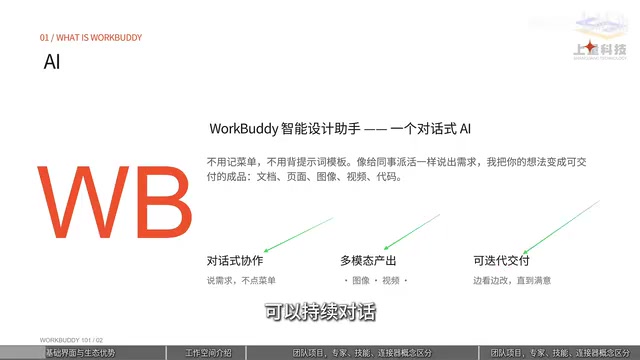
Tencent WorkBuddy uses a three-layer design of experts, skills, and MCP connectors to string AI capabilities into an actionable automated workflow.
Based on a Bilibili creator's WorkBuddy course series, this article systematically introduces the positioning and functional architecture of Tencent's WorkBuddy agent collaboration platform. WorkBuddy targets three groups—office work, code development, and design creativity—and features multimodal understanding and persistent conversation. Its core features fall into three layers: role agents and experts optimize the quality of AI's judgment (the "brain"), skills let AI operate local software ("hands and feet"), and MCP connectors extend the boundaries of cloud service operations. In addition, the assistant module supports remotely directing the computer through channels such as WeChat, the project module targets team task division, scheduled tasks enable automated triggering, and the knowledge base provides a dedicated knowledge source. Using AI comic-drama production as a hands-on case, the article emphasizes the transferability of workflow combination ideas, noting that the real barrier lies in understanding module collaboration logic and designing an automation chain that suits you.
Title
WorkBuddy Agent Automation in Practice: Building an AI Workflow from Scratch
Meta Description
A detailed WorkBuddyAd agent tutorial: breaking down the Tencent WorkBuddy interface layout, the three core concepts of experts/skills/MCP connectors, and how assistants, projects, scheduled tasks, and the knowledge base work together, with a hands-on AI comic-drama workflow example.
Article Content
Whether you use AI tools well often doesn't depend on how powerful any single feature is, but on whether you can string multiple capabilities into a complete workflow. Tencent's WorkBuddy is designed precisely in this direction—it's not just a chatbot, but an agent platform that can actually operate a computer, connect to external services, and automatically complete tasks.
What WorkBuddy Is: An Agent Collaboration Platform Within the Tencent Ecosystem
According to a full set of detailed lessons from a Bilibili creator, WorkBuddy is positioned as an agent tool for three groups: everyday office work, code development, and design creativity. It's not a simple dialog box, but a collaboration platform with multimodal understanding (images, video, voice) and persistent conversation context.
Judging from the interface design, WorkBuddy clearly divides usage scenarios: data analysis work involving documents, spreadsheets, and PPTs; mini-program and agent development for programmers; and creative design such as posters and visual motion effects. Because it's backed by the Tencent ecosystem, it has natural advantages in WeChat mini-program development and integration with Tencent Cloud services. In the course demo, users only need to enter "design a PPT around [a topic]" and the system can directly produce usable slides, saving a great deal of manual work.
Breaking Down the Core Features: The Division of Labor Among Experts, Skills, and Connectors
WorkBuddy's feature system can be split into three layers, and understanding their differences is the key to getting started.
Role Agents and Experts: Optimizing AI's "Brain"
Role agents are AI instances with built-in specific prompts and identity settings, designed to make outputs more focused and professional. Experts are similar to role agents, focusing on providing suggestions and judgment optimization; the course likens them to "optimizing AI's brain"—they improve the quality of AI's judgment rather than directly executing operations.
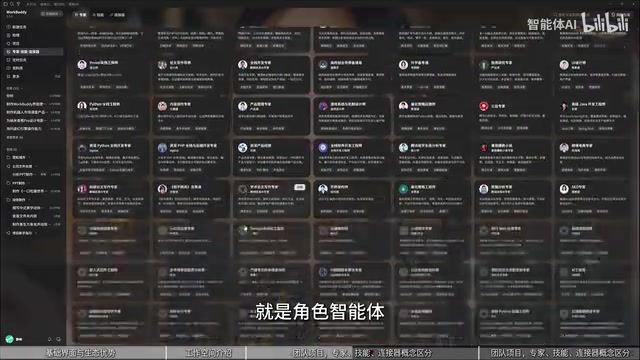
Prompt Engineering refers to guiding a model to produce results that better match expectations by carefully designing the instructions fed to the AI (including role settings, task descriptions, output format constraints, etc.). A role agent essentially packages a preset prompt template into a reusable "identity," such as "senior financial analyst" or "UI design consultant," so that the model exhibits a more professional tone and judgment within a specific domain. The advantage of this approach is that users don't need to write complex instructions from scratch each time—they just choose the right role to get stable output. The expert module goes a step further; it may combine multi-round reflection or scoring mechanisms to perform a second round of optimization on the AI's initial answer, thereby improving decision quality rather than execution speed.
Skills: Giving AI "Hands and Feet"
Skills are reusable, fixed methods of operation, covering a large number of scenarios such as handling QQ Music, PDFs, Markdown, Mermaid diagrams, and more. Unlike experts, skills directly operate software on the local computer, letting the AI truly "get its hands dirty." The course puts it this way: experts optimize the brain, skills optimize the hands and feet, and where and how to do the work depends on your specific task.
MCP Connectors: Extending the Boundaries of Operation
Connectors are based on the MCP protocol and connect to cloud services rather than local software. For example, to operate on applications whose data isn't in the local environment, such as cloud documents, you need to go through MCP. Its role is to expand the agent's "operating territory."
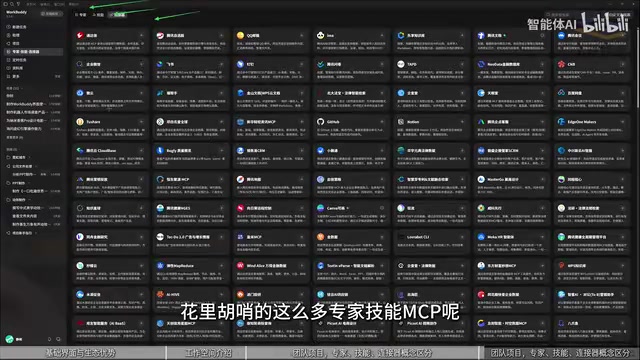
Behind this three-layer design is an ecosystem logic: application providers open up MCP to let AI connect in, while controlling the scope of what's opened—what they want you to operate is opened, and what they don't is naturally isolated.
MCP protocol (Model Context Protocol) is an open protocol proposed by Anthropic, aimed at standardizing the way AI models connect to external tools and data sources. You can think of it as the "USB interface" of the AI world: as long as any service (such as cloud documents, databases, calendars) is packaged as an MCP server according to the protocol, AI agents can discover and invoke its capabilities in a unified way, without needing to develop separate adaptation code for each service. The emergence of MCP lowers the barrier for agents to connect to third-party ecosystems, and also lets application providers finely control the scope of what's opened. WorkBuddy's connectors are based on this protocol, which is why it can quickly extend the boundaries of operations to cloud services rather than being limited to locally installed software.
Assistants, Projects, and Scheduled Tasks: Embedding Agents into Real Collaboration
Beyond the core capabilities, WorkBuddy also provides several modules geared toward collaboration.
Assistants are remote access channels. Chatting with WorkBuddy through channels such as WeChat, QQ, DingTalk, Feishu, and WeCom is essentially close to the interaction form of open cloud. The course demonstrates a scenario of sending a message on WeChat to have the agent "send over a certain file on the computer"—remotely directing the computer to complete tasks.
Projects are aimed at team tasks. After creating a project, you can assign superior and subordinate tasks according to templates, clarifying who completes what and when, which suits scenarios requiring division of labor and collaboration.
Scheduled tasks are used for automated triggering. You can set instructions like "open an application on the computer at 10 o'clock," and complex tasks can also call stronger AI models. Before execution, the system requests computer operation permissions and only starts running after confirmation.
The knowledge base is an external knowledge add-on. Put proprietary materials (such as data in the biomedical field) into it, and the AI reads them directly each time it executes a task, without having to search broadly online—equivalent to equipping the agent with a dedicated knowledge source.
AI Comic-Drama in Practice: A Template for Workflow Migration
The course uses AI comic-drama production as its core hands-on case, thoroughly breaking down the entire process from script creation, art asset generation, and video clip production to voice consistency control and post-production editing. The value of this case lies not in the comic drama itself, but in how it demonstrates the way workflows are combined—once you've learned it, you can migrate it to scenarios such as copywriting, character costume changes, advertising production, voiceover, AI video ads, and even extend it to personal website building, unattended automation, and scheduled tasks.
For people who want to use AI to improve efficiency or explore side hustles, the key conclusion is this: the tool itself is not the barrier; using tools on real tasks and producing actual results is. WorkBuddy's interface has a low learning cost, and the real barrier lies in understanding the collaboration logic of each module and designing an automation chain that suits you.
This article is compiled based on the content of the WorkBuddy series of courses published by a Bilibili creator. Feature descriptions are based on the course demonstrations, and the actual experience may change with version updates.
One-line Summary
Tencent WorkBuddy uses a three-layer design of experts, skills, and MCP connectors to string AI capabilities into an actionable automated workflow.
Paragraph Summary
Based on a Bilibili creator's WorkBuddy course series, this article systematically introduces the positioning and functional architecture of Tencent's WorkBuddy agent collaboration platform. WorkBuddy targets three groups—office work, code development, and design creativity—and features multimodal understanding and persistent conversation. Its core features fall into three layers: role agents and experts optimize the quality of AI's judgment (the "brain"), skills let AI operate local software ("hands and feet"), and MCP connectors extend the boundaries of cloud service operations. In addition, the assistant module supports remotely directing the computer through channels such as WeChat, the project module targets team task division, scheduled tasks enable automated triggering, and the knowledge base provides a dedicated knowledge source. Using AI comic-drama production as a hands-on case, the article emphasizes the transferability of workflow combination ideas, noting that the real barrier lies in understanding module collaboration logic and designing an automation chain that suits you.
Related articles
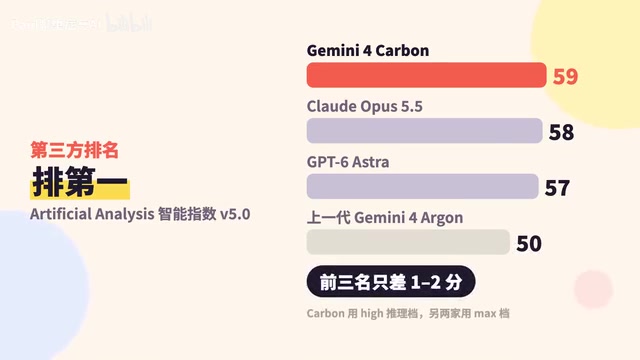
Google Releases Gemini 4 Carbon: Its Strongest Model Yet, Debuting with a Cybersecurity Focus
Google releases Gemini 4 Carbon, calling it its strongest model, with a cybersecurity focus. It tops the third-party composite ranking at 59 points but leads by only one or two. This article analyzes its security test results, staged rollout, token pricing, and the divergence between self-reported and third-party tests on hallucinations.

LangChain Adds SchemagateRetriever: On-Demand Table Retrieval Cuts Text-to-SQL Prompts by 92.9%
LangChain docs add SchemagateRetriever: retrieves only the tables needed for text-to-SQL with permission filtering, cutting median prompt size by 92.9% on Spider 2.0 large schemas via offline BM25 selection with no model calls.

Multi-Step AI Agent Guardrail in Practice: Fact-Change Detection Drives False-Alarm Rate to 0%
Developer shares first version of a multi-step AI Agent guardrail: re-verifying dependency facts before irreversible actions cut false alarms from 50% to 17% across 23 scenarios, then to 0% via conservative normalization without lowering catch rate. Runs on local qwen2.5-7b.