X Rolls Out Parental Controls for Teens: A Safety Patch Twenty Years Late

X rolls out parental controls for teens, filling a twenty-year capability gap rather than innovating.
X (formerly Twitter) has introduced parental controls for teen users for the first time in twenty years, letting guardians manage content visible on their children's accounts. The article argues this is essentially catching up: most mainstream platforms already offer parental controls, time management, and content filtering, and X's long absence has been a weak spot for families and a compliance risk as minor-protection laws tighten. Launching the feature doesn't solve the problem—real protection depends on how guardian relationships are verified, whether teens can bypass limits by changing age info, how granular content filtering is, and where the platform draws the line between guardianship and teen privacy.
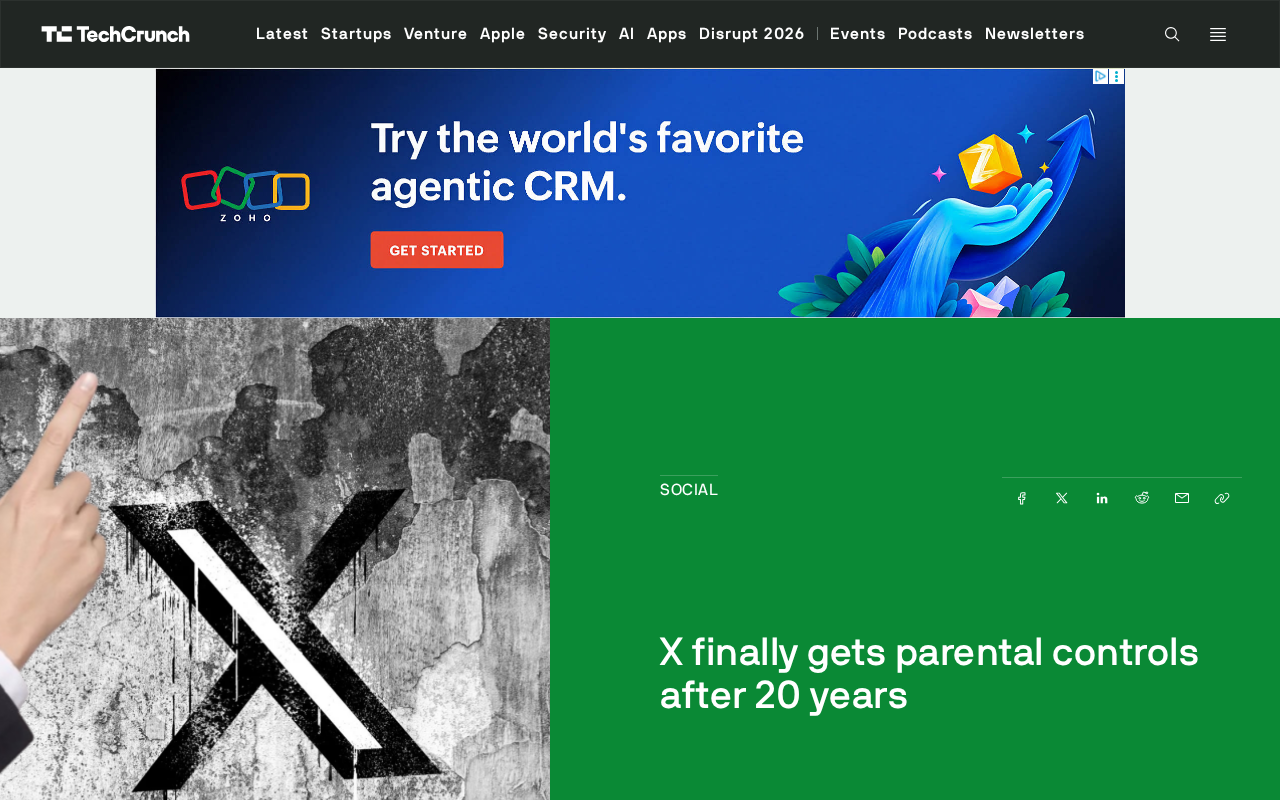
Elon Musk's social platform X (formerly Twitter) has finally introduced parental controls for teen users, allowing parents and guardians to manage what their children see on the platform. For a social network that has been operating for two decades, this feature is arriving somewhat late.
Why This Is a "Late" Update
The responsibility of social platforms to protect minors has been repeatedly debated and driven by legislation over the past decade. Most mainstream platforms have long established parental controls, screen time management, and content filtering mechanisms, while X's long-standing absence in this area has made it a weak spot in the eyes of family users.
The parental controls now being added are built around giving guardians a management entry point to directly intervene in the content visibility of teen accounts. This contrasts with the platform's previous reliance primarily on self-declared age gates—which in practice are nearly impossible to verify and easy to circumvent.
From an industry perspective, this move is more about catching up than innovating. It doesn't mean X has moved to the forefront of teen safety; rather, it has finally filled in basic capabilities to roughly the same starting line as its peers.
Parental controls are a set of management tools that platforms provide to guardians of minor users, typically including content rating filters, usage time limits, account visibility settings, and controls over spending and interaction permissions. The industry-wide adoption of such features is directly tied to a series of legislative and public pressure points: the U.S. Children's Online Privacy Protection Act (COPPA) of 1998 requires services directed at children under 13 to obtain verifiable parental consent; Article 8 of the EU's General Data Protection Regulation (GDPR) sets the age of consent for processing minors' data at 16 (member states may lower it to 13); and the UK's Age Appropriate Design Code requires platforms to default to privacy settings more protective of children. Together, these rules have pushed mainstream platforms to treat parental controls as compliance infrastructure rather than an optional value-added feature.
Feature Positioning and Potential Impact
What Guardians Gain
According to the official description, parents and guardians can use this feature to manage the content teens encounter on the platform. This means decision-making authority over content filtering is partially shifted from algorithms and users themselves to the guardian within the family context.
For parents, this provides an official path that doesn't depend on third-party tools. Previously, limiting a child's behavior on social platforms often meant relying on device-level parental modes or simply banning use altogether, with no granular in-platform options.
An age gate is a mechanism platforms use to determine whether a user meets the minimum age for use, commonly in the form of self-reported birth dates at registration, age confirmation checkboxes, and more recently estimation schemes based on behavioral characteristics or third-party age verification services. The inherent flaw of self-reported age gates is the lack of verification: minors can easily enter a false birthday to complete registration, and platforms struggle to verify authenticity without adding friction to the signup process. This is precisely why parental controls are designed as an "account-level" intervention—they don't rely on teens truthfully reporting their age, but instead impose constraints through a guardian who has been linked to the account in some way. However, the two are not substitutes for each other: if teens can change their birth date or create new accounts, the coverage of parental controls is weakened, so the credibility of the age gate still determines the practical boundaries of parental controls.
What It Means for the Platform Ecosystem
Teen users are an important source of growth for social products, but they are also the group facing the most concentrated regulatory pressure. By introducing parental controls, X is objectively preparing for a stricter compliance environment. As legislation on minors' online protection tightens across countries, the absence of parental control capabilities is itself a compliance risk.
Compliance pressure around minors' online protection has shown a clear tightening trend over the past decade. In addition to the aforementioned COPPA, GDPR, and the UK's Age Appropriate Design Code, the EU's Digital Services Act (DSA) requires large platforms to assess and mitigate systemic risks to minors' rights, and multiple U.S. states have successively passed laws requiring parental consent for minors' social media use (such as related legislation in Arkansas and Utah, though some has been stalled or amended amid legal challenges). Against this backdrop, "whether a platform has parental control capabilities" is gradually shifting from a product differentiation option to a baseline item in regulatory review. For platforms, lacking such capabilities may not only invite fines but also affect app store listings, advertising partnerships, and regional market access.
Several Issues That Warrant a Measured View
Launching a feature doesn't equal solving the problem. The actual effectiveness of parental controls depends on several key details: how guardians complete identity and relationship verification, whether teens can bypass restrictions by modifying age information, and whether content filtering is granular enough. The original information did not disclose these implementation-level designs, so the actual protective strength still needs to be observed.
Another dimension worth watching is the privacy boundary. Parental controls inherently involve access rights to teen account data, and how the platform draws the line between guardianship and minors' privacy will directly affect the acceptance of this feature. Too loose, and the feature becomes nominal; too tight, and it may trigger resentment and evasion among teen users.
Twenty years of waiting have yielded a set of basic capabilities rather than a mature solution. For X, the real test is not whether the feature launches, but whether it can, in real-world use, block the scenarios that most need blocking.
One-line Summary
X launches parental controls for teens, filling a twenty-year capability gap rather than innovating.
Paragraph Summary
X (formerly Twitter) has introduced parental controls for teen users for the first time in its twenty-year history, allowing guardians to manage the content visible on their children's accounts. The article notes that this move is essentially catching up: most mainstream platforms already have parental controls, time management, and content filtering mechanisms, and X's long-standing absence has made it a weak spot for family users—while also exposing it to compliance risks as legislation on minors' online protection tightens across countries. At the same time, launching a feature doesn't mean the problem is solved; actual protective strength depends on how guardian relationships are verified, whether teens can bypass restrictions by changing age information, whether content filtering is granular enough, and how the platform draws the boundary between guardianship and minors' privacy.
Related articles

Nothing CMF Buds 2A Drops to $17.89 on Black Friday: A New Low for ANC Earbuds
Nothing CMF Buds 2A wireless earbuds Black Friday deal: just $17.89 on Amazon, about $11 off retail and a record low. ANC earbuds at an entry-level price.

When AI Creation Gets Accused of "Spitting": Hacker News Heats Up Over the Glaude Controversy
A Hacker News post, "Spitting in the Face of Glaude," sparks debate on AI creation transparency and attribution ethics. This analysis examines the blurred creator identity behind the controversy and offers practical advice for AI content production.

Akai Embraces Custom Firmware: MPC Sample 1.4 Lets Users AI-Program Their Sampler
Akai embraces the modding community with MPC Sample 1.4 firmware, supporting vibe-coded custom firmware and effects. We analyze the impact of this open strategy on music hardware and AI-assisted programming.