Xbox Employees Required to Return to Office Four Days a Week: Microsoft Tightens Hybrid Work Policy Again

Microsoft raises Xbox employees' weekly return-to-office requirement from three to four days to promote collaboration, aligning with the tech industry's RTO wave.
Microsoft announced via internal memo that it will raise the weekly return-to-office requirement for most Xbox employees from three days to four, citing the need for more collaborative opportunities. This adjustment comes just one year after the last three-day requirement, reflecting tech giants' ongoing oscillation between remote and in-person work. The article analyzes that the increased RTO requirement stems from collaboration needs and business pressure—Xbox faces content delivery and hardware sales challenges, and stronger face-to-face communication may boost efficiency. Meanwhile, the move aligns with the RTO wave at Google, Amazon, and others, but Microsoft's gradual approach shows it seeks balance between employee satisfaction and business needs. The policy may affect retention and recruitment, especially for game developers who prefer remote work. The four-day RTO model represents exploration of hybrid work's future, with success depending on execution details and collaboration design.
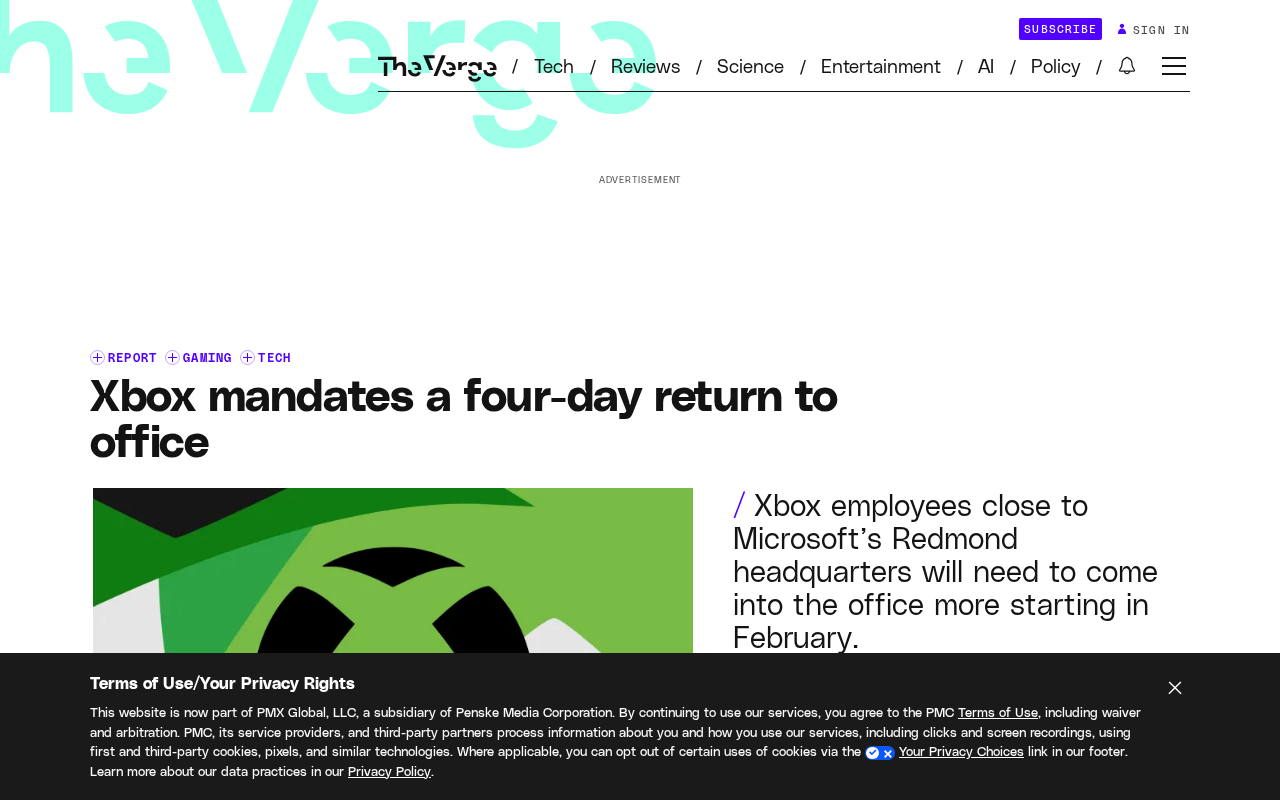
Microsoft is further tightening its hybrid work policy. According to an internal memo obtained by The Verge, Microsoft has raised the weekly return-to-office requirement for most Xbox employees from three days to four, citing the need to "create more opportunities for people to collaborate." This adjustment comes just one year after Microsoft last required employees to return to the office three days a week, reflecting the tech giant's ongoing oscillation between remote work and in-person collaboration.
Policy Change: From Three Days to Four
Microsoft began requiring employees to work from the office at least three days a week last year, and now this threshold has been raised to four days for most Xbox employees. The memo describes the change as an adjustment based on feedback, emphasizing the value of face-to-face collaboration. Although the specific effective date and scope (whether it covers all Xbox teams or specific functions) have not been fully disclosed, sources indicate the policy applies to "most" Xbox employees, suggesting there may be individual exemptions.
This move aligns with the evolution of Microsoft's overall hybrid work framework. Since the pandemic, Microsoft was among the first to promote flexible work, but has gradually tightened over the past two years. As an important gaming business unit under Microsoft, changes to Xbox's return-to-office policy may signal a broader trend within the company.
Hybrid Work refers to arrangements where employees work part of the time in the office and part of the time remotely, typically with companies stipulating a minimum number of on-site days per week. After the pandemic, tech companies like Microsoft and Google widely adopted this model to balance flexibility with collaboration needs. Microsoft's hybrid work framework allows employees to work remotely with manager approval, but minimum on-site requirements have been gradually tightened in recent years. The Xbox division raising its return-to-office threshold from three days to four is a specific adjustment under this framework, reflecting companies' reassessment of the value of face-to-face collaboration.
Driving Factors: Collaboration Needs and Business Pressure
The internal memo attributes the increased return-to-office requirement to "creating more opportunities for collaborative work," which typically means management believes remote work has affected team innovation and execution. In the gaming industry, cross-team collaboration—from development and art to marketing—often relies on immediate face-to-face communication. Xbox has faced pressure in content delivery and hardware sales in recent years, and strengthening in-person collaboration may be aimed at improving project efficiency.
Additionally, the tech industry as a whole is experiencing a return-to-office wave. From Google to Amazon, multiple giants have tightened remote work policies. Microsoft's move is not isolated but part of an industry trend. However, Microsoft's gradual adjustment (rather than a one-size-fits-all approach) indicates it is seeking a balance between employee satisfaction and business needs.
Return-to-Office (RTO) refers to the trend of companies requiring employees to return to the office after the pandemic. The tech industry is a typical example of this trend: giants like Google and Amazon have implemented policies requiring at least three days on-site per week, with some companies even requiring full-week in-person work. Driving factors include management concerns about remote work productivity, emphasis on team innovation and culture, and sunk costs of commercial real estate leases. Microsoft's gradual adjustment (from three days to four) aligns with industry trends but emphasizes flexibility more to avoid employee backlash.
Impact on Employees and Industry Signals
For Xbox employees, returning to the office four days a week means commuting time and personal schedules need to be readjusted. Although Microsoft may retain some flexibility (such as allowing exceptions for certain teams), the tightened policy will undoubtedly increase employees' living costs and time pressure. In the highly competitive gaming talent market, overly strict return-to-office requirements may affect recruitment and retention, especially for developers who prefer remote work.
From an industry perspective, Microsoft's move further confirms the swing back of hybrid work models. Fully remote or highly flexible work that was once prevalent after the pandemic is being reassessed by more companies. As Microsoft's creative business unit, Xbox's policy changes may be referenced by other gaming companies, but could also trigger employee backlash.
The Balance: The Future of Hybrid Work
Microsoft's return-to-office policy adjustment is not an isolated case but a microcosm of global companies exploring post-pandemic work models. The four-day return-to-office requirement reflects both the pursuit of collaboration efficiency and the retention of some flexibility (one day remote per week). This "middle path" may become the choice of more companies. However, the success of the policy depends on execution details: whether sufficient office space is provided, whether teams are allowed to decide collaboration days autonomously, and whether tools and processes compensate for efficiency losses on remote days.
For Xbox, the key is whether face-to-face collaboration can truly improve game development efficiency and team cohesion. If the policy remains at the level of "clocking in" without meaningful collaboration design, it may backfire. Microsoft needs to prove that this change is not control for control's sake, but for creating better work outcomes.
One-line Summary
Microsoft raises Xbox employees' weekly return-to-office requirement from three days to four to promote collaboration, aligning with the tech industry's return-to-office wave.
Paragraph Summary
Microsoft announced through an internal memo that it will raise the weekly return-to-office requirement for most Xbox employees from three days to four, citing the need to create more opportunities for collaborative work. This adjustment comes just one year after the last three-day requirement, reflecting tech giants' ongoing oscillation between remote work and in-person collaboration. The article analyzes that the increased return-to-office requirement stems from collaboration needs and business pressure—Xbox faces challenges in content delivery and hardware sales, and strengthening face-to-face communication may improve efficiency. Meanwhile, this move aligns with the return-to-office wave at companies like Google and Amazon, but Microsoft's gradual adjustment shows it is seeking a balance between employee satisfaction and business needs. The policy may affect employee retention and recruitment, especially for game developers who prefer remote work. The four-day return-to-office model represents exploration of the future of hybrid work, with success depending on execution details and collaboration design.
Related articles

iPhone Duo Battery Life Tested: One Charge a Day Is Unavoidable, and the Large Screen Is the Culprit
iPhone Duo battery test: heavy use needs at least one charge a day, and about 30% remains after 6.5 hours of screen-on time. How often the large screen is unfolded is key; a MagSafe battery pack helps, and long-term degradation is also worth watching.

Kimi K3.1 Pro Open-Sourced: 2.8 Trillion Parameters Close In on Opus
Moonshot releases the open-source MoE model Kimi K3.1 Pro, with 2.8T total parameters and 104B activated, trailing Opus 5.5 by under 1 point on Terminal Bench 4.0.

Costco Tech Price Guessing: Are Monitors, Keyboards, Mice, and Bose Speakers Worth It?
A YouTube blogger guesses prices of Costco tech products: 2K 180Hz monitor, Logitech keyboard and mouse, Bose speaker, and CyberPower UPS, revealing warehouse-store selection and brand premium.