You Don't Have to Believe in God to Pray: A Psychologically Validated Practice

Prayer's real value isn't petitioning God — it's honest self-confrontation, and it works for non-believers too.
Vox columnist Caspar Ter-Kyle redefines prayer in his column *Soul Searching*: not a wish-granting vending machine, but an inner practice of honest speech that confronts fear, anger, and despair. Harvard cardiology research shows prayer doesn't affect the person prayed for — but it does change the one praying. The Psalms offer historical evidence that authentic prayer has always been "unclean," full of raw emotion and accusation. For non-believers, Ter-Kyle offers practical alternatives: journaling, speaking to deceased loved ones, or any practice that accesses genuine feeling. His core conclusion: stripped of religion, prayer is a universal tool for emotional processing and self-awareness.
As more and more people stop affiliating with any religious group, a seemingly paradoxical question arises: if you don't believe in God, can you still pray? Vox columnist Caspar Ter-Kyle, writing in his new column Soul Searching, answers with a resounding yes — and argues that the practice itself has value regardless of faith.
This isn't a piece about technology or AI. It's an opinion article about how an ancient spiritual practice can serve modern life. What follows is a distillation of its core arguments.
Prayer Is Not a "Vending Machine for Wishes"
Many people understand prayer through a simple transactional model: you make a request to God, and God decides whether to fulfill it — like a "divine vending machine." Ter-Kyle argues this framing drastically undersells what prayer is.
Real prayer is far more interesting than asking for things. It's not about petitioning the heavens for something; it's a process of confronting yourself. This reframing shifts prayer from being "outcome-oriented" to "process-oriented" — and that's precisely why it can work equally well for non-believers.
Harvard Research: Prayer Changes the One Who Prays
The article cites a Harvard cardiologist's research finding: while prayer has no measurable effect on the person being prayed for, it does have a real effect on the person doing the praying.
This is a quietly radical conclusion. It shifts prayer's mechanism from "external miraculous intervention" to "internal psychological effect" — the value of prayer lies not in whether it changes the outside world, but in how it changes the practitioner's own mental state. This gives secular observers a foothold for understanding prayer: even if you remove God from the equation entirely, the practice still holds up.
The Harvard cardiologist research referenced in the article most likely refers to the work of Herbert Benson and his colleagues on intercessory prayer, conducted in the late 20th and early 21st centuries. The largest such study, published in 2006, enrolled approximately 1,800 cardiac bypass surgery patients and found no significant difference in post-operative recovery between those who were prayed for and those who were not. Meanwhile, Benson's earlier "Relaxation Response" theory documented the physiological effects of prayer and meditation on the practitioner themselves: reduced heart rate, lower cortisol levels, and decreased blood pressure. Together, these two lines of research form the empirical backbone of the article's central argument — that prayer works inward, not outward. It should be noted, however, that research in this field has long faced significant methodological challenges (how do you measure the "quality" of prayer? how do you implement a double-blind design?), and the generalizability of its conclusions remains limited.
The Key Is Honest Speech
According to Ter-Kyle, the core mechanism that makes prayer work is "honest speech." It's not pleasantries and empty blessings — it's taking the time to speak truthfully about fear, anger, resentment, and jealousy, encompassing the good, the bad, and the ugly of human experience.

He draws on the Psalms from the Hebrew Bible as an example, noting that the prayers within them are anything but gentle and holy: some rail against God, some confess total loss of hope, and some even plead for the death of enemies. Prayer is "unclean" — it's real dialogue. It's precisely this unvarnished honesty that has kept prayer in continuous practice for thousands of years.
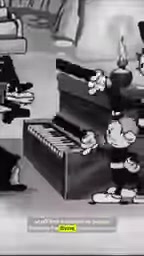
The Psalms is a collection of 150 poems in the Hebrew Bible (Old Testament), traditionally attributed in part to King David. It holds a significant place in Judaism, Christianity, and Islam, and remains a central text in many religious traditions. Ter-Kyle's invocation of the Psalms is meaningful because it provides a historically ancient template for "unclean prayer": Psalm 22 opens with "My God, my God, why have you forsaken me"; Psalm 137 contains a curse against Babylonian infants; and Psalm 88 is described by scholars as the darkest in the Bible — with no resolution or hope, only despairing accusation. The very existence of these texts demonstrates that within religious tradition, expressing negative emotions to the divine was never heresy — it was canonical, sanctioned practice. For secular readers, this is an important reference point: the legitimacy of honestly expressing negative emotions carries thousands of years of cultural backing.
What Non-Believers Can Do
For those without religious faith, Ter-Kyle offers several actionable paths. His own preferred method is journaling — using writing to practice this kind of honesty.
You can also ask yourself: who do you want to talk to? Whose voice do you want to hear? Is there someone who loved you deeply and is no longer alive — a grandparent, a beloved teacher or mentor, even a pet — someone you wish were still there to listen?
His conclusion is deliberately open-ended: any practice that helps you access your true feelings and unlocks something deeper than everyday thinking can serve as prayer. This effectively redefines "prayer" as a universal tool for self-awareness, stripping away its religious gatekeeping.
A Final Observation
The value of this perspective lies in translating a practice traditionally monopolized by faith into psychological language anyone can understand: honestly confronting your own emotions and giving them an outlet for expression. Whether it's journaling, meditative self-dialogue, or speaking to a deceased loved one, the essence is the same — honesty. In this sense, prayer is closer to an emotional processing mechanism than a form of supernatural communication.
One caveat worth noting: the Harvard research cited in the article appears only in summary form, without specific citations or methodological detail. Readers should treat it as supporting context for an argument rather than a rigorous scientific conclusion.
Related articles

OpenAI Partners with Shield: How the Astra Agent Revolutionizes IT Troubleshooting
OpenAI and Shield launch the Astra agent, which autonomously logs into computers and legacy systems to fix IT issues in real time, 35-40% faster than traditional models, with humans involved only when judgment is needed.

iPhone Duo Battery Life Tested: One Charge a Day Is Unavoidable, and the Large Screen Is the Culprit
iPhone Duo battery test: heavy use needs at least one charge a day, and about 30% remains after 6.5 hours of screen-on time. How often the large screen is unfolded is key; a MagSafe battery pack helps, and long-term degradation is also worth watching.

Kimi K3.1 Pro Open-Sourced: 2.8 Trillion Parameters Close In on Opus
Moonshot releases the open-source MoE model Kimi K3.1 Pro, with 2.8T total parameters and 104B activated, trailing Opus 5.5 by under 1 point on Terminal Bench 4.0.