YouTube Ad Punisher: Fighting Ads with 'Punitive Refreshing'

YouTube Ad Punisher fights platform ads by refreshing the page upon ad detection, sparking heated community debate.
YouTube Ad Punisher is an open-source anti-ad tool that auto-refreshes the page when YouTube ad playback is detected, interrupting ad impressions and billing. It received 279 points and 350 comments on Hacker News, with polarized reactions: supporters see it as low-cost protest, while opponents note it causes viewing progress loss, recommendation data disruption, bandwidth waste, and possible platform flagging. The article places this tool in the long-term user-platform ad game, comparing it with collaborative projects like SponsorBlock.
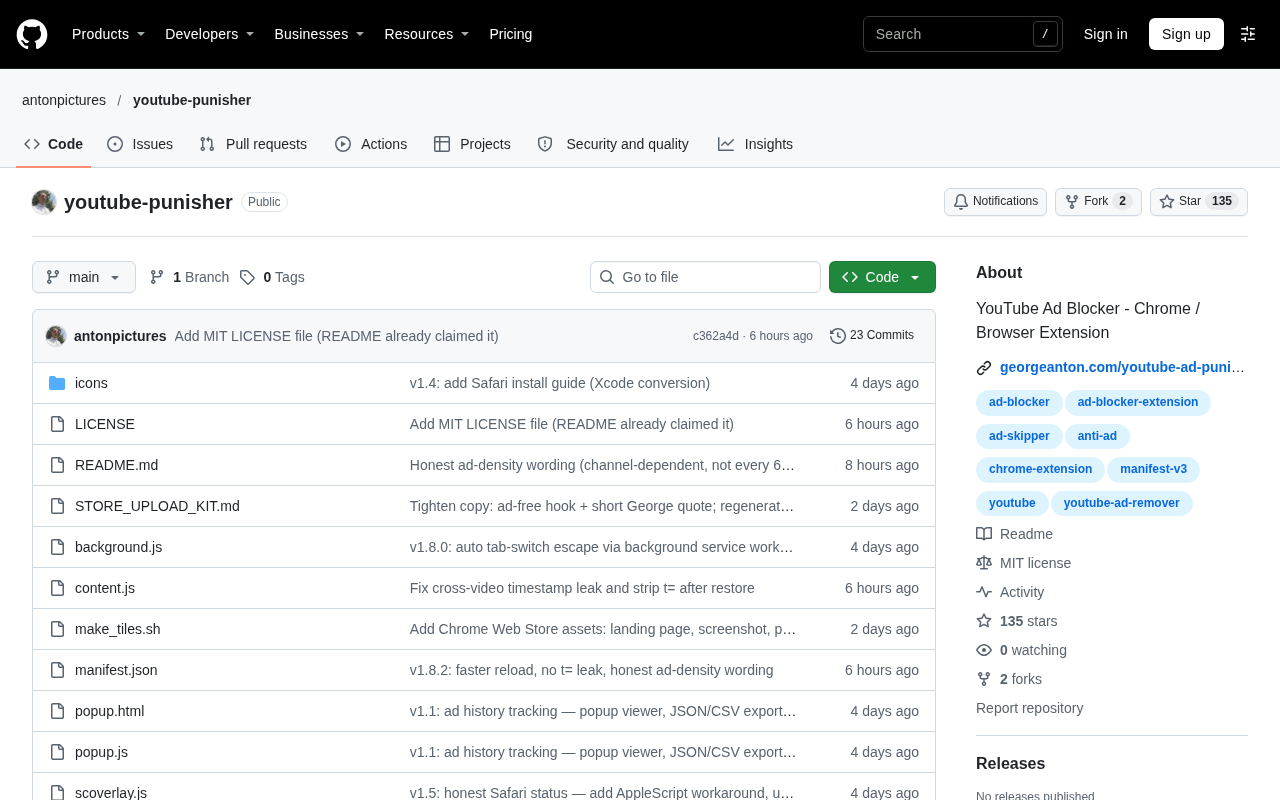
With YouTube ad-blocking tools proliferating, an open-source project called YouTube Ad Punisher has sparked heated discussion on Hacker News. Its approach is simple and blunt: when an ad is detected playing, it automatically refreshes the page. What problem does this seemingly "counterintuitive" tool actually solve, and what controversies does it expose?
A "Punitive" Anti-Ad Approach
The core logic of YouTube Ad Punisher isn't complicated: when the script detects that YouTube has started playing an ad, rather than blocking the ad content, it simply reloads the current page. The purpose is clear — to interrupt the ad's impression and billing process while forcing the player to reload the video stream.
According to the discussion on Hacker News (the post received 279 points and 350 comments), the naming of this "punitive" logic carries an emotional charge: users are no longer passively enduring ads, but actively triggering a page refresh to make the platform pay an experience cost for forcibly inserting ads.
From a technical implementation standpoint, such tools typically rely on browser extensions or user scripts that monitor player state changes. Unlike traditional ad-blocking plugins, it doesn't modify network requests or filter video streams, but rather works at the playback layer. This also means its adversarial approach is more "overt" and more easily detected by the platform.
The difference between user scripts and browser extensions: The "browser extensions or user scripts" mentioned in the article are two common injection methods. User scripts (Userscripts) are typically loaded by managers like Tampermonkey, run in the page context, are lightweight and easy to modify, but have limited permissions and cross-domain capabilities; browser extensions, on the other hand, gain more stable APIs and background services through specifications like Manifest V3, and can intercept network requests or modify response headers, but require manual installation and authorization by the user. A tool like YouTube Ad Punisher can be implemented with a user script if it only monitors player state and triggers a refresh; but to bypass platform detection or handle dynamically loaded ad modules, it often requires the higher permissions of an extension. This also explains why similar tools differ significantly in survival lifespan and adversarial strength.
Community Debate: Pragmatism or Self-Sabotage?
The project has generated polarized discussion on Hacker News. Supporters see it as a low-cost means of protest — since the platform keeps escalating its ad strategy, it's understandable for users to express dissatisfaction through refreshing. The ad interruption caused by page refreshes at least gives users a small sense of regained control.
Opposing voices are equally sharp. Some comments point out that automatic refreshing causes viewing progress loss, disrupts recommendation algorithm data, and may even be flagged by the platform as anomalous behavior. Frequent refreshing itself also consumes bandwidth and computing resources, constituting a form of "self-harm" to the user experience. A more realistic problem is that YouTube's anti-ad mechanisms continue to evolve, and such tools often have very short lifespans.
Other discussions focus on the ethical dimension: content creators rely on ad revenue, and while refreshing the page punishes the platform, it may also indirectly affect creators' revenue sharing. Whether this "cut off one's nose to spite one's face" strategy is truly worth promoting remains a matter of community disagreement.
The mechanism behind recommendation algorithm data disruption: YouTube's recommendation system relies on user watch time, completion rate, skip behavior, and interaction signals to build interest profiles. Automatic refreshing forcibly interrupts playback, generating large numbers of "abnormally short views" and "page reload" events, which the algorithm may misinterpret as low-quality content or user interest drift, thereby affecting homepage recommendations and the "Up Next" list. More seriously, frequent refreshing may trigger the platform's risk control system, flagging the account as anomalous traffic, leading to recommendation downgrading or CAPTCHA challenges. Therefore, the "algorithm data disruption" cited by opponents is not alarmist rhetoric, but a direct consequence of signal pollution in the recommendation system.
A Microcosm of the Open-Source Tool vs. Platform Game
YouTube Ad Punisher is not an isolated case. From early ad-blocking plugins to later community collaboration projects like SponsorBlock, the game between users and platforms over ads has never stopped. Every time the platform tightens its strategy, new adversarial tools emerge; and every time a tool becomes popular, it pushes the platform to upgrade its detection methods.
The value of this project may not lie in how "useful" it is, but in the observation window it provides: when ads become the platform's core revenue source, in what forms will user resistance appear? The "non-violent non-cooperation" approach of automatic refreshing reflects users' fatigue with the ad experience and their one-sided distrust of platform rules.
For developers, such projects also remind us: tool design logic directly influences user behavior. A simple refresh action behind it lies complex product ethics and commercial gaming. The open-source community votes with code, the platform responds with rules, and this tug-of-war is far from over.
SponsorBlock's collaborative adversarial logic: SponsorBlock, mentioned in the article, is an open-source browser extension that doesn't directly block ads but relies on community crowdsourcing to mark sponsored segments, intros/outros, and subscription reminders in videos, automatically skipping these sections. Unlike YouTube Ad Punisher's "punitive refreshing," SponsorBlock takes a "collaborative avoidance" route: users contribute timestamps, the database is shared, and skipping occurs within the player without interrupting page loading or generating anomalous traffic. This model has less direct impact on platform ad revenue, but it has similarly sparked ethical controversy — whether creators should have the right to decide if their content gets skipped. The contrast between the two precisely illustrates two typical strategies of user resistance against platform ads: destructive interruption and constructive collaboration.
Conclusion
YouTube Ad Punisher, with a single line of refresh logic, pushes ad resistance to a more emotional level. It may not be the remedy for the ad problem, but it has indeed brought the old question of "how users coexist with platform ads" back to the discussion table. For readers interested in open-source tools, ad technology, and platform ecosystems, this project is worth continued observation.
One-line Summary
YouTube Ad Punisher fights platform ads by refreshing the page upon ad detection, sparking heated community debate over practicality, ethics, and the platform game.
Paragraph Summary
YouTube Ad Punisher is an open-source anti-ad tool whose core logic is to automatically refresh the page when YouTube ad playback is detected, thereby interrupting the ad impression and billing process. The project received 279 points and 350 comments on Hacker News, with polarized community reactions: supporters view it as a low-cost means of protest, while opponents point out that automatic refreshing causes viewing progress loss, recommendation algorithm data disruption, bandwidth waste, and may be flagged by the platform as anomalous behavior. The discussion also touches on the ethical dimension, namely that refreshing the page may indirectly affect content creators' ad revenue sharing. The article places this tool within the long-term context of the user-platform ad game, comparing it with collaborative projects like SponsorBlock, revealing its "non-violent non-cooperation" adversarial nature, and noting that the survival lifespan of such tools is constrained by platform countermeasures.
Related articles

Nothing CMF Buds 2A Drops to $17.89 on Black Friday: A New Low for ANC Earbuds
Nothing CMF Buds 2A wireless earbuds Black Friday deal: just $17.89 on Amazon, about $11 off retail and a record low. ANC earbuds at an entry-level price.

When AI Creation Gets Accused of "Spitting": Hacker News Heats Up Over the Glaude Controversy
A Hacker News post, "Spitting in the Face of Glaude," sparks debate on AI creation transparency and attribution ethics. This analysis examines the blurred creator identity behind the controversy and offers practical advice for AI content production.

Akai Embraces Custom Firmware: MPC Sample 1.4 Lets Users AI-Program Their Sampler
Akai embraces the modding community with MPC Sample 1.4 firmware, supporting vibe-coded custom firmware and effects. We analyze the impact of this open strategy on music hardware and AI-assisted programming.