Zed Editor v1.19.1-pre Preview Release
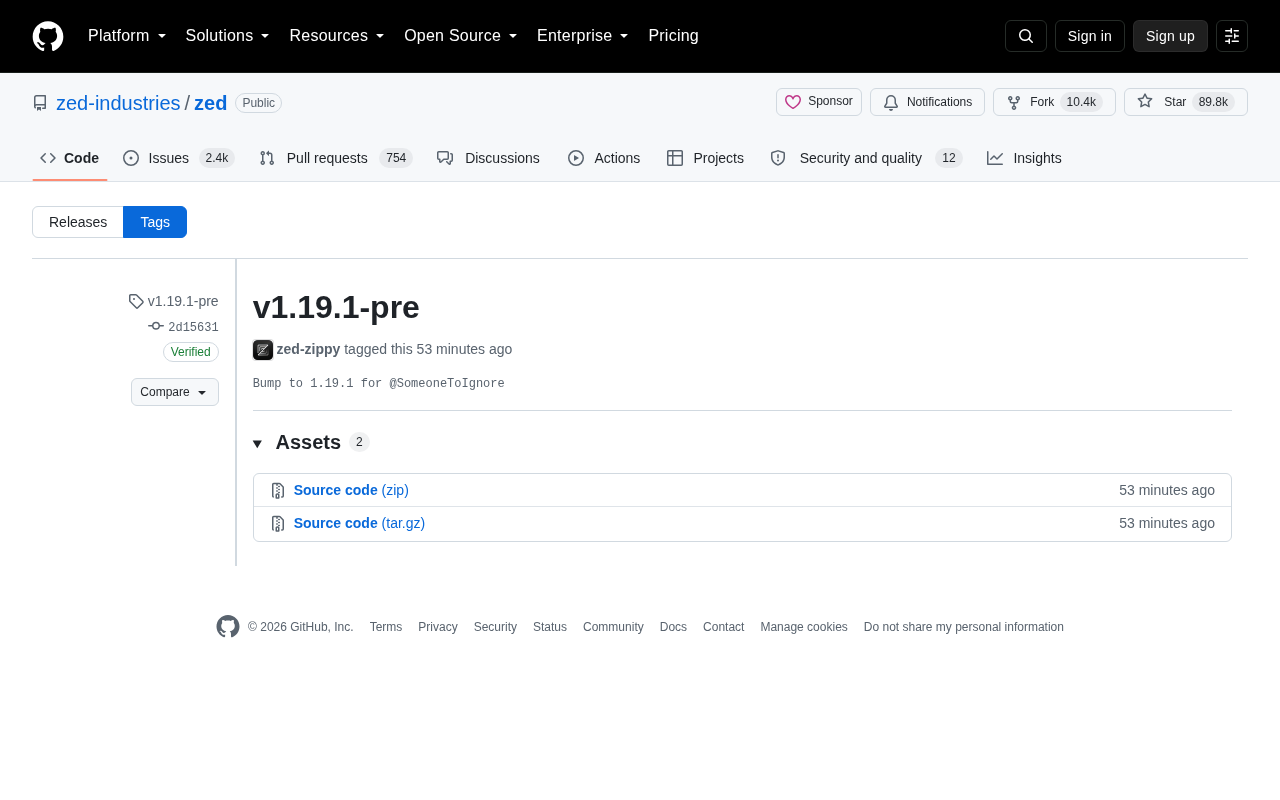
Zed editor releases v1.19.1-pre preview with continued improvements to its Rust-powered high-performance editing experience.
Zed editor has released v1.19.1-pre, a preview version featuring bug fixes and stability improvements in the 1.19.x series. Built entirely in Rust with a custom GPU-accelerated UI framework (GPUI), Zed delivers exceptional performance. The editor stands out with native real-time collaboration powered by CRDT, model-agnostic AI programming integration supporting OpenAI, Claude, Gemini, and local models, and a transparent open-source development process backed by 89.8k GitHub stars.
Zed Editor Gets v1.19.1-pre Preview Update
Zed is a high-performance code editor developed by the Zed Industries team. Thanks to its Rust-based architecture and deeply integrated AI programming capabilities, it has quickly gained traction in the developer community. Rust is a systems-level programming language originally initiated by Mozilla Research, with a core design philosophy of guaranteeing memory safety without sacrificing performance. Through its Ownership System and Borrow Checker, Rust eliminates common errors like data races and null pointer dereferences at compile time—without the runtime overhead of a garbage collector (GC). This means applications written in Rust can achieve execution efficiency close to C/C++ while significantly reducing the risk of memory leaks and crashes. For a code editor—an application that needs to respond to user input within milliseconds while simultaneously handling syntax parsing and file I/O—Rust's zero-cost abstractions and predictable performance provide an ideal foundation. The project has currently earned over 89.8k Stars and 10.4k Forks on GitHub, demonstrating strong community appeal.
Recently, Zed officially released the v1.19.1-pre preview version. This release was published by maintainer zed-zippy on September 4th, with commit hash 2d15631, and has passed GitHub's official GPG signature verification (key ID: B5690EEEBB952194), ensuring the integrity and trustworthiness of the release artifacts. GPG (GNU Privacy Guard) signing is a digital signature mechanism based on asymmetric encryption, widely used for verifying the integrity of software releases. In GitHub's release workflow, maintainers sign release artifacts with their private key, and users can verify the signature's validity using the corresponding public key. By verifying the signature, users can confirm that the version was indeed published by an authorized maintainer and that the contents were not tampered with during transmission. This is especially important in an era of growing supply chain security awareness—multiple software supply chain attacks in recent years (such as the SolarWinds incident and npm package poisoning) have significantly heightened the developer community's focus on software provenance verification.
Positioning of the Preview Version
The -pre suffix in the version number indicates this is a pre-release version, primarily targeting early adopters willing to experience the latest features ahead of time and help with testing and feedback. According to the release notes, this update is marked as "Bump to 1.19.1," which typically indicates bug fixes, minor feature adjustments, or stability optimizations within the 1.19.x series.
The pre-release version reflects Zed's rapid iteration development cadence. Unlike traditional editors, Zed employs a high-frequency rolling release strategy, enabling new features to reach users quickly while collecting feedback from real-world usage through the preview channel to pave the way for stable releases. Rolling Release is a continuous delivery software release model that contrasts with traditional major-version periodic releases. Under this model, new features and fixes are pushed to users in small, frequent increments rather than accumulated over months for a single release. The advantages of this strategy include: shorter wait times for users to access new features, lower risk per release (small change sets make issues easier to isolate), and faster feedback loops. Zed balances speed and stability by maintaining two release channels—Preview and Stable—where the preview channel effectively serves as a public beta testing environment, allowing early adopters to help identify issues before verified updates are pushed to the stable channel. Products like Chrome and Arch Linux also adopt similar multi-channel rolling release strategies.
Zed's Core Technical Advantages
Extreme Performance
Zed's most fundamental differentiator is performance. The editor is written entirely in Rust, paired with a custom GPU-accelerated UI framework, maintaining extremely low latency when opening large files, performing syntax highlighting, and multi-cursor editing. Zed developed its own GPU-accelerated UI rendering framework called GPUI, which is fundamentally different from the traditional approach of using the CPU for interface rendering in most desktop applications. GPUI directly leverages the GPU's parallel computing capabilities to handle text rendering, interface layout, and animation effects, offloading UI drawing tasks to the graphics card. This architecture is similar to a game engine's rendering pipeline, capable of achieving stable high-frame-rate UI refresh.
For developers who have long dealt with the memory consumption and stuttering issues of Electron-based editors, this is an extremely attractive feature. Electron is an open-source framework developed by GitHub that allows developers to build cross-platform desktop applications using web technologies like HTML, CSS, and JavaScript. Well-known applications such as VS Code, Slack, and Discord are all built on Electron. Electron's advantage lies in dramatically lowering the barrier to cross-platform development, allowing web developers to directly reuse their existing frontend tech stacks. However, since each Electron application embeds a complete Chromium browser and Node.js runtime, its baseline memory overhead typically exceeds 200MB, and JavaScript's single-threaded model can easily block the UI thread when handling computation-intensive tasks. In contrast, GPUI's design philosophy represents an important exploration direction for desktop application UI frameworks, and it's precisely the technical motivation behind Zed's choice of Rust + GPU rendering to disrupt the traditional editor experience.
Native Real-Time Collaboration
Zed was designed from the ground up with real-time collaboration as a core feature. Multiple developers can synchronously edit the same codebase just like using Google Docs, offering practical value for pair programming and remote team collaboration.
Real-time collaborative editing needs to solve a core challenge in distributed systems—conflict resolution. When multiple users simultaneously edit different or even the same locations in a document, the system must guarantee that all participants eventually see consistent content. Mainstream solutions include OT (Operational Transformation) and CRDT (Conflict-free Replicated Data Type). Google Docs uses the OT algorithm, which relies on a central server for operation transformation, while Zed employs a CRDT approach, whose advantage is that the data structure itself guarantees eventual consistency, offering better fault tolerance for network latency and offline scenarios. Zed's co-founder Nathan Sobo had already conducted deep research on CRDT applications in text editing during the Atom editor era, and this accumulated expertise has directly translated into one of Zed's core competitive advantages.
Deep AI Programming Integration
Recently, Zed has significantly strengthened its AI-assisted programming capabilities, with built-in support for multiple large language models, allowing developers to invoke AI directly within the editor for code completion, refactoring suggestions, and conversational programming.
AI-assisted programming has become the most important competitive dimension in the developer tools space. GitHub Copilot pioneered bringing large language models into code editors in 2021, followed by Cursor editor's rapid rise through deeper AI integration, while JetBrains also launched its own AI Assistant. Zed's strategy in this arena is to provide a model-agnostic integration framework—users can choose to connect to OpenAI GPT series, Anthropic Claude, Google Gemini, and other models, or even connect to locally deployed open-source models through tools like Ollama. This open architecture avoids vendor lock-in while allowing privacy-sensitive enterprise users to opt for fully localized AI solutions. At the editor level, AI capability competition is evolving from simple code completion toward multi-file editing, codebase understanding, and natural language-driven refactoring.
As the 1.19.x series continues to evolve, these AI capabilities are being continuously refined. Even seemingly routine preview iterations often carry behind-the-scenes refinements to AI interaction experience details.
Development Culture and User Recommendations
Transparent Collaboration Process
The release notes include the annotation "for @SomeoneToIgnore," a detail reflecting Zed's internal team collaboration—version bumps are often driven by specific contributor needs. This transparent, open development process is a key reason why Zed, as an open-source project, attracts a large number of contributors.
Version Selection Advice
For general users who prioritize stability, it's recommended to continue using the official stable release. However, if you're a power user of Zed or want to participate in testing and providing feedback, the preview version is worth trying. If you encounter any issues after installation, you can report them directly to the core team through GitHub Issues.
Summary
While v1.19.1-pre is a routine version update in itself, it reflects Zed's healthy development cadence and vibrant community ecosystem. In the fiercely competitive code editor landscape, Zed is gradually establishing its unique position through Rust-powered extreme performance, native collaboration capabilities, and continuously deepening AI integration. Keeping an eye on its version iterations can help us better grasp the evolution direction of next-generation development tools.
Related articles
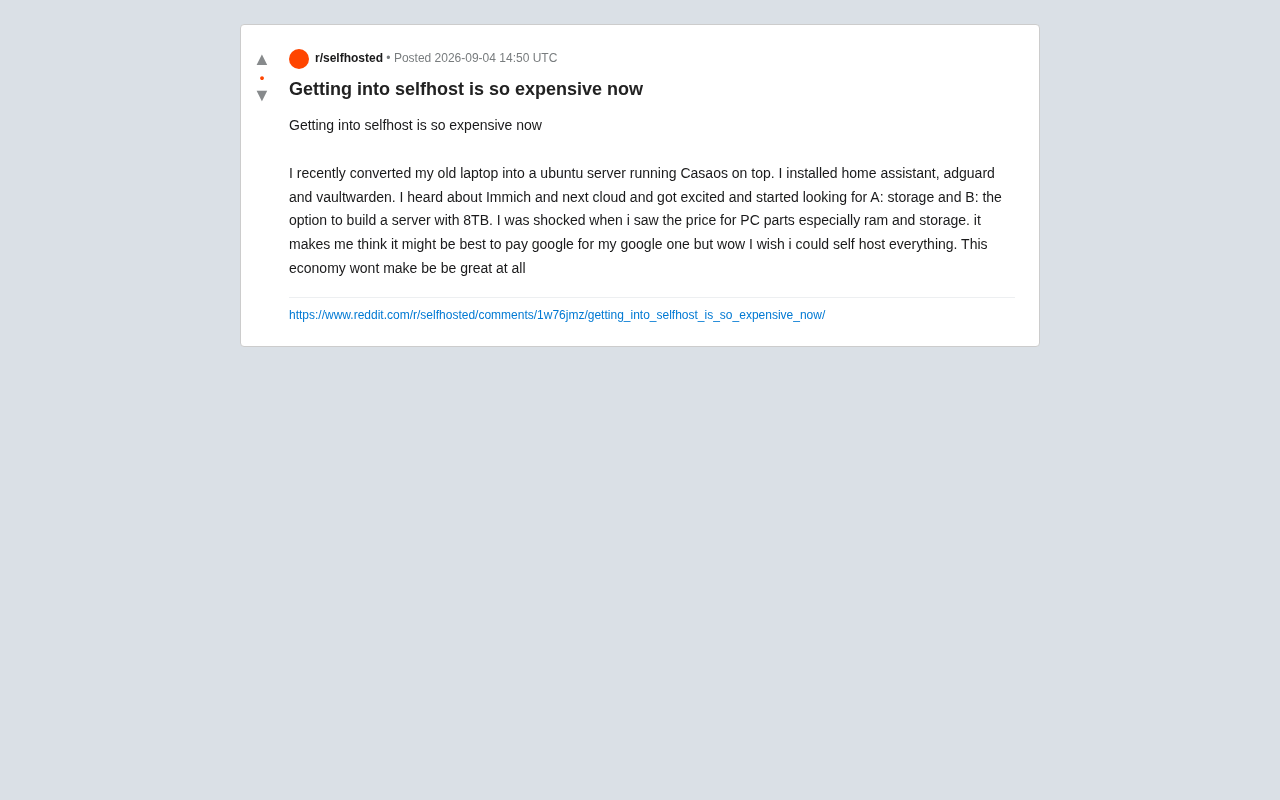
Self-Hosting Hardware Cost Analysis: Does It Really Save Money? A Phased Build Guide
A deep dive into self-hosting hardware costs including storage, RAM, and electricity, compared to cloud subscriptions like Google One, with phased build strategies for budget-conscious users.

Complete Kali Linux Cybersecurity Learning Path from Zero to Practitioner: A Full Guide from Beginner to Hands-On
Complete zero-to-hero cybersecurity learning path covering fundamentals, Kali Linux attack & defense, and hands-on practice including lab setup, penetration testing, CVE reproduction, SRC bug bounties, and CTF competitions.
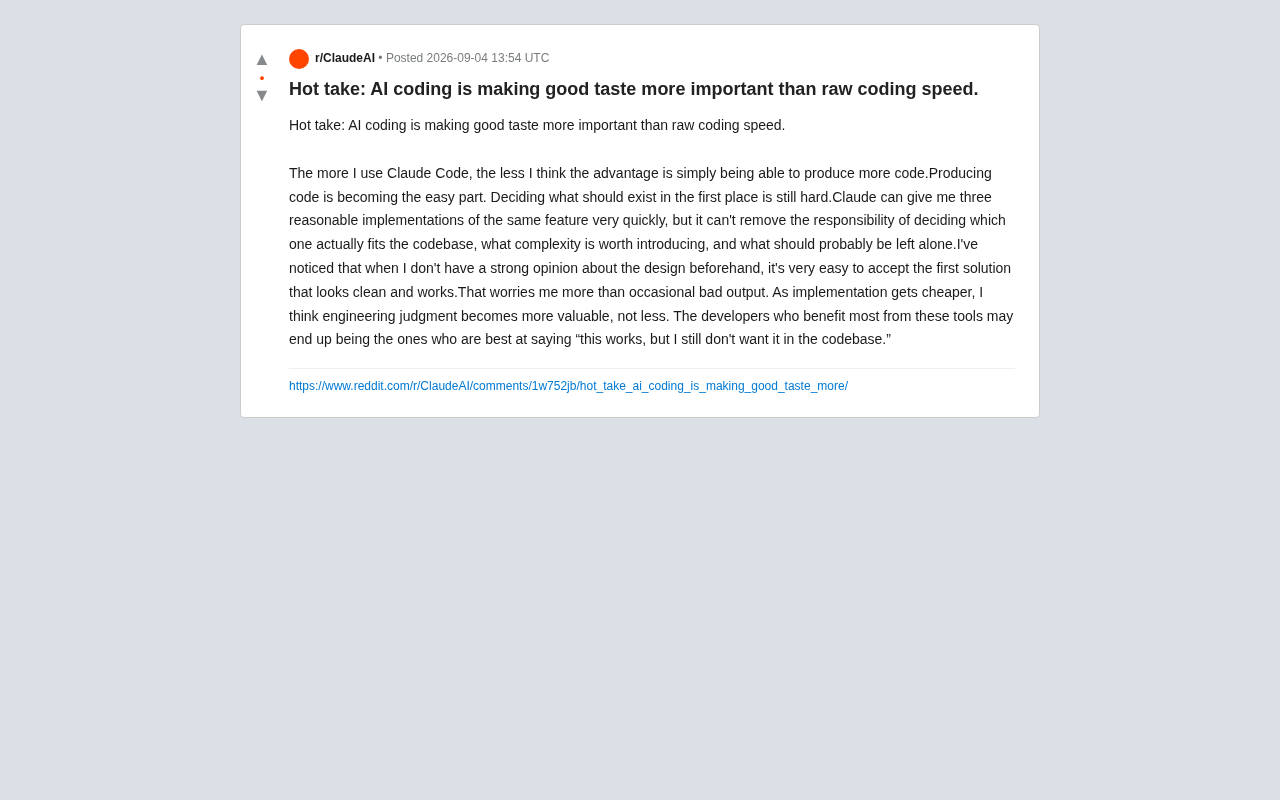
The AI Coding Era: Engineering Taste Matters More Than Code Velocity
AI coding tools make code generation easy, but raise the bar for decisions. Learn how developers can cultivate engineering taste through architectural consistency, complexity sensitivity, and strategic deletion.