Zhipu GLM-4.5 Free Usage Tutorial: Full-Stack Development + PPT Generation + Claude Code in Practice

Zhipu releases GLM-4.5: ranked 3rd globally, top among open-source models, with free web access and ultra-low API pricing.
Zhipu AI's GLM-4.5 model ranks third globally and first among both Chinese and open-source models, with API pricing as low as ¥0.8 per million tokens. The free web version offers full-stack development and PPT generation features, while developers can top up just ¥6.9 to pair the API with Claude Code for a high-value programming workflow, dramatically lowering the barrier to accessing top-tier AI capabilities.
Introduction
Zhipu recently released its latest open-source model, GLM-4.5, which ranks third globally in overall capability while claiming the top spot among both Chinese domestic models and open-source models. The news immediately attracted widespread attention. More importantly, this model doesn't just shine on benchmarks — the web version is free to use, and the API pricing is significantly cheaper than competitors.
Zhipu AI was founded in 2019, incubated from the Knowledge Engineering Group (KEG) at Tsinghua University's Department of Computer Science, with its core team hailing from Tsinghua. Starting from the earliest GLM-130B, the company has gone through multiple iterations including ChatGLM and GLM-4, gradually transitioning from academic research to commercial deployment. GLM (General Language Model) employs a unique autoregressive blank-filling pre-training paradigm that differs from both GPT's pure autoregressive approach and BERT's pure masked language model, delivering strong performance on both understanding and generation tasks. The release of GLM-4.5 marks another major breakthrough for Zhipu in the open-source large model space, reflecting the rapid catch-up of Chinese AI companies in foundational model development.
This article will walk you through getting started with GLM-4.5 from scratch: how to use the free web version for full-stack development and PPT generation, and how to spend just ¥6.9 to integrate it with Claude Code for a programming workflow — all explained step by step.
GLM-4.5's Core Strengths: A Globally Third-Ranked Open-Source Model
Rankings & Comparisons: Surpassing Kimi and Qwen
GLM-4.5 has secured the position of third globally, first among Chinese models, and first among open-source models in overall average scores. In the open-source model track, it has outperformed a host of domestic competitors including Kimi and Qwen, with virtually no rival except Claude. Zhipu has also released comparison test data against Qwen and Kimi, and the gap is quite evident.
The "overall average score" mentioned here typically comes from a weighted aggregation of multiple authoritative benchmarks, including MMLU (Massive Multitask Language Understanding), HumanEval (code generation), GSM8K (mathematical reasoning), GPQA (graduate-level Q&A), and more. Currently, widely-used leaderboards include LMSYS Chatbot Arena (ELO ranking based on human blind evaluation), Open LLM Leaderboard (maintained by Hugging Face for open-source models), and evaluation systems built by individual vendors. It's worth noting that different leaderboards vary in their evaluation dimensions and methodologies — a single ranking cannot fully reflect a model's real-world performance, and users should conduct hands-on testing based on their specific use cases.
It's helpful here to explain the difference between open-source and closed-source models. Open-source models publicly release their model weights, architecture, and sometimes even training data, allowing developers to freely download, deploy, and modify them. In contrast, closed-source models (such as OpenAI's GPT-4o and Anthropic's Claude) only provide services through APIs without revealing core technical details. The advantages of open-source models include local deployment capability, data privacy control, and continuous community optimization; the disadvantage is that they typically lag behind top closed-source models in performance. The fact that GLM-4.5 can top the open-source track and approach closed-source model performance means the performance gap between open-source and closed-source is rapidly narrowing — a development with profound implications for the entire AI industry ecosystem.

API Pricing: As Low as ¥0.8 per Million Tokens
Pricing is another ace up GLM-4.5's sleeve. API costs start at just ¥0.8 per million input tokens and ¥2 per million output tokens, placing it in the top tier of low-cost options among mainstream models. For individual developers and small teams, the barrier to using a top-tier open-source model has been dramatically lowered.
For readers unfamiliar with token-based pricing, here's a quick primer. A token is the basic unit that large language models use to process text. In Chinese, one character is typically encoded as 1-2 tokens; in English, a common word is roughly 1 token, while longer or rarer words may be split into multiple tokens. API billing is divided into "input tokens" and "output tokens": input is the prompt and context you send to the model, and output is the response generated by the model. Taking GLM-4.5's price of ¥0.8 per million input tokens as an example, processing approximately 500,000-700,000 Chinese characters costs just ¥0.8. By comparison, GPT-4o's input price is approximately $2.5 per million tokens (about ¥18), a difference of over 20x — GLM-4.5's price advantage is clear.
This dramatic price drop is not an isolated case. China's first-tier large model players currently include Zhipu (GLM series), Alibaba (Qwen series), Moonshot AI (Kimi/Moonshot series), DeepSeekAd, Baidu (ERNIE Bot), ByteDance (Doubao), and others. Fierce competition has directly driven rapid capability improvements and continuous price decreases — in early 2024, the price per million tokens was still in the tens of yuan range, but by mid-2025 it had dropped to single digits or even lower, dubbed a "price war" by the industry. For developers and users, this is undoubtedly good news, meaning access to top-tier AI capabilities at extremely low cost is becoming reality.
Free Web Version: Full-Stack Development & PPT Generation
Zhipu offers two ways to use the model: a web version and an API. The web version is accessible directly at z.ai — just log in and start using it for free, no top-up or card binding required. The web version includes several practical built-in modes, with "Full-Stack Development" and "PPT Generation" being the most worth trying.

Full-Stack Development Mode: Let AI Write Front-End and Back-End Code with a Single Sentence
The full-stack development mode is the most impressive feature in the GLM-4.5 web version. It can handle complete front-end plus back-end development with a built-in runtime environment — just describe what you want in one sentence and GLM's Agent mode will write the code for you. The experience is very similar to the previously viral Manus.
The Agent mode mentioned here is one of the key paradigms in current AI applications. Unlike traditional single-turn Q&A, an AI in Agent mode possesses the ability to autonomously plan, invoke tools, and execute multi-step tasks. Its core workflow is: receive user goal → decompose the goal into subtasks → sequentially invoke tools such as code executors, file systems, web search, etc. to complete each subtask → aggregate results and deliver the final output. Manus is a general-purpose AI Agent product that attracted widespread attention in early 2025, known for its powerful autonomous task execution capabilities. GLM-4.5's full-stack development mode adopts a similar Agent architecture with a built-in code sandbox runtime environment, capable of automatically writing, executing, and debugging code — this is the technical foundation that enables it to "generate a complete website from a single sentence."
The underlying technology behind the "built-in runtime environment" is a Code Sandbox. A code sandbox is an isolated execution environment, typically implemented using containerization technology (such as Docker) or WebAssembly, allowing AI-generated code to be instantly compiled and run in a securely isolated environment without affecting the host system's security. This technology solves a core pain point in AI programming: users don't need to configure any local development environment to see real-time code execution results. Similar technical solutions are widely adopted by online IDEs like Replit and CodeSandbox, and combining them with large language model code generation capabilities has been a major trend in AI programming tools during 2024-2025.
Taking "create a simulated Bing homepage" as an example, the entire workflow looks like this:
- Automatic task decomposition: After you state your requirement, GLM automatically generates a clear to-do list
- Sequential execution with checkmarks: Each completed feature is automatically marked off before moving to the next
- Delivery of complete results: After all tasks are finished, the generated website is fully functional with polished animations
In testing, the generated Bing simulation site was highly faithful in appearance, the search functionality was fully working, and the displayed content was real and accessible. Beyond websites, you can also use natural language descriptions to create small games, interactive 3D landscape scenes, and other complex projects — most can be generated in one shot without repeated debugging.
PPT Generation Mode: Say Goodbye to Late-Night Slide Decks
Anyone who frequently makes presentations should definitely try this feature. Just describe your needs in one sentence, and GLM-4.5 will automatically generate a logically clear, beautifully formatted presentation.

The generated PPTs have several highlights:
- Content aligned with requirements — not randomly assembled filler
- Supports online editing — click any element to modify it
- Supports export and download — save locally via "Share → Save as PDF"
Compared to traditional PPT workflows, the efficiency improvement is orders of magnitude better, especially suitable for rushing out reports or proposal presentations.
API + Claude Code: Building a High-Value Programming Workflow
If you're a developer, GLM-4.5's API combined with Claude Code creates a very practical programming workflow. Currently the API has no free tier, but you can start with a minimum top-up of just ¥6.9.
Claude Code is a command-line AI programming tool from Anthropic. It runs in the terminal environment and can directly read and modify local project files, execute Shell commands, run tests, and more. Unlike IDE plugins such as GitHub Copilot, Claude Code functions more like an "AI pair programming partner" that can understand the entire project context and perform complex cross-file operations. One of its important features is support for configuring custom API endpoints and models through environment variables, meaning you can replace the underlying language model from the default Claude to other models compatible with the OpenAI API format — such as GLM-4.5. This flexibility allows developers to significantly reduce model calling costs while retaining Claude Code's excellent interaction experience.
This model replacement is possible because the OpenAI API-compatible format has become the de facto standard in the large model industry. OpenAI originally defined a set of RESTful API interface specifications (including endpoints like /v1/chat/completions), and due to its first-mover advantage and broad developer ecosystem, virtually all subsequent model providers (including Zhipu, DeepSeek, Mistral, etc.) have chosen to be compatible with this interface format. This means developers only need to change the API endpoint address and key to seamlessly switch between different models without modifying application-layer code. This standardization greatly reduces model migration costs and has also spawned API gateway projects like OneAPI and LiteLLM that help developers manage calls to multiple models in a unified way.
Step 1: Verify Node.js Environment
Make sure Node.js is installed locally with version 20 or above. Node.js is a JavaScript runtime environment based on Chrome's V8 engine that allows JavaScript to run on the server side outside of browsers. In the AI development toolchain, Node.js plays an important infrastructure role: many AI programming tools (including Claude Code) are built on Node.js because its npm ecosystem provides rich package management capabilities, and its asynchronous non-blocking I/O model is well-suited for network-intensive tasks like API calls. The requirement for Node.js 20+ is because this version introduced native fetch API support, an improved ES module system, and other modern features that new-generation AI tools depend on.
How to check:
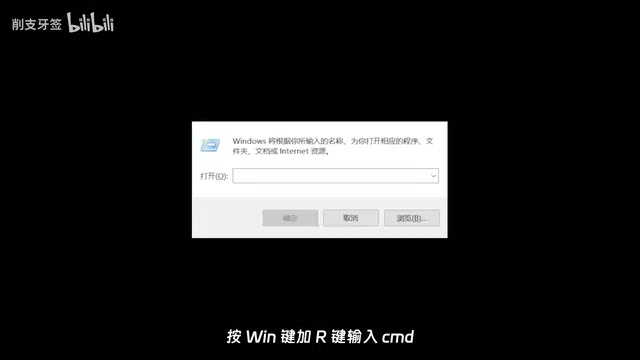
- Press
Win + R, typecmdto open the command line - Enter
node -vto check the version number - If not installed, download and install from the Node.js official website
Step 2: Install Claude Code
Open a terminal window (such as PowerShell) and enter the installation command to complete the Claude Code installation.
Step 3: Configure Zhipu API Key
- Visit the Zhipu BigModel official website
- Click "Developer Documentation" → "Scenario Examples"
- Obtain your API Key through the page link
- Configure environment variables in Claude Code and enter your API Key
- Type
claudeto launch — done
An API Key (Application Programming Interface Key) is a unique string used for authentication, functioning like your "digital pass." When your application sends a request to Zhipu's servers, the API Key tells the server "who this request is from," enabling usage tracking and billing. It's particularly important to safeguard your API Key — don't hardcode it in public code repositories or share it with others, as this could lead to unauthorized usage of your quota. Best practice is to store API Keys in environment variables or dedicated secret management tools.
Once configured, you can directly call GLM-4.5 within Claude Code's interactive environment for code generation, project scaffolding, and various other development tasks. This combination balances Claude Code's interaction experience with GLM-4.5's cost advantage, making it one of the most cost-effective AI programming solutions currently available.
Summary: Who Should Use GLM-4.5, and How to Choose
The release of GLM-4.5 has elevated the practicality of Chinese open-source large models yet another notch. Whether it's the free web version for full-stack development or the low-cost API service, both genuinely lower the barrier to entry.
General users: Go straight to the web version — full-stack development and PPT generation are both free, giving you zero-cost access to experience a top-tier open-source model's capabilities.
Developers: Top up ¥6.9 for API access, pair it with Claude Code to build a programming workflow — the value far exceeds comparable solutions.
In an era of increasingly fierce competition among Chinese large models, GLM-4.5 delivers real impact to the market through both capability and pricing. If you haven't tried it yet, now is the perfect time to get started.
Related articles
 Tutorials
ChatGPT Plus Subscription Guide: Are GPT-5.5, image-2, and Codex Worth the Upgrade?
A detailed look at ChatGPT Plus features — GPT-5.5, image-2, and Codex — with a Plus vs Pro comparison and a complete step-by-step subscription guide for users outside the US.
 Tutorials
Harness AI Engineering in Practice: Using Claude Code to Master Enterprise-Level E-Commerce Development
Deep dive into Harness AI Engineering: master enterprise e-commerce development with Claude Code using the Rules, Skills, Wiki, and Changes framework.
 Tutorials
Cursor + Codex Dual-IDE Collaboration: A Practical Methodology for Open-Source Project Customization
A complete methodology for open-source project customization based on real-world experience, detailing the Cursor+Codex dual-IDE workflow, seven-stage process, MVP validation, and AI source code reading techniques.