Zuckerberg Admits AI Progress Falls Short of Expectations: The Industry Truth Behind the Layoffs

Zuckerberg admits AI agents fell short, exposing the industry truth behind the layoffs.
Meta cut 8,000 jobs to fund a $145B AI push, yet Zuckerberg admits AI agents fell short of expectations. From OpenAI to Google, tech giants are collectively reflecting on AI's limits. Research shows AI's impact on jobs is selective — hitting entry-level workers first — while organizational adoption lags far behind technical capability.
A Deeply Contradictory AI Narrative
Meta laid off 8,000 employees and reassigned another 7,000 to AI teams — which, in corporate euphemism, means "you still have a job, but don't get too comfortable." Yet a few months later, in a livestreamed interview, Zuckerberg looked into the camera and said: AI will not replace human workers, and that outcome is not inevitable.
These remarks stand in sharp contrast with Meta's own actions. When the company laid off thousands of people, the official justification was its massive investment of nearly $145 billion in AI infrastructure. Notably, this investment flows primarily into GPU compute clusters centered on NVIDIA H100/H200, self-built data centers, and Meta's in-house MTIA dedicated AI chips.
MTIA (Meta Training and Inference Accelerator) is Meta's in-house ASIC (Application-Specific Integrated Circuit). Unlike NVIDIA's general-purpose GPUs, an ASIC is deeply optimized for specific computational tasks, offering clear advantages in inference efficiency and energy consumption. Google's TPU and Amazon's Trainium/Inferentia have followed similar paths.
The economic logic behind bringing chips in-house is far more complex than it appears on the surface. General-purpose GPUs provide highly parallel computing power for matrix operations, but the price of that flexibility is that a large number of transistors are devoted to general-purpose logic control, resulting in energy waste on specific inference tasks. By hardcoding a specific computation graph at the silicon level, an ASIC can reduce inference latency by 30–50% while compressing the energy consumption per inference to a fraction of that of a GPU. In hyperscale scenarios involving billions of inference requests per day, this translates into differences in electricity costs of hundreds of millions of dollars. The deeper logic behind this chip-internalization trend is this: as AI inference scales up, cloud computing and GPU procurement costs will become long-term profit-eroding factors, and the giants are attempting to compress marginal costs by controlling the compute layer, thereby achieving economic viability in hyperscale AI deployment. Capital expenditure of this magnitude, in accounting terms, almost inevitably requires corresponding cuts in labor costs to maintain the profit margins shareholders expect. In other words, layoffs and AI investment are, at the financial level, highly coupled decisions — not purely technical judgments. When the very person who issued layoff notices to employees in the name of AI turns around and says AI won't replace humans, the statement sounds deeply ironic.
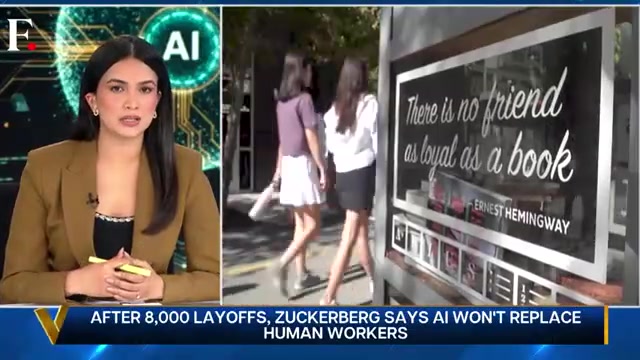
This may be the biggest contradiction in Silicon Valley today: the people building the machines don't seem to trust the technology themselves.
Behind Closed Doors: What the Executives Actually Said
At an internal all-hands meeting, Zuckerberg admitted something quite different: progress on AI agents has not been as fast as he expected, and this round of layoffs was not exactly "clean."
What are AI agents, and why are they so hard to deploy? An AI agent is an AI system capable of autonomously perceiving its environment, formulating plans, and executing multi-step tasks. It is regarded as the next major form of large language model (LLM) applications. LLMs themselves are based on the Transformer architecture, learning language patterns by "predicting the next most likely token" from vast amounts of text data — mainstream models such as GPT-4, Claude, and Gemini have parameter counts reaching hundreds of billions or even trillions, with training costs often in the hundreds of millions of dollars. Unlike traditional AI, which can only passively respond to a single instruction, agents can call external tools, browse the web, write and execute code, and even coordinate other AI subsystems — theoretically capable of completing complex workflows that previously required continuous human judgment.
At the engineering implementation level, AI agents typically adopt a "plan–tool call–feedback" loop architecture. A typical framework is ReAct (Reasoning + Acting), proposed by researchers at Princeton and Google in 2022. Its core idea is to interleave a language model's reasoning and actions — the model not only generates answers but also produces a traceable chain of thought, calls external tools to obtain feedback after each decision step, and then revises its next reasoning step accordingly. The AutoGPT paradigm goes further, allowing an agent to autonomously decompose goals and recursively invoke subtasks. But in practice, models are found to be highly prone to getting stuck in unproductive loops or drifting off-goal.
The engineering predicament of agents is laid bare in real-world test data. Stanford University's 2024 AgentBench benchmark showed that even the most advanced GPT-4-class models achieve an end-to-end success rate of less than 30% on complex tasks requiring cross-system coordination — a figure far below the reliability threshold required for enterprise-grade deployment (which typically demands over 99% success on critical workflows). One of the core challenges for agents is "context management for long-horizon tasks": although the context windows of today's mainstream large models have expanded to 128K or even a million tokens, as the task chain lengthens, judgment errors made by the model in early steps get amplified exponentially with the number of iterations — the engineering community calls this "error cascading." Every tool call may introduce latency, errors, or unexpected outputs, and the model lacks a reliable mechanism to distinguish between "the tool returned noise" and "the tool returned valid information." In addition, agents in enterprise environments face the "permission boundary" problem: when an agent needs to access an ERP system, a CRM database, or execute financial operations, there is a fundamental conflict between the enterprise's IT security policies and the dynamic permissions the agent requires — a system-integration problem that cannot be solved by improving model capabilities alone. This is precisely the technical root of Zuckerberg's internal admission that "progress fell short of expectations."
Meta's Chief Technology Officer even described the progress of the company's new AI division as "atrocious." It's worth mentioning that Meta had previously experimented with monitoring software that tracked employees' mouse movements and keystrokes. This triggered a strong backlash, and Meta subsequently suspended the project, with executives clarifying that employee data had not been used to train AI. But as someone aptly pointed out: "Trust is not like software — it does not update automatically."
The Era of Collective "AI Reflection" Among Tech Giants
Meta is not an isolated case. This has almost become a microcosm of the major tech giants collectively reassessing the limitations of AI:
- OpenAI's Sam Altman: autonomous agents are not yet reliable enough;
- Microsoft's Satya Nadella: Copilot still requires human oversight to function effectively;
- Google: admits its AI still struggles with basic reasoning tasks;
- Amazon: has adopted a more cautious, wait-and-see attitude;
- Anthropic's Dario Amodei: warns that the hallucination problem in AI systems remains prominent and cannot be trusted on its own in high-stakes scenarios.
Why is AI hallucination so hard to eliminate? Hallucination refers to a large language model generating factually incorrect or fabricated content in a highly confident tone — an inherent flaw of all current mainstream generative AI systems. The root cause lies in how LLMs work: the model is essentially predicting "the next most likely token" rather than retrieving facts from a verifiable knowledge base. This mechanism dictates that the model's output is a statistically "plausible continuation" rather than a logically "correct answer." When the model encounters a question insufficiently covered by its training data, it does not say "I don't know" but instead tends to generate content that sounds plausible.
The severity of the hallucination problem can be corroborated by concrete data: In 2023 testing, the Stanford HAI team found that even top-tier legal AI tools had a hallucination rate as high as 69% when citing real case rulings. Google DeepMind's "factuality benchmark" (FactScore) showed that even GPT-4, on biography-generation tasks, produced accurate factual statements only about 73% of the time. Researchers have tried to mitigate this through techniques such as retrieval-augmented generation (RAG) and chain-of-thought prompting. RAG dynamically retrieves external knowledge bases at inference time (typically based on vector databases such as Pinecone or Weaviate) to provide the model with factual anchors, thereby reducing the probability of unfounded generation. However, RAG is no panacea: when the retrieval results deviate semantically from the question, the model may ignore the correct document and still hallucinate; moreover, RAG cannot resolve errors at the level of reasoning logic — it can only mitigate gaps at the level of knowledge.
The mitigation approach the industry currently places the highest hopes in is "test-time compute scaling" — having the model perform extensive internal "draft" reasoning before producing output (as done by OpenAI's o1/o3 series), trading compute for accuracy. However, the cost of this approach is a significant increase in inference latency and cost, making it difficult to apply in real-time interactive scenarios. More cutting-edge directions include reinforcement learning from human feedback (RLHF) and direct preference optimization (DPO), used to align model outputs during the post-training stage. But RLHF carries a "reward hacking" risk: the model may learn to generate outputs that sound satisfying but are actually incorrect, because human annotators sometimes favor fluent, confident answers over accurate, cautious ones — a phenomenon known as "over-alignment." There is an essential difference between how current LLMs store knowledge parametrically (knowledge distributed and encoded in weights) and the "verifiable fact retrieval" that humans expect, and this architectural-level gap is difficult to fully bridge through engineering patches in the short term. This flaw is especially harmful in high-stakes scenarios such as medical diagnosis, legal documents, and financial decision-making — because hallucinated content is often formally flawless and extremely hard for non-experts to identify. This is the core technical reason why the AI tools of every major company still require human oversight.
The signal that emerges from these statements is consistent: the AI revolution is quietly hinting to you — for now, don't put too much faith in the hype.
Technical Capability ≠ Organizational Deployment Reality
This phenomenon is not limited to the tech industry. Automotive giant Ford introduced AI for quality control, only to rehire 350 human engineers afterward, because the machines couldn't meet production requirements. The Commonwealth Bank of Australia and IBM likewise adjusted their earlier hiring plans, shifting the focus back to human capital.
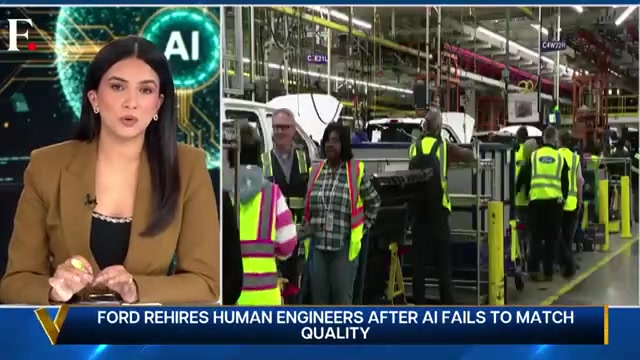
The crux of the problem is this: we have conflated technical capability with organizational deployment reality. Just because AI can complete a certain task does not mean an enterprise can immediately restructure its entire operating system around it.
The Cambridge Centre for Alternative Finance found that 81% of surveyed institutions had adopted AI in some form, but only 14% said the technology had genuinely transformed their organizational strategy. This figure reveals a long-standing phenomenon in technology management known as the "Adoption Gap" — one not unique to AI. In fact, Technology Diffusion Theory was systematized as early as 1962 by sociologist Everett Rogers, who used an S-curve to describe how new technology penetrates from early adopters to the mainstream market. Rogers divided adopters into five categories: innovators (2.5%), early adopters (13.5%), early majority (34%), late majority (34%), and laggards (16%). Management scholar Geoffrey Moore further discovered that technology often faces a statistically significant discontinuity when moving from early adopters to the early majority, which he called "The Chasm." AI is currently at this crossing stage: enterprise deployment faces three interlocking sources of resistance — the technical debt of legacy systems and data silos, the labor cost of retraining employee skills, and the time it takes to build organizational trust around AI outputs. In high-stakes decision scenarios, organizations need to accumulate a sufficient history of validated AI outputs before incorporating them into formal decision chains, and this process cannot be accelerated through technical means. AI models can draft reports, summarize meetings, and write code, which is indeed impressive. But deploying AI at scale across an entire organization is far from as simple as downloading an app. Enterprises need to reshape their workflows, and even more, they need to be confident that AI won't "confidently fabricate facts" halfway through a critical project.
Technology evolves in months, but organizations evolve in years — that is the real bottleneck.
What the Data Reveals: AI's Impact Is Selective
The most convincing evidence comes from research institutions. Yale University's Budget Lab analyzed U.S. employment trends since the launch of ChatGPT, and its conclusion was: there has been no statistically significant, economy-wide disruption to the labor market.
The Cambridge Centre for Alternative Finance found that 81% of surveyed institutions had adopted AI in some form, but only 14% said the technology had genuinely transformed their organizational strategy.
However, economists at the Dallas Fed uncovered a different side of the story: among occupations with high AI exposure, employment among young workers aged 22 to 25 declined by about 13%.
Why are entry-level young workers the first to bear the brunt? This phenomenon has its own deep internal logic. Economists refer to entry-level positions as the "first rung of the career ladder" — in traditional organizational structures, these roles are not just a buffer for the labor supply but also carry the core function of knowledge transfer and the accumulation of tacit experience: by handling real business problems, newcomers gradually internalize industry judgment through making and correcting mistakes — a process that classroom education cannot replace. And these are precisely the kinds of tasks that today's AI excels at: clearly defined rules, high repetitiveness, and outputs that can be quickly verified — junior data analysis, basic code review, simple copywriting, standard contract drafting, and the like.
Researchers at Stanford's Human-Centered AI Institute (HAI) call the resulting structural problem "talent pipeline hollowing." This issue has a theoretical counterpart in the management literature: Organizational Capability Theory holds that an enterprise's core competitiveness is built through the accumulation of experience and transfer of knowledge within the organization, rather than relying purely on technical tools. Michael Polanyi's concept of "tacit knowledge" is especially crucial here — the vast body of judgment that junior employees accumulate through handling real business problems, which cannot be documented, is precisely what gets passed down across generations through entry-level positions.
This problem has alarming precedents in other industries. The U.S. Nuclear Regulatory Commission issued a report in the 2010s noting that, because the stagnation of nuclear power construction from 1980 to 2000 led to a prolonged shrinkage of entry-level positions in the industry, a large amount of tacit engineering knowledge was permanently lost along with retiring engineers, and could not be rebuilt through documentation or training. A 2024 report from the McKinsey Global Institute likewise noted that the "efficiency-first" orientation in current AI deployment strategies leads enterprises to favor using AI to replace the most easily quantifiable junior tasks, rather than using AI as a tool to help junior employees grow faster — two strategies whose short-term financial performance differs little, but whose impact on organizational capability over a ten-year horizon is starkly different. When this tier is replaced at scale by AI, enterprises that ten years from now need senior talent with deep judgment will find themselves facing a supply vacuum, because the cultivation pipeline has been cut off for so long. The deeper social consequence is this: entry-level positions have traditionally provided a channel for upward mobility for young people from non-elite educational backgrounds; AI's erosion of this tier could systematically worsen the inequality structure of the labor market, concentrating the gains of technological change even more among those who already possess advanced skills.
These data points seem contradictory but in fact point to the same reality — they are simply observing different layers of the economy. The overall labor market remains robust, but entry-level knowledge workers are the first to bear the impact. AI automation is not happening uniformly; it is happening selectively, concentrated especially in entry-level positions.
Therefore, the question truly worth asking is not "Will AI replace humans?" but rather: Which people? Which jobs? And how fast?
Historical Lessons: Major Disruptions Never Happen Overnight
Every major technological revolution has brought disruption, but disruption rarely happens overnight.

The history of electricity gives us the most sobering reference. The electric motor was invented as early as the 1880s, but it took nearly 40 years for U.S. manufacturing to truly transition from steam power to electricity. Economic historian Paul David, in his 1990 paper "The Dynamo and the Computer: A Historical Perspective" published in the American Economic Review, systematically documented this phenomenon, attributing the delay to three interlocking factors: first, the accumulation of complementary innovations — factories had to wait for supporting technologies such as electrical controls, safety standards, and distribution networks to mature; second, the slowness of capital stock replacement — machinery from the steam era had depreciation cycles spanning decades, and enterprises would not rashly replace equipment that still had residual value; third, the incompressibility of organizational learning — factories in the steam era were laid out centrally around a central drive shaft, whereas electricity allowed each machine to be driven independently, requiring enterprises to thoroughly restructure plant buildings, division of labor among workers, and even management hierarchies. Managers needed time to understand this new production organization logic, and such understanding could not be automatically obtained by purchasing equipment. David called this phenomenon the "Productivity Paradox of General Purpose Technology": there is a historical delay, difficult to compress, between the time a technology itself is ready and the time society completes the systemic reorganization around it.
This pattern shows a striking cross-era consistency throughout the history of technology. Electricity did not eliminate the factory; it redesigned it. The internet did not eliminate the office; it fundamentally changed how the office operates. The personal computer was already widespread by the late 1970s, but the true realization of the "paperless office" was delayed until the mid-1990s, again because of the lagging adaptation of organizational processes, employee skills, and regulatory frameworks. It is worth noting that in every wave of general-purpose technology, the time gap between "the technology is declared ready" and "productivity data shows improvement" has historically averaged about 15–25 years. This means that AI's true contribution to macro-level productivity may appear in the data much later than the market expects — the GPU clusters are already in place, but AI-native workflow design, mature regulatory frameworks, and the reconstruction of labor skills are all still in their early stages, and these are the variables that truly determine the pace of AI penetration. AI will very likely follow the same path.
This is exactly what both the "doomsday" and "boom" camps overlook. AI probably won't take everyone's jobs tomorrow, but no position will remain forever secure either. The future belongs neither purely to humans nor purely to machines, but to those who learn to make the two work together.
Artificial intelligence may be accelerating, but one line is worth chewing on again and again: "It's one thing to declare to the world that AI will replace humans; it's another thing entirely to explain why you had to hire the humans back."
Key Takeaways
Related articles

Disaster and Glory of the Apollo Program: The History We Must Revisit Before Returning to the Moon
From the fatal Apollo 1 fire to Apollo 8's daring lunar orbit to Apollo 11's successful landing—revisiting the disasters, fears, and compromises of the Apollo program and their lessons for today's return to the Moon.

Netflix Trust Exercise Turns Into Firing Trap: Where Are the Boundaries of Corporate Trust?
A Netflix employee was fired after sharing private info in a trust exercise. We analyze the risks of corporate trust exercises and how employees can protect themselves.

AMD CDNA5 Architecture Deep Dive: Technical Evolution and the AI Computing Competition Landscape
Deep analysis of AMD's CDNA5 architecture covering Chiplet packaging upgrades, HBM memory evolution, and low-precision compute optimization, examining how AMD challenges NVIDIA's AI chip dominance.