Trending content
Running Gemma LLM in Godot with GDScri…
A developer runs the Gemma LLM inside Godot 4 using only GDScript and Vulkan compute shaders — no llama.cpp or external dependencies. A technical breakdown of how it works.
DeepSeek V4 Flash GA launches soon with native vision support; OpenAI admits GPT-5.6-Soul reasoning budget was quietly cut; Anthropic reopens Fable 5; ByteDance C-Dance 2.5 generates 3-min 4K video.
Google Finance officially exits Beta with a new Android app and AI-powered natural language Q&A. A deep dive into the upgrade's highlights and competitive impact.
The AI Whale Fall: How Big Players' Tr…
The "AI Whale Fall" reveals a hidden industry symbiosis: giants like OpenAI and Meta spend billions training models, and their open weights and research continuously nourish the open source ecosystem.
YouTrackDB Deep Dive: Core Features an…
YouTrackDB is a general-purpose object-oriented graph database combining OOP paradigms with graph data models, supporting classes, inheritance, and polymorphism for knowledge graphs, social networks, and recommendation systems.
Master 8 core AI concepts — LLM, Token, Context Window, Prompt, Tool, Agent, MCP, and Agent Skill — and understand the complete logic chain behind AI's evolution.
Google's AMIE Medical AI: Disease Mana…
Google published research in Nature showing its conversational medical AI, AMIE, matches primary care physicians in complex disease management. A deep dive into the technology, evaluation methodology, and real-world implications.
LibTV's 'Screenshot to Promo Video' Skill lets designers generate promo videos by simply uploading a mockup — no prompts, no MCP setup required.
The 'One-Step Trap' in AI Research: Wh…
What is the 'One-Step Trap' in AI research? A deep dive into how greedy thinking locks research directions, the limits of incremental improvements, and how multi-step planning and exploration-exploitation balance enable real breakthroughs.
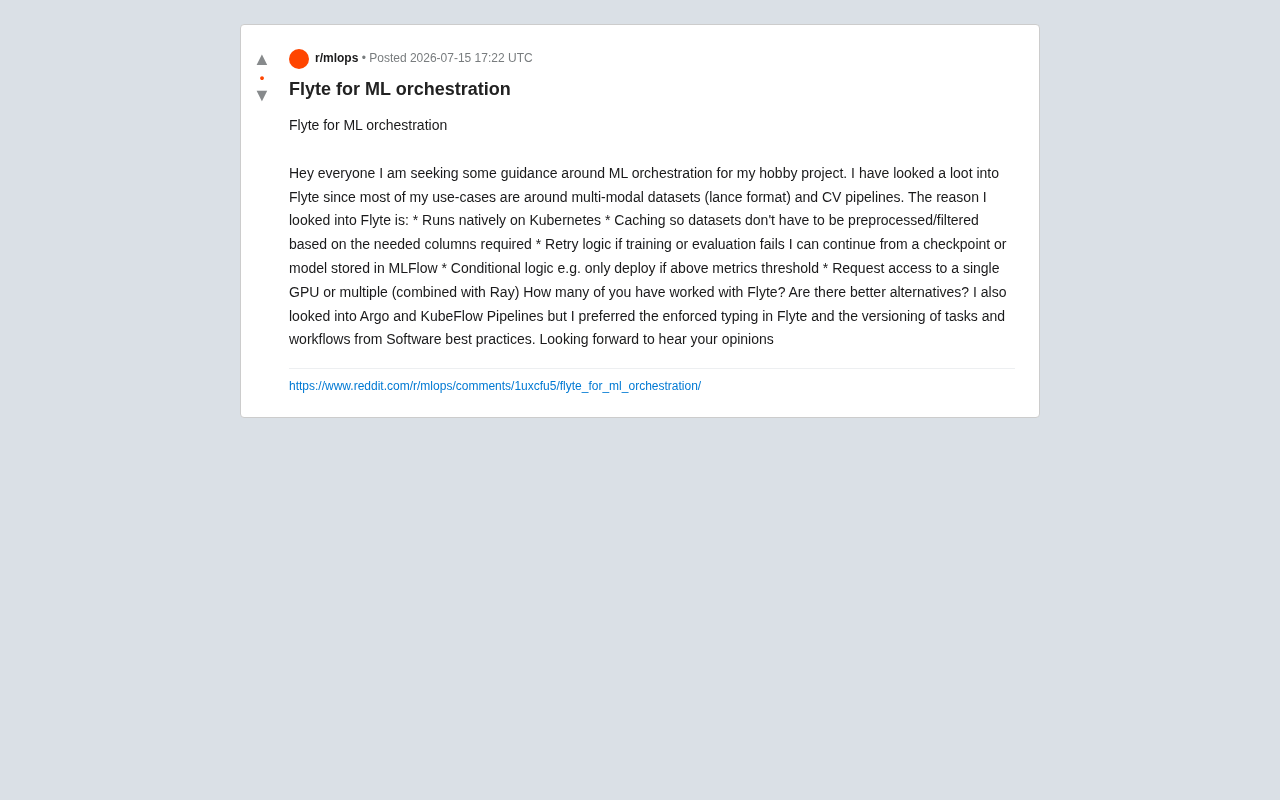
Deep dive into Flyte's core capabilities: cloud-native GPU scheduling, intelligent caching, checkpoint recovery, and conditional deployment — plus a full comparison with Argo and KubeFlow Pipelines.
A deep dive into global vs. per-image normalization in deep learning, with remote sensing segmentation case studies covering data leakage, Min-Max vs. Z-score, and best practices for multi-channel satellite imagery.
A structured zero-to-one roadmap for AI Agent development: Phase 1 covers Python & LLM basics, Phase 2 tackles five core Agent capabilities and LangChain/LangGraph, Phase 3 delivers hands-on RAG projects.
GitHub Daily · July 23: The Duet of Ru…
GitHub Trending July 23: block/buzz tops the chart with 3,252 stars, Rust dominates system tools, and AI Agents shift from tools to parallel collaborators.
Perplexity Integrates Forge Private Ma…
Perplexity integrates Forge Global private market data into Perplexity Computer, enabling direct queries on pre-IPO valuations. A deep dive into the strategy, data moat logic, and AI's push into professional financial research.
Using Claude for Constrained Optimizat…
How Claude and LLMs assist constrained optimization research — from problem modeling to solver integration. An honest look at AI's real capabilities and limits in automated science.
Want free Vizuara 'Modern Robot Learning from Scratch' course notes? This guide covers official channels, GitHub resources, and recommends free courses like UC Berkeley CS285.
How can linguistics or translation majors transition into NLP engineering? This article compares three pathways and offers a phased strategy covering core skills, project building, and job hunting tips.
The True Nature of Moving Fast: Freque…
"Moving fast" isn't recklessness — it's intellectual humility. This article explores the shared logic behind Agile, MVP, and AI iteration: true arrogance is believing you don't need to be tested.
The NYT vs. OpenAI copyright lawsuit escalates into a trust crisis over training data retrieval. Did OpenAI mislead the court? A deep dive into AI data governance.
Google Invests $1.5 Billion to Expand …
Google announces $1.5B phased expansion of its Jackson County, Alabama data center campus. Explore the site selection logic, AI compute race, and community impact.