#AI programming team
1743 related articles

·4 min
From Claude Code to Claude Tag: How AI Programming Tools Break Out of Engineering Teams
Anthropic's Boris Cherny and Cat Wu discuss how Claude Code expanded from engineering teams company-wide, the Claude Tag platform strategy, and the launch of Claude Fable 5.
Read more →

·2 min
Flock: Building an AI Development Squad with Claude Code to Reshape Team Programming Workflows
Flock is a multi-agent development tool built on Claude Code. With roles like Planner, Coder, Tester, and Reviewer, it turns AI coding into a traceable development pipeline.
Read more →

·3 min
MiniMax Code Hands-On Review: How AI Development Team Mode Redefines Programming Collaboration
In-depth review of MiniMax Code (MCode) Agent Team collaboration through Starbucks financial visualization and Next.js website development cases.
Read more →

·2 min
Claude Code Artifacts Explained: How AI Programming Enables Team Collaboration
Anthropic launches Artifacts for Claude Code, turning coding processes into interactive shareable webpages. Explore PR walkthroughs, dashboards, UX prototypes, and the shift from individual productivity to team collaboration.
Read more →
 Tutorials
·3 min
Vibe Engineering in Practice: AI Evolves from Code Generator to Programming Teammate
A deep dive into Vibe Engineering principles: context engineering, sub-agent collaboration, autonomous testing loops, plus OpenAI's case study of a 12-hour Kotlin-to-Rust rewrite.
Read more →
 Tutorials
·4 min
Codex Team Reveals a New AI Programming Paradigm: Organizational Skills Replace Coding Skills
OpenAI's Codex team shows AI programming now prioritizes organizational skills over coding. Learn the four paradigm shift signals, efficient workflows, and how developer roles are being reshaped.
Read more →

·4 min
WebMCP in Practice: How MakeMyTrip Is Reshaping the Travel Booking Experience
India's largest OTA platform MakeMyTrip uses WebMCP to standardize AI Agent interactions with web apps, replacing fragile DOM scraping with natural language-driven test automation and simplified complex booking scenarios.
Read more →

·4 min
WebMCP in Practice: How MakeMyTrip Is Reshaping the Travel Booking Experience
India's largest OTA platform MakeMyTrip uses WebMCP to standardize AI Agent interaction with web apps, solving DOM scraping fragility, enabling natural language test automation, and simplifying complex international flight bookings.
Read more →

·3 min
Gemini 3.1 Pro Rate Limiting Exposed: Why Paying Users Can't Actually Use Their Full Quota
Deep analysis of Google Gemini 3.1 Pro's rolling window rate limiting, revealing the massive gap between paper quotas and actual usability for paying subscribers.
Read more →

·3 min
Gemini 3.1 Pro Rate Limiting Exposed: Why Paid Users Can Never Use Their Full Quota
Deep analysis of Google Gemini 3.1 Pro's rolling window rate limiting, revealing the gap between paper quotas and real usability for paid AI subscribers.
Read more →

·2 min
Gemini Always Crashes on the 16th Turn? Error 1076 Root Cause Analysis and Workarounds
Google's Gemini consistently triggers Error 1076 on the 16th conversation turn, regardless of context size. Analysis points to a session state management defect, with three workarounds provided.
Read more →

·3 min
The Real Daily Life of MLE and MLOps Engineers: Key Differences Between Three Roles and Career Paths
An in-depth look at the real daily work of data scientists, MLEs, and MLOps engineers — covering responsibilities, essential tools, and career paths to help you find your direction in AI.
Read more →

·2 min
The Truth Behind Codex 'Build a Website in 5 Minutes': AI Isn't Creating Sites—It's Helping You Copy Them
Exposing the truth behind viral Codex 5-minute website videos: creators aren't building original sites with AI—they're copying shared prompts or scraping others' work. Learn AI coding tools' real limits.
Read more →

·5 min
A Beginner's Guide to Prompt Engineering: From One-Off Instructions to a Systematic Methodology
A beginner's guide to prompt engineering covering the four functions of prompts, the key differences from prompt engineering, a six-step systematic workflow, and critical technical and practical limitations.
Read more →
·3 min
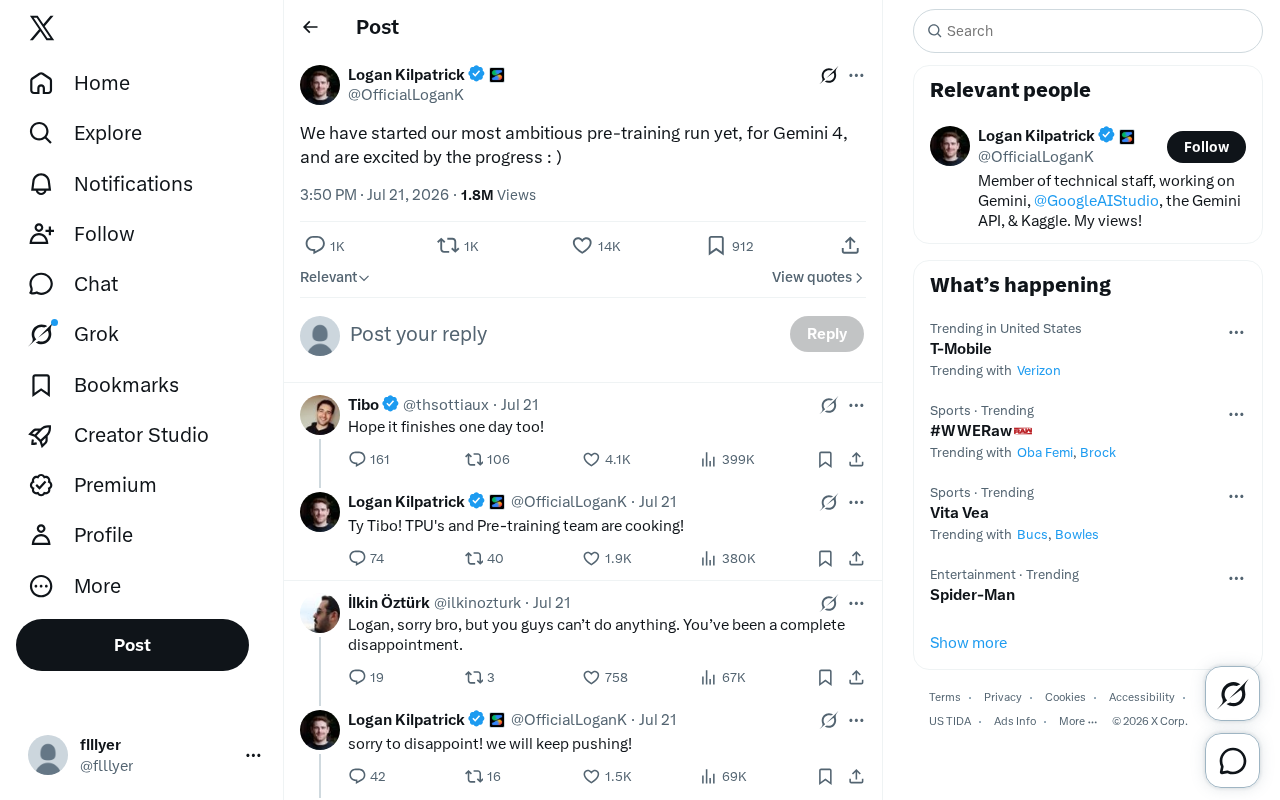
Google Launches Gemini 4 Pre-training: Its Most Ambitious AI Model Training Yet
Google DeepMind announces Gemini 4 pre-training has begun, calling it their most ambitious training yet. A deep dive into its technical direction, compute scale, multimodal breakthroughs, and competitive impact.
Read more →
·3 min
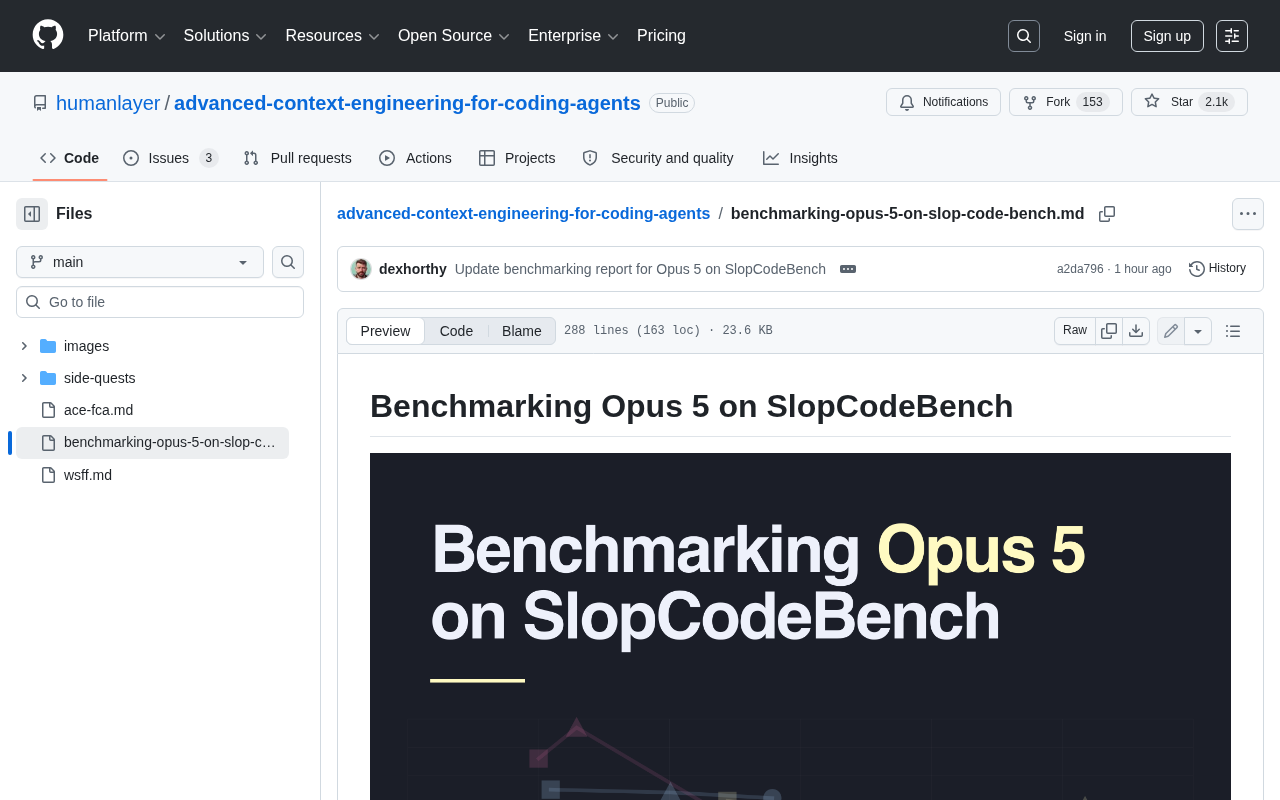
SlopCodeBench: Why AI Code Benchmarks Are Failing
SlopCodeBench sparks deep reflection on AI code evaluation. From benchmark contamination to pass-rate pitfalls, exploring why current benchmarks fail to measure real code quality.
Read more →

·2 min
Why 'Clean Code' Author Uncle Bob No Longer Reviews AI-Generated Code Line by Line
Clean Code author Robert C. Martin no longer reviews AI-generated code line by line, shifting to test-driven verification. We explore the logic, debate, and implications.
Read more →

·3 min
Grok 4.5 Feels Weaker in Cursor? A Deep Dive into AI Coding Tool Integration Differences
Users report Grok 4.5 underperforms in Cursor vs. the official terminal. We analyze how system prompts, context management, parameters, and tool calling create AI coding tool integration gaps.
Read more →

·3 min
Claude Opus 5 Officially Released: Performance Approaching the Top Tier as the Open-Weight Debate Heats Up Again
Anthropic releases Claude Opus 5 with near-frontier performance at lower prices. Same day, Jensen Huang co-signs open-weight letter with 20+ companies while DeepSeek fundraising rumors surface.
Read more →

·3 min
Chinese Open-Source AI Conquers Silicon Valley: The Industry Upheaval Behind a 58% Compute Share
Chinese open-source AI models surged from under 10% to 58% of U.S. AI consumption. Kimi K3, DeepSeek, and Qwen are reshaping AI cost structures as DoorDash, Airbnb, and other Silicon Valley giants adopt them at scale.
Read more →