#Anthropic Routines
27 related articles
Alibaba Open-Sources Code Review Tool …
·5 min
Alibaba Open-Sources Code Review Tool open-code-review: Deterministic Pipeline + LLM Dual-Engine Analysis
Alibaba open-sources code review tool open-code-review, using a hybrid architecture of deterministic rule pipelines and LLM Agents. Supports line-level comments, OpenAI/Anthropic APIs, battle-tested at Alibaba scale, written in Go, fully free and open-source.
Read more →

·8 min
LangChain Crash Course: A Complete Roadmap from Zero to Agent Development
A systematic roadmap from LangChain and LangGraph to multi-agent development, covering RAG, Tool Calling, MCP, and more, helping developers break into AI app development.
Read more →
Agentty: An 11MB Lightweight Claude Co…
·2 min
Agentty: An 11MB Lightweight Claude Code Alternative Built with C++26
Agentty is an open-source AI coding assistant written in C++26, compiling to just 11MB. Positioned as a drop-in alternative to Claude Code, it explores lightweight, native-first AI tooling.
Read more →

·6 min
AI Agent Development in Go: A Hands-On Guide to ByteDance's Eino Framework and Its Seven Core Capabilities
Build production-grade AI Agents with a pure Go stack using ByteDance's Eino framework. A deep dive into seven core capabilities: multi-Agent orchestration, long-task execution, command approval, RAG, MCP, Skills, and database reporting.
Read more →

·6 min
GPT-5.6 Now Widely Available: The Era of Three-Tier Models and Multi-Agent Orchestration Arrives
OpenAI releases GPT-5.6 (SOUL/TERRA/LUNA), with Ultra mode running four agents in parallel; Meta launches Muse Spark 1.1 with million-token context; ChatGPT desktop unifies Chat, Work, and Codex.
Read more →

·6 min
Gas Town: A Multi-Agent Workspace Manager Built in Go
Gas Town is an open-source multi-agent workspace manager built in Go with 16,000+ GitHub Stars. This article analyzes its architecture, Go language advantages, and typical multi-agent collaboration scenarios.
Read more →

·4 min
Why Is Skill Breaking Out of Software Development? Uncovering the Underlying Structure of Knowledge Work
Skill isn't just for programmers — it's crossing industry lines to become the operational foundation for entire organizations. This article unpacks the three cores of knowledge work, explores legal, research, and finance use cases, and examines how a Skill Library becomes a core enterprise AI asset.
Read more →

·5 min
AI-Native Team Practices: How Anthropic Engineers Achieved an 8x Productivity Boost
Anthropic's Fiona Fung shares how AI tools drove an 8x increase in engineer code output, and how AI-native teams are rethinking management, quality, and collaboration.
Read more →

·6 min
Claude Team Edition Launches as Encrypted Reasoning Controversy Sparks AI Transparency Debate
Anthropic launches Claude for team collaboration while encrypted reasoning controversy erupts. Plus Sakana AI's routing model and OpenAI's alignment research breakthroughs.
Read more →

·4 min
Claude Code New Features Deep Dive: Remote Control, Multi-Agent Parallelism, and Auto Memory
Deep dive into Claude Code's major new updates: Remote Control for session takeover, Auto Mode to reduce interruptions, multi-agent code review, Auto Memory, and Routines for cloud automation workflows.
Read more →
·8 min
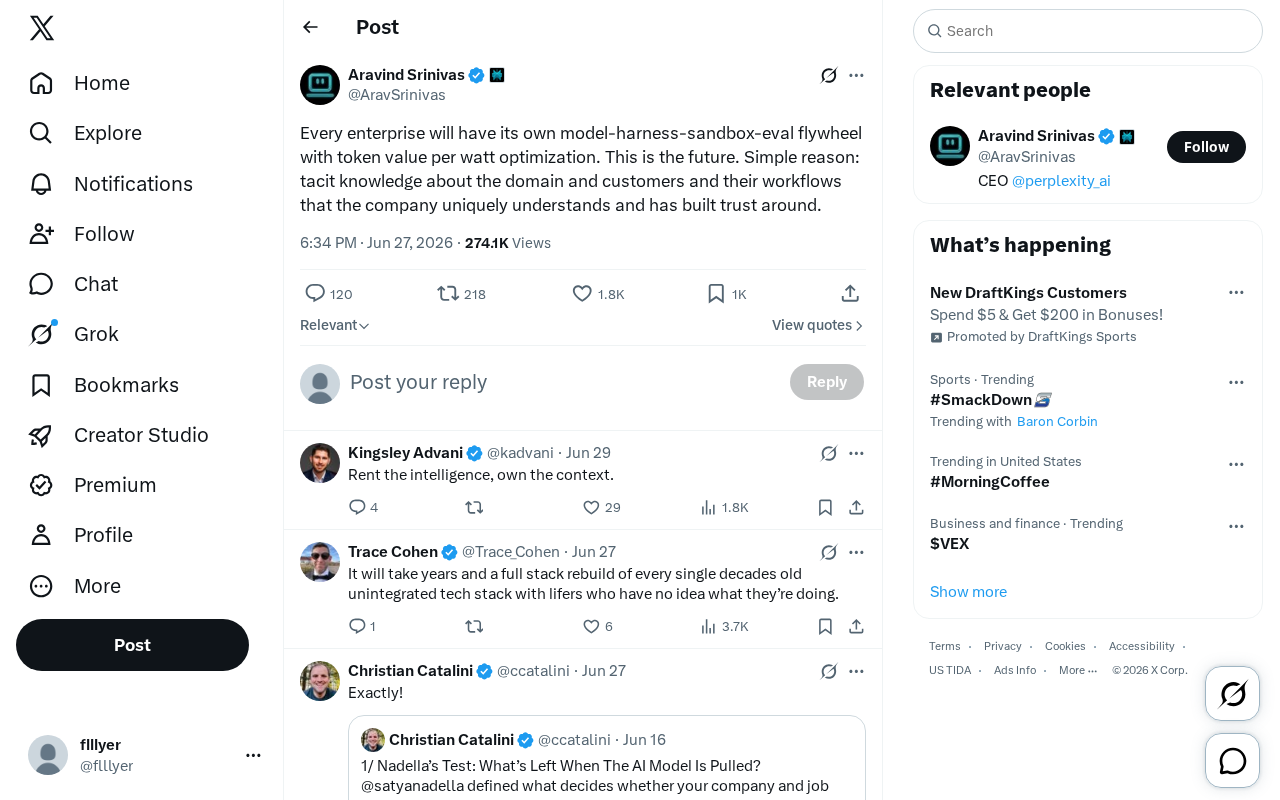
The Enterprise AI Flywheel: Building a Model-Eval Loop as a Competitive Moat
The core of enterprise AI isn't calling general models—it's building a self-reinforcing "model-harness-sandbox-eval" flywheel. This article analyzes the four components, tacit knowledge moats, and the "token value per watt" efficiency metric.
Read more →

·4 min
Deep Dive into Hermes Agent Architecture: Loop Mechanism, Memory System, and Gateway Design
Deep dive into Hermes Agent's core architecture: Agent Loop mechanism, three-layer memory system (Markdown/SQLite/external), Gateway multi-platform integration, context compression, and Cron jobs.
Read more →

·3 min
Claude Code Routines Explained: Automation in Practice with Proactive AI Coding Agents
Deep dive into Claude Code Routines: build proactive AI coding agents with time-scheduled and event-driven triggers. Covers automated docs, deploy verification, and on-call investigation.
Read more →

·3 min
Codex Record & Replay Plugin: Record Once, Auto-Generate Reusable Skills
Explore OpenAI Codex's Record & Replay plugin that captures mouse and keyboard actions via MCP server to auto-generate reusable, shareable Skills for zero-code RPA automation.
Read more →
·3 min
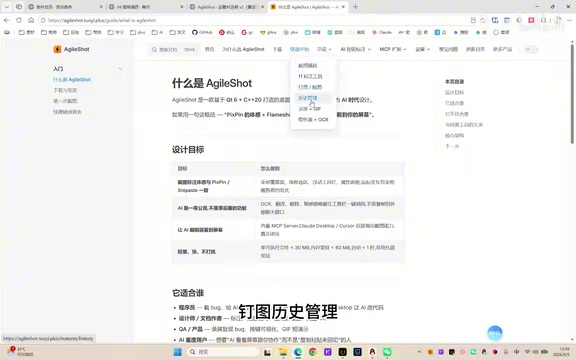
A Giant Shot: An AI Screenshot Tool with Built-in MCP That Lets AI Directly Control Your Computer
A Giant Shot is a desktop screenshot tool with a built-in MCP Server, offering 11 annotation tools, smart OCR, AI chat, and desktop automation for Cursor and Claude Desktop.
Read more →

·4 min
A Practical Guide to Loop Engineering: Pain Points and Solutions in Automated AI Coding Workflows
Deep dive into Loop Engineering: core mechanisms, three major pain points (reliability, cost, context bloat), and Harness workflow solutions including mixed model strategies and Human in the Loop.
Read more →

·4 min
Claude Code in Practice: Complex Payment Feature Built in 4 Hours for $60
A detailed walkthrough of Claude Code + Opus 4.7 in action: from CCSwitch setup to model configuration, completing a complex payment feature in 4 hours for $60 with zero hand-written code.
Read more →

·2 min
Claude Code at One Year: A Programming Revolution from Single Agent to Agent Army
Claude Code turns one. From running thousands of Agents in parallel to Auto Mode replacing Plan Mode, explore how Anthropic's team is reshaping AI coding workflows.
Read more →

·2 min
Claude Proactively Discovers Bugs in an Open-Source Library: AI Evolves from Coding Assistant to Collaborator
Simon Willison releases asyncinject 0.7, fixing bugs proactively discovered by Claude. This case shows AI evolving from passive coding assistant to active code reviewer and collaborator.
Read more →
From Prompt Engineer to Loop Architect…
·2 min
From Prompt Engineer to Loop Architect: The Paradigm Shift in AI Programming
Explore the paradigm shift from prompt engineering to loop architecture in AI programming. Learn about Anthropic's Routines, the six elements of mature coding loops, and token cost strategies.
Read more →