#Anthropic enterprise AI
1224 related articles
·2 min
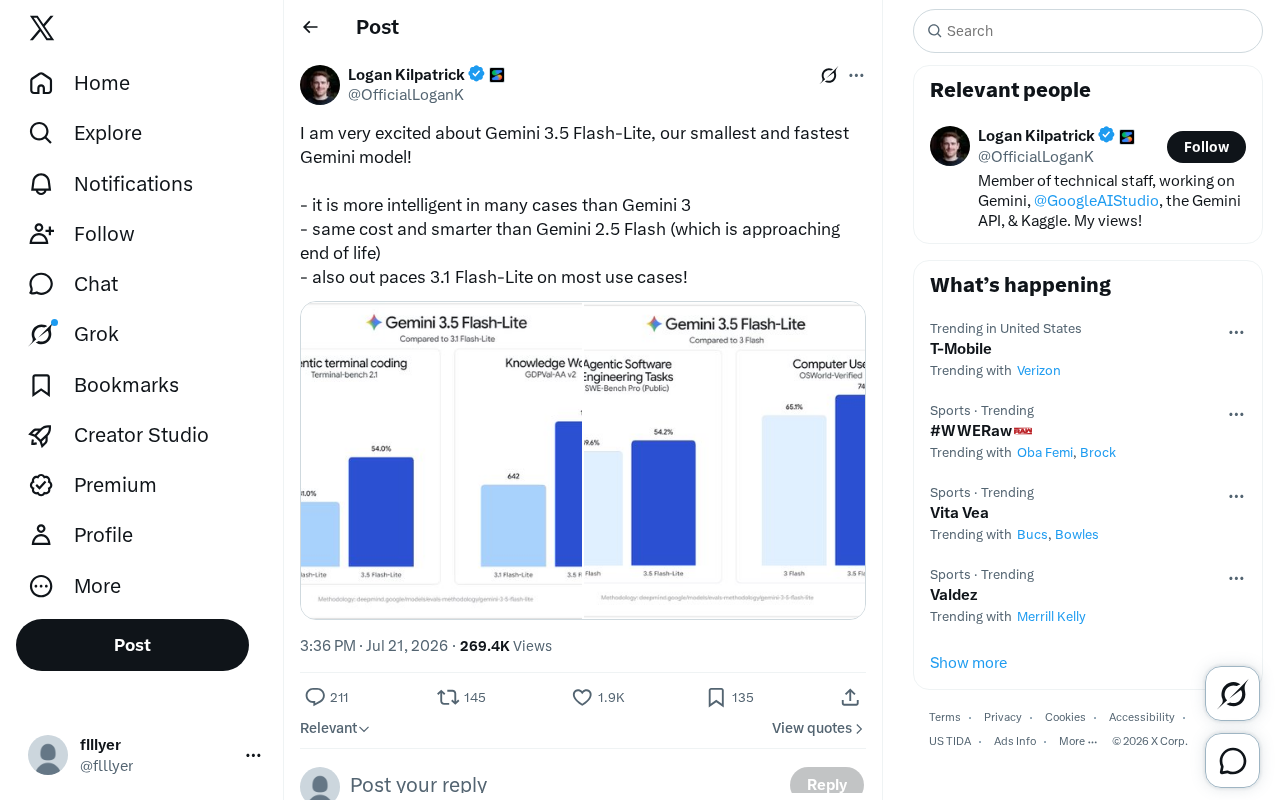
Gemini 3.5 Flash-Lite Released: The Smallest, Fastest Model Outperforms Gemini 3
Google launches Gemini 3.5 Flash-Lite, its smallest and fastest AI model that outperforms Gemini 3 in most scenarios. Learn about its key advantages, cost benefits, and impact on developers.
Read more →

·4 min
A Beginner's Guide to AI Agents: Core Principles and Learning Paths Explained
Learn AI Agent core principles from scratch: understand how Agents differ from LLMs, their execution mechanisms, why rule design matters, and find the right learning path for your goals.
Read more →

·3 min
Poolside Laguna Model Launch: Can Silicon Valley's Open-Source Push Catch Up to China's AI?
Poolside launches Laguna open-weight model after 18 months of silence, pitting 118B parameters against Kimi K3's 2.8 trillion. Can Silicon Valley's open-source push close the gap with Chinese AI?
Read more →

·3 min
Chinese Open-Source AI Conquers Silicon Valley: The Industry Upheaval Behind a 58% Compute Share
Chinese open-source AI models surged from under 10% to 58% of U.S. AI consumption. Kimi K3, DeepSeek, and Qwen are reshaping AI cost structures as DoorDash, Airbnb, and other Silicon Valley giants adopt them at scale.
Read more →

·3 min
Kimi K3 Launch: Performance Rivaling Claude at One-Third the Price, US-China AI Gap Narrows to 3 Months
Moonshot AI launches Kimi K3 reasoning model with performance rivaling Claude and OpenAI's top models at one-third the price. The US-China AI gap narrows from 6-12 months to just 3 months.
Read more →

·3 min
Claude Shared Links Indexed by Google: Privacy Risks and Protection Guide
Claude's shared conversation links and Artifacts may be crawled and indexed by Google, exposing sensitive information publicly. Learn the technical causes and how to protect yourself.
Read more →
·3 min
Claude Shared Links Indexed by Google: Privacy Risks and Protection Guide
Claude's shared conversation links and Artifacts may be crawled and indexed by Google, risking sensitive data exposure. Learn the technical causes and how to protect yourself.
Read more →

·3 min
Open Source vs. Closed Source: Who Will Win the US-China AI Battle?
Chinese open-source models DeepSeek and Kimi K3 are challenging OpenAI's closed-source dominance. Analyzing the business logic, chip ecosystems, and US-China strategic dynamics behind the open vs. closed AI debate.
Read more →

·3 min
After 6 Billion Tokens, Here's What I've Learned About AI Agents
A power user who consumed over 6 billion Tokens shares real insights on AI Agents, exploring spending money, investing time, and managing life changes with AI.
Read more →

·2 min
Getting Started with Codex: A Practical Guide to OpenAI's AI Programming Assistant with Tips to Avoid Common Pitfalls
A detailed guide to OpenAI Codex's core features and setup, comparing it with Claude Code, plus practical tips for configuring DeepSeek and avoiding common pitfalls.
Read more →

·3 min
Cursor Alternatives Compared: A Guide to 5 AI Coding Tools
Compare 5 Cursor alternatives — from GitHub Copilot and Windsurf to open-source Cline and Continue — covering model freedom, workflow integration, cost, and privacy.
Read more →

·4 min
AI Agent Development in Practice: A Complete Path from Zero to Production
A systematic guide to AI Agent development covering core modules, framework selection, tool calling, data preparation, and production deployment to help developers build production-ready Agent applications.
Read more →
·4 min
A Beginner's Guide to AI Agents: Core Principles and Learning Paths Explained
A beginner's guide to AI Agents: understand core principles, how Agents differ from LLMs, their execution mechanisms, and get tailored learning path recommendations.
Read more →

·3 min
Agent Skills Explained: Solving the MCP Context Bloat Problem
Deep dive into Anthropic's Agent Skills mechanism, explaining how Progressive Disclosure solves MCP context bloat and tool calling accuracy issues in AI agents.
Read more →

·3 min
Is Ollama Pro Worth It? An In-Depth Comparison of the $20 Subscription vs. API Costs
In-depth analysis of Ollama Pro's $20/month subscription value, comparing usage quotas, equivalent API costs, and ZDR privacy policy to help developers decide if it's worth it.
Read more →

·2 min
The AI Model Race Heats Up: Reasoning Becomes the New Battleground — A Deep Dive into Flagship Model Showdowns
Deep analysis of the AI model race: from parameter competition to reasoning competition, examining tiered reasoning mechanisms, benchmark limitations, and how to rationally interpret model rankings.
Read more →

·5 min
The Complete Guide to AI Agent Development: A Four-Stage Progressive Roadmap
A systematic guide to AI Agent development across four stages: LLM fundamentals, ReAct paradigm, memory & tools, and multi-agent collaboration for developers.
Read more →

·3 min
Jensen Huang's First Tweet Backs AI Open Source — But It's Really About NVIDIA's Ecosystem Anxiety
Jensen Huang's first tweet backs AI open source, but behind it lies NVIDIA's deep anxiety over CUDA ecosystem displacement. We analyze why open-source models matter and what's really at stake.
Read more →

·3 min
Poolside Laguna Model Release: Can Silicon Valley Open Source Catch Up with Chinese AI?
Poolside releases its Laguna open-weight model after 18 months of silence, challenging Moonshot's Kimi K3 with 118B vs 2.8T parameters. Can Silicon Valley close the gap with Chinese AI?
Read more →

·3 min
Why Is Every Company Rushing to Embrace AI? A Multi-Layered Analysis of Capital, Technology, and Marketing
Why is every company embracing AI? A deep dive into valuation premiums, FOMO, lower API barriers, and marketing hype — plus how to spot real AI value vs. gimmicks.
Read more →