#Augment
1837 related articles

·2 min
Real-Time Data Augmentation for Single-Class Segmentation Models: Frequency, Combinations, and Boundary Precision Explained
How many augmentations per image is enough? This guide breaks down on-the-fly augmentation strategy for single-class segmentation with 3,000 labeled images, covering controlled mixing, domain matching, and mask boundary precision.
Read more →

·3 min
Understanding RAG from Scratch: A Complete Guide to Retrieval-Augmented Generation
RAG (Retrieval-Augmented Generation) is a key technology for solving LLM hallucinations. This guide breaks down how RAG works, its advantages, and real-world use cases — no math required.
Read more →

·6 min
AI Job Displacement Fears Cool Down: Why Tech Giants Are Collectively Pivoting to the 'Augmentation' Narrative
Silicon Valley tech giants are quietly abandoning the doomsday 'AI destroys jobs' narrative in favor of AI augmentation and human-AI collaboration. A deep analysis of the reality gap, regulatory pressure, and business logic behind this reversal.
Read more →
·2 min
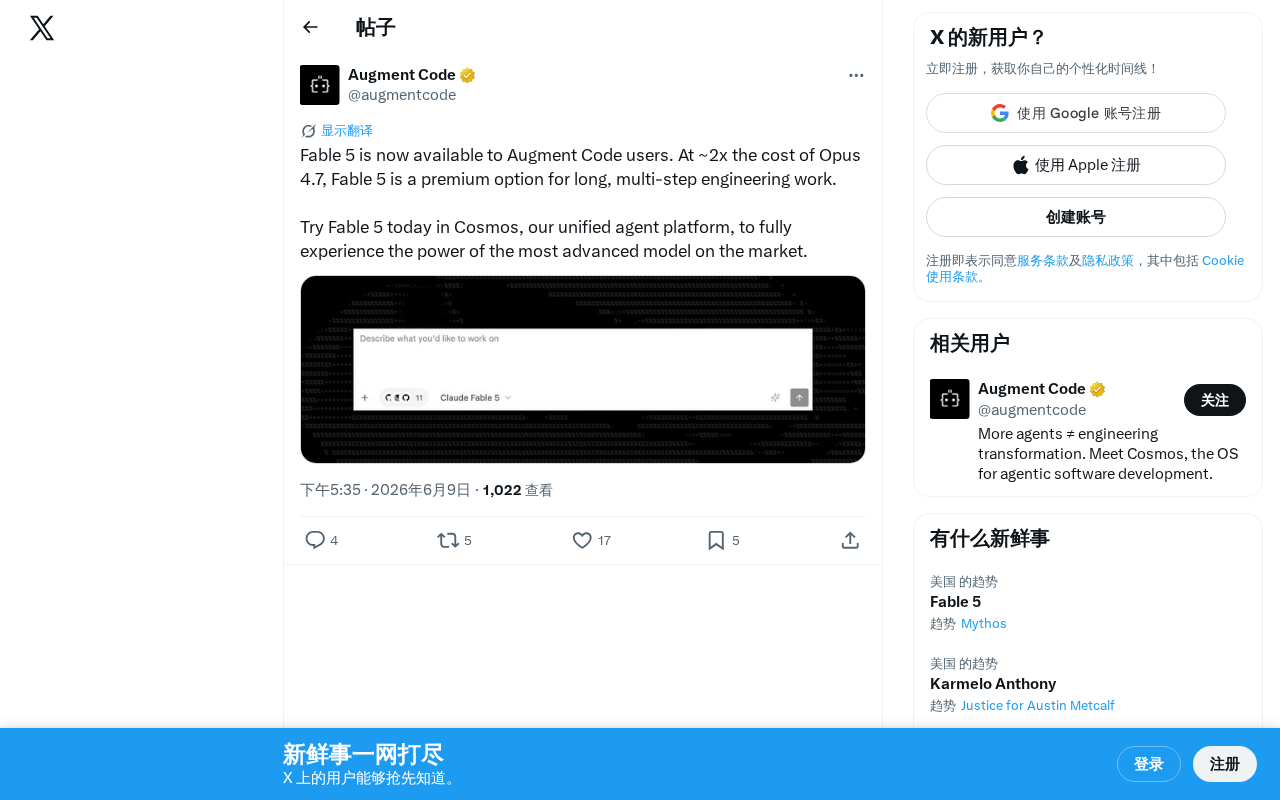
Fable 5 Lands on Augment Code: A Premium Coding Model Priced at 2x Claude Opus 4.7
Fable 5 launches on Augment Code's Cosmos platform, priced at ~2x Claude Opus 4.7, targeting long-chain multi-step engineering tasks. Analysis of its positioning, pricing, and market impact.
Read more →
 Tutorials
·2 min
Getting Started with RAG: What Is Retrieval-Augmented Generation and How Does It Solve LLM Hallucination?
RAG (Retrieval-Augmented Generation) is the core solution for LLM hallucination. Learn RAG concepts, how it works, three causes of hallucination, and the complete learning path from basics to Knowledge Graph RAG.
Read more →
 Tutorials
·2 min
Augment in Practice: Building an AI Recipe Generator from Scratch and Deploying to Cloudflare
A hands-on guide to building an AI recipe generator with Augment Code. Covers prompt enhancement, codebase understanding, Next.js 15 on Cloudflare Workers, and multi-AI tool collaboration.
Read more →
 Tutorials
·2 min
Augment in Practice: Building an AI Recipe Generator from Scratch and Deploying to Cloudflare
A complete hands-on guide to building an AI recipe generator with Augment Code, covering prompt enhancement, codebase understanding, Next.js 15 deployment to Cloudflare Workers, and multi-AI tool collaboration.
Read more →
 Product Reviews
·3 min
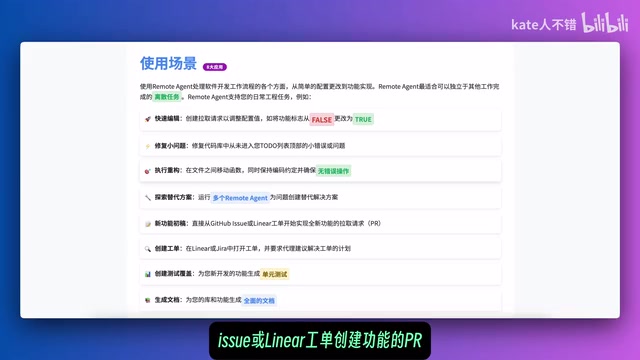
Augment Remote Agent Hands-On: Running 10 Cloud AI Agents in Parallel for Programming
Hands-on review of Augment Remote Agent: 10 cloud AI Agents coding in parallel, covering bug fixes, PR generation, documentation, and more with detailed workflows and real-world examples.
Read more →
 Research
·3 min
MixupMP: How Data Augmentation Fixes the Uncertainty Quantification Flaws of Deep Ensembles
Deep dive into AISTATS 2024 paper MixupMP: revealing Deep Ensembles' fundamental UQ flaws and fixing them via Mixup augmentation and Martingale Posterior framework for better calibration and OOD detection.
Read more →
 Product Reviews
·3 min
In-Depth Comparison of 8 AI Coding Tools: How to Choose Between Cursor, Claude Code, and Augment Code
In-depth comparison of 8 AI coding tools including Cursor, Claude Code, Augment Code, Trae, and Windsurf across model support, pricing, code quality, and context understanding to help developers choose the right tool.
Read more →
 Deep Dives
·3 min
Getting Started with RAG: A Complete Guide from LLM Hallucinations to Retrieval-Augmented Generation
A deep dive into RAG (Retrieval-Augmented Generation) technology, covering LLM hallucinations, data staleness, and limited expertise, plus RAG workflows, core components, and LangChain learning paths.
Read more →
 Product Reviews
·2 min
LightningRAG: A Full-Stack RAG Framework in Go, Built with Vue + Gin for High-Performance Retrieval-Augmented Generation
LightningRAG is an open-source full-stack RAG framework built with Vue and Gin, supporting knowledge base management, vector search, and multi-model integration. A deep dive into its architecture and comparison with LangChain and Dify.
Read more →
 Deep Dives
·3 min
Augment Code Architecture Revealed: Dedicated Subagents Replace KV Cache, Cutting Costs by 90%
Deep dive into how Augment Code uses Mercury 2 dedicated subagents to replace traditional KV cache, achieving 82% faster context compaction, 90% lower summarization costs, and 30% reduced LLM spending.
Read more →
 Tech Frontiers
·2 min
Augment Launches Prism Smart Routing: Automatically Selects Optimal Models to Cut Costs by 30%
Augment launches Prism, an intelligent model router that automatically assigns requests to the optimal AI model during multi-turn coding, matching frontier quality while cutting costs 20-30%.
Read more →

·3 min
ARYA: Building a Voice AI Assistant That Controls Real Applications from Scratch
Developer builds ARYA, a voice AI assistant that controls real apps like WhatsApp and Spotify with vector memory. Deep dive into its technical implementation, AI Agent trends, and opportunities for builders.
Read more →

·3 min
Kopai: Turn Your Expertise into AI Agents and Earn Passive Income from Knowledge
Kopai is a no-code AI agent platform where experts upload knowledge to publish sellable AI agents, with per-message billing and 70% revenue share for creators.
Read more →

·3 min
AI Cross-Validation: A Practical Guide to Using Gemini to Review ChatGPT Outputs
Explore cross-validation methods using Gemini to review ChatGPT outputs. Analyze the value and limitations of AI peer review with a rational multi-model collaboration framework.
Read more →

·3 min
Building an AI Agent from Scratch: A Full Development Process Retrospective and Pitfall Guide
A complete guide to building AI Agents from scratch based on real developer experiences: task selection, tool comparison (no-code vs frameworks vs hand-written), stability challenges, and evaluation criteria.
Read more →

·6 min
AI Coding Boosts Productivity 10x: Are Programmers Writing Their Own Pink Slips?
A senior developer admits 95% of work is done by Claude Code, with 10x productivity gains. From coding to architecture, AI is eroding programmers' core skill moats. Deep analysis of AI coding's impact on tech employment.
Read more →

·3 min
Enterprise RAG Development Team Evaluation Guide: Retrieval Quality, Engineering Details & Production Readiness
When evaluating RAG development teams, enterprises should focus on retrieval quality metrics, hallucination detection, chunking strategies, hybrid retrieval, and production observability—not just model and framework support.
Read more →