#Bill Gates
132 related articles

·3 min
Chinese Open-Source AI Conquers Silicon Valley: The Industry Upheaval Behind a 58% Compute Share
Chinese open-source AI models surged from under 10% to 58% of U.S. AI consumption. Kimi K3, DeepSeek, and Qwen are reshaping AI cost structures as DoorDash, Airbnb, and other Silicon Valley giants adopt them at scale.
Read more →

·3 min
How to Fix AI Tool Error 1076? Root Cause Analysis and Solutions
Getting "Something went wrong 1076" from an AI service? This article analyzes common causes including server overload and session issues, with practical troubleshooting steps to restore normal usage.
Read more →

·3 min
How Hidden Layers Solve the XOR Problem: A Complete Walkthrough from Math to Geometry
A deep dive into how neural network hidden layers solve the XOR problem through feature space transformation, with math, geometry, and concrete examples.
Read more →

·3 min
Agent Skills Explained: Solving the MCP Context Bloat Problem
Deep dive into Anthropic's Agent Skills mechanism, explaining how Progressive Disclosure solves MCP context bloat and tool calling accuracy issues in AI agents.
Read more →

·5 min
The Complete Guide to AI Agent Development: A Four-Stage Progressive Roadmap
A systematic guide to AI Agent development across four stages: LLM fundamentals, ReAct paradigm, memory & tools, and multi-agent collaboration for developers.
Read more →
·3 min
Chinese Open-Source AI Conquers Silicon Valley: The Industry Upheaval Behind a 58% Compute Share
Chinese open-source AI models surged from under 10% to 58% of U.S. market share. Kimi K3, DeepSeek, and Qwen are being adopted by DoorDash, Airbnb, and other Silicon Valley giants, reshaping AI costs and competition.
Read more →

·3 min
If Digital Computers Have Consciousness, It Exists Only at the Hardware Level — Not in Software
If digital computers can produce consciousness, does it reside in software algorithms or physical hardware? Exploring causal closure, substrate independence, and implications for AI consciousness.
Read more →

·3 min
Wattage: An AI Agent Token Cost Profiling and Regression Protection Tool
Deep dive into Wattage, an AI Agent token consumption profiling and cost regression protection tool, exploring its core features, industry context, and value for developers.
Read more →

·5 min
30+ Free AI & Machine Learning Classic Textbooks: All in One GitHub Repository
Awesome Free AI Books is an open-source repo with 30+ legally free AI & ML classic textbooks covering deep learning, reinforcement learning, NLP, LLMs, and more — all linking to official sources with weekly automated link checks.
Read more →
·2 min
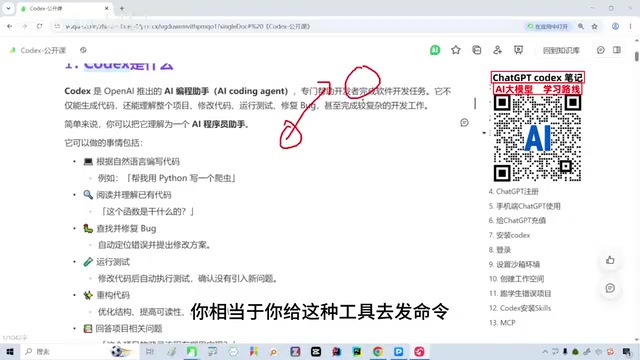
Getting Started with ChatGPT Codex: A Practical Guide to the AI Coding Assistant
Codex is OpenAI's AI coding assistant that lets you write code using natural language. Learn its core features, use cases, and why programmers must master AI coding tools.
Read more →

·2 min
Getting Started with ChatGPT Codex: A Practical Guide to the AI Programming Assistant
Codex is OpenAI's AI programming assistant that lets you write code in natural language. This article breaks down Codex's core features, use cases, and why programmers must master AI coding tools.
Read more →

·5 min
From Vibe Coding to AI Engineering: A Complete Guide to Enterprise-Grade Development
In the AI programming era, Vibe Coding alone can only build toys. This article deeply analyzes the complete engineering path from Vibe Coding to SDD spec-driven development, covering Claude Code and Codex tool selection, the SuperPower plugin, and domestic LLM comparisons.
Read more →

·7 min
DeepSeek's Mysteriously Retracted Paper: Breaking AI's Multimodal Reasoning Bottleneck with Visual Primitives
DeepSeek's paper 'Thinking with Visual Primitives' was online for just 4 hours before being pulled. It uses bounding boxes and points as reasoning primitives, letting models 'point at' images to outperform GPT, Gemini, and Claude on maze navigation and counting.
Read more →

·3 min
From Word Vectors to Large Language Models: The Complete Evolution of AI 2.0 Technology
From word vectors and embeddings to RNNs, BERT, Transformers, and ChatGPT — a complete guide to the technical evolution of large language models and the AI 2.0 era.
Read more →

·6 min
The Complete Guide to Using Claude in China: In-Depth Comparison of 4 Solutions and How to Choose
How can users in China use Claude? This article deeply compares four solutions: official subscription, proxy subscription (WildCard), relay platforms (2233/0011.ai), and API aggregation (OpenRouter).
Read more →

·6 min
The AI Builder's Handbook: A Complete Guide to LLM Principles, RAG Architecture, and Agent Design
From the autocomplete nature of LLMs, tokens, and context windows to RAG vector databases, the MCP protocol, and AI agent loop design — this article uses vivid analogies to unpack the reality of AI engineering.
Read more →

·2 min
Getting Started with ROS2: What Is a Robot Operating System, and How Does It Differ from ROS1?
A beginner's guide to ROS2: what ROS really is (an SDK, not a traditional OS), how ROS1 and ROS2 differ, and how to choose the right version to start robot development.
Read more →

·4 min
Complete Guide to Running Claude Code on Amazon Bedrock
Complete guide to deploying Claude Code on Amazon Bedrock: environment setup, cross-region inference, prompt caching, cost attribution, Guardrails, and the Mantle endpoint for enterprise compliance.
Read more →
GitHub Daily · July 20: AI Agent Infra…
·3 min
GitHub Daily · July 20: AI Agent Infrastructure Explodes Across the Board
AI Agent infrastructure explodes across GitHub Trending: OmniRoute unifies 268+ providers, cognee adds long-term memory, and self-hosted openship tops growth with +1719 stars.
Read more →

·3 min
Running a 27B Model on iPhone: How 1-bit Quantization Achieves Extreme Compression
PrismML's Bonsai compresses a 27B model from 54GB to 3.9GB, running at ~11 tokens/sec on iPhone. A deep dive into QAT, knowledge distillation, and speculative decoding.
Read more →