#GPT-4.5
32 related articles

·3 分钟
Introduction to How AI Large Models Work: A Must-Read Guide for Test Engineers
A clear explanation of how AI large models work: from concept hierarchy and Transformer mechanics to probabilistic traits, helping test engineers grasp AI testing.
阅读全文 →

·3 分钟
Introduction to AI Large Language Models: A Must-Read Guide for Test Engineers
A thorough explanation of the essence of AI large language models: from conceptual hierarchy and Transformer mechanics to probabilistic nature, helping test engineers understand LLM strengths and weaknesses.
阅读全文 →
·2 分钟
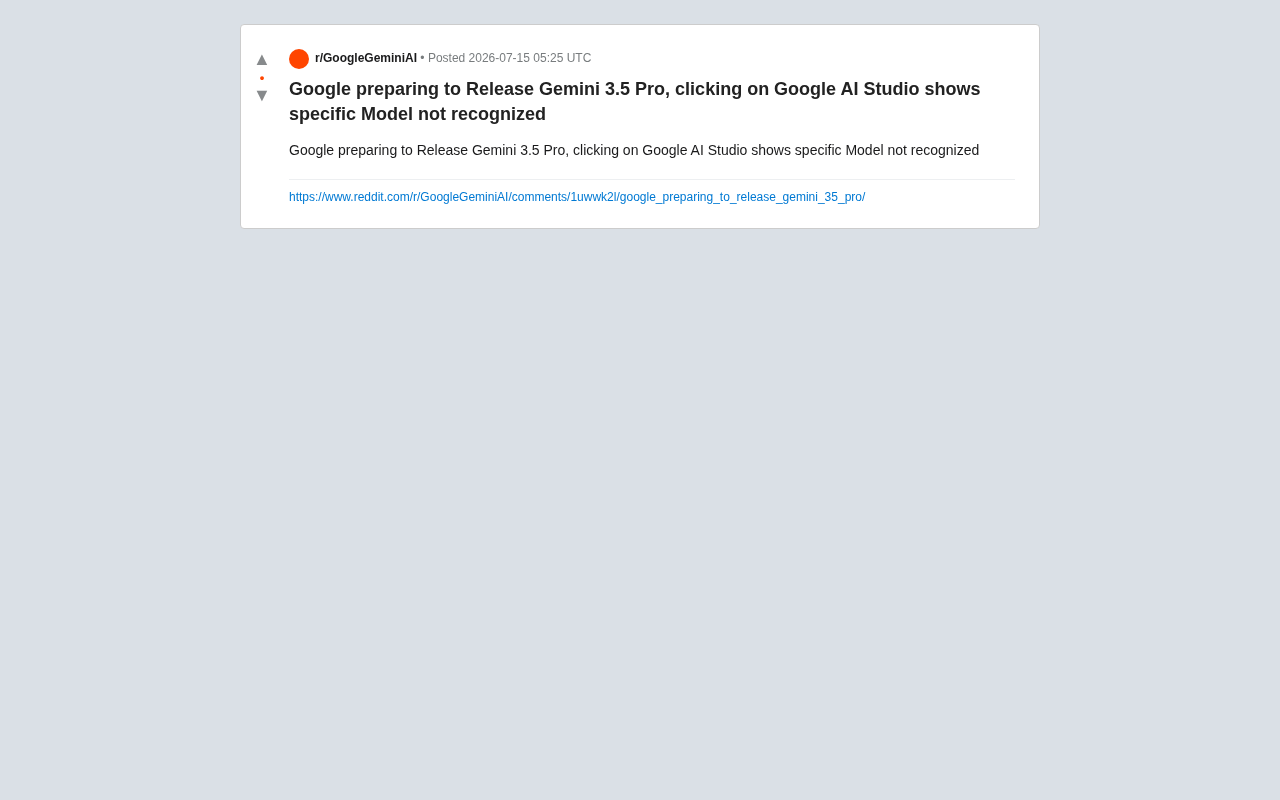
Gemini 3.5 Pro Spotted in Google AI Studio — Is a New Flagship Model Coming?
A Reddit user spotted "Gemini 3.5 Pro" listed as unrecognized in Google AI Studio. We break down the technical signals, naming logic, and strategic implications.
阅读全文 →

·6 分钟
GPT-5.6 Fully Available: A Deep Dive into the Sol/Terra/Luna Three-Tier Models and Four-Agent Parallelism
GPT-5.6 is now officially available to all users, launching the three-tier Sol, Terra, and Luna models with four-agent parallelism. An in-depth look at the official benchmarks, API pricing, safety, and Ultra mode.
阅读全文 →

·6 分钟
GPT-5.6 Released: Codex Officially Integrated into ChatGPT, Ushering in a New Era of AI Programming
OpenAI releases GPT-5.6 and integrates Codex directly into ChatGPT, letting developers invoke code generation and debugging within conversations. A deep dive into the product logic and ecosystem impact.
阅读全文 →

·3 分钟
Real-World Test: GPT-4.1 mini Solved a Crash Bug That Stumped Every Chinese LLM
Real debugging case: when 400MB of source code and 40K files caused an infinite crash loop, MiniMax M3, DeepSeek, and Hunyuan all gave wrong answers. GPT-4.1 mini found the root cause after an hour of deep reasoning.
阅读全文 →

·2 分钟
GPT-5.6 Sol Series Coming Soon: A Deep Dive into the Three-Model Architecture
OpenAI may release the GPT-5.6 series this Thursday, featuring three models: Sol, Terra, and Luna. A deep dive into the naming logic, product strategy, and competitive implications.
阅读全文 →

·2 分钟
GPT-5.6 Launches Three New Models; Claude Code Exposed to Potential Security Backdoor Risk
OpenAI launches GPT-5.6 with three models — Sol, Terra, and Luna — spanning flagship to economy tiers. Meanwhile, Claude Code is flagged for a potential code leak risk between April and June 2025.
阅读全文 →

·3 分钟
GPT-5.6 Sol Ultra Rumors Decoded: How Codex's Programming Capabilities Could Evolve
Rumors of GPT-5.6 Sol Ultra integrating into Codex are circulating in tech communities, but OpenAI hasn't confirmed anything. We analyze the real trends: context understanding, reasoning, and agentic workflows.
阅读全文 →

·2 分钟
A Complete Methodology for Upgrading Wireframe Pages to Commercial-Grade Visuals with Cursor
How indie developers can use Cursor and reference pages to upgrade wireframe sites to commercial-grade visuals. A 3-step workflow: extract design prompts, migrate visual specs, and narrow AI instructions.
阅读全文 →
GPT-5.6 Sol Deep Dive: Major Upgrades …
·3 分钟
GPT-5.6 Sol Deep Dive: Major Upgrades Across Coding, Science, and Cybersecurity
OpenAI previews GPT-5.6 Sol, featuring major upgrades in coding, scientific research, and cybersecurity alongside its most advanced safety stack yet.
阅读全文 →

·3 分钟
Codex Capabilities Explained: From Code Writing and Browser Automation to Controlling Your Computer and Phone
Deep dive into OpenAI Codex desktop's three core capabilities: AI coding & debugging, browser automation, and computer/iPhone control. Includes ChatGPT comparison and membership tips.
阅读全文 →

·4 分钟
Codex Generates a WeChat Mini Program from a Single Prompt: A Complete Walkthrough from Requirements to Launch
Learn how to build a WeChat Mini Program from scratch using OpenAI Codex through pure conversation — covering requirements, design specs, code generation, and debugging.
阅读全文 →

·3 分钟
Freely Switch Between Claude/DeepSeek and Other AI Models in Codex: CPA Deployment Guide
Learn how to use CLI Proxy API (CPA) to aggregate Claude, DeepSeek, Grok, and Gemini models into OpenAI Codex via VPS deployment, Docker setup, and Codex++ integration.
阅读全文 →

·3 分钟
Practical Guide to Configuring 6 Major AI Coding CLI Tools on Windows
Complete guide to configuring Claude Code, GitHub Copilot CLI, OpenAI Codex, Trae, and OpenCode on Windows, covering environment variables, API setup, and model configuration.
阅读全文 →

·2 分钟
Trae IDE Custom Model Integration Tutorial: Complete Guide to Configuring Third-Party APIs
Learn how to integrate custom models in Trae IDE, including step-by-step configuration for third-party APIs like OpenRouter and DeepSeek to overcome built-in model limitations.
阅读全文 →

·2 分钟
An Anthropic Employee's Firsthand Account: How Claude Fable 5 Evolved from Tool to Collaborative Partner
A veteran Anthropic employee shares observations on Claude's evolution from Opus 3 to Fable 5, highlighting four milestone releases and how Fable 5 marks the shift from tool to collaborative partner.
阅读全文 →

·1 分钟
Running Out of Cursor Credits? Compliant Cost-Saving Strategies & Model Pairing Guide
Running out of Cursor credits with new models? This guide covers shared account risks and compliant strategies like model pairing, API Keys, and team plans to save costs.
阅读全文 →

·2 分钟
Apple Executives' Secret Meeting Exposed: Admitting AI Lag, WWDC Counterattack Plan Emerges
Bloomberg reveals Apple executives held a secret meeting without Tim Cook, admitting they've fallen behind in AI. With WWDC 2025 approaching, Apple's counterattack plan against OpenAI and Google emerges.
阅读全文 →

·3 分钟
Cursor Design Mode Launch and OpenAI Codex Updates: Latest Developments in AI Programming Tools
Cursor launches Design Mode for visual development, OpenAI Codex updates and Safety Lock Mode released, Anthropic doubles limits, AI agent leaderboards debut, Google DeepMind model compression breakthrough.
阅读全文 →