#LLM observability
295 related articles
·2 min
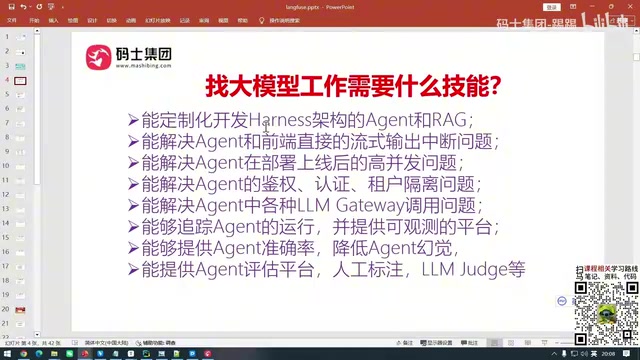
The New Bar for AI/LLM Roles: A Practical Guide to Agent Observability and Evaluation
Enterprise AI/LLM roles now demand engineering skills: streaming recovery, high concurrency, multi-tenancy, LLM gateways, Langfuse observability, and evaluation platforms. Master these 8 core competencies.
Read more →

·2 min
LLM Observability & Eval in Practice: A Complete Guide to Monitoring and Evaluating Large Models in Production
A deep dive into LLM observability, evaluation systems, and experimentation loops for production AI. Covers OpenTelemetry, trace monitoring, five eval signal types, four scope levels, and automated improvement flywheels.
Read more →

·3 min
Ctrlb-decompose: Denoise Logs Before Feeding Them to LLMs — Save Tokens, Improve Quality
Ctrlb-decompose is an open-source log denoising tool that strips redundant noise via templatization and clustering before sending logs to LLMs, reducing Token costs and improving AI analysis quality.
Read more →

·3 min
Ctrlb-decompose: Denoise Logs Before Feeding Them to LLMs — Save Tokens, Improve Quality
Ctrlb-decompose is an open-source log denoising tool that strips redundant noise from logs before sending them to LLMs, reducing Token costs and improving AI analysis quality for AIOps and observability.
Read more →

·2 min
HuggingFace Open-Source Voice Assistant: A Complete Guide to Local Deployment
A deep dive into HuggingFace's speech-to-speech open-source project, covering its modular VAD, STT, LLM, and TTS pipeline architecture and the advantages of local deployment for privacy, cost, and latency.
Read more →

·6 min
Harness Engineering: From Context Engineering to the Third Phase of AI Programming
Explore Harness Engineering: the next evolution beyond context engineering for AI programming. Learn how to build enterprise-grade Skill systems and deliver real projects with mid-tier models.
Read more →

·3 min
Spring AI Explained: Unified API, RAG, and Enterprise AI Development Guide
Deep dive into Spring AI framework's core features including provider-agnostic unified API abstraction, RAG retrieval-augmented generation, and structured output to help Java developers build enterprise AI apps.
Read more →

·3 min
Spring AI Explained: Unified API, RAG, and Enterprise AI Development Practical Guide
Deep dive into Spring AI framework's core features including provider-agnostic unified API abstraction, RAG retrieval-augmented generation, and structured output to help Java developers build enterprise AI apps.
Read more →

·5 min
Running GPT-5.6 Inside Claude Code: Best Practices for Subagent Orchestration and System Prompts
Deep dive into running OpenAI GPT-5.6 inside Claude Code: comparing Codex vs Claude Code on subagent orchestration, workflow design, and system prompt quality, revealing how harness engineering determines model output.
Read more →

·3 min
How to Choose an AI Agent Platform for Your Team: 5 Evaluation Dimensions and a Decision Framework
Choose the right AI Agent platform by evaluating model flexibility, observability, tool integration, security compliance, and total cost. A complete decision framework to help technical leaders avoid vendor lock-in.
Read more →

·3 min
How to Choose an AI Agent Platform for Your Team: 5 Evaluation Dimensions & Decision Framework
Choose an AI Agent platform by evaluating model flexibility, observability, tool integration, security compliance, and total cost. A complete decision framework to avoid vendor lock-in.
Read more →

·5 min
Complete Breakdown of Core Competencies for AI Agent Engineers: From Demo to Production-Grade Systems
Deep breakdown of 4 core AI Agent engineer competencies: business decomposition, multi-Agent architecture, quantitative evaluation, and engineering delivery—bridging the gap from Demo to production.
Read more →

·5 min
The Complete Guide to AI Agent Development: A Four-Stage Progressive Roadmap
A systematic guide to AI Agent development across four stages: LLM fundamentals, ReAct paradigm, memory & tools, and multi-agent collaboration for developers.
Read more →

·3 min
The Jargon Trap: Why Engineers Can Never Seem to Speak Plain Language
Why do engineers struggle to communicate in plain language? Exploring the curse of knowledge, jargon as identity, and practical tips for clearer technical communication.
Read more →

·3 min
Unified Prompt Management, Evaluation & Observability: A Comprehensive Comparison of LangSmith and Other Leading Platforms
In-depth comparison of LangSmith, Langfuse, PromptLayer, Helicone, and Orq.ai across Prompt management, Evals, and observability to help teams choose the best unified LLM Ops platform.
Read more →

·3 min
API Mock vs. Sandbox in Agent Testing: A Detailed Layered Strategy Guide
API Mock is fast but misses bugs; Sandbox is realistic but costly. This article analyzes their core differences and provides a layered testing strategy for building reliable Agent test systems.
Read more →

·3 min
HuggingHack Update: S3 Storage, Dual-Engine Scheduling, and GGUF Inspection Get Major Upgrades
HuggingHack releases major updates with S3/MinIO storage, Ollama + vLLM dual-engine scheduling, GGUF inspection, and local accounts for enterprise-grade local LLM management.
Read more →
In-Depth Analysis of the Claude Opus 5…
·3 min
In-Depth Analysis of the Claude Opus 5 Elevated Error Rate Incident and Response Strategies
Deep analysis of the Claude Opus 5 elevated error rate incident, exploring LLM service reliability challenges and providing developers with practical strategies including multi-model redundancy, retry mechanisms, and graceful degradation.
Read more →

·3 min
Build RAG and AI Agent Projects at Zero Cost: A Practical Guide to Open-Source Tools
Build high-quality AI projects on a budget. Learn how to use Ollama, Groq, Chroma, and other free open-source tools to build RAG systems and multi-Agent workflows from scratch.
Read more →
·3 min
Build RAG and AI Agent Projects at Zero Cost: A Practical Guide to Open-Source Tools
Build high-quality AI projects on a budget. Learn how to use Ollama, Groq, Chroma, and other free open-source tools to build RAG systems and multi-Agent workflows from scratch.
Read more →