#Meta open source
1611 related articles
·6 min
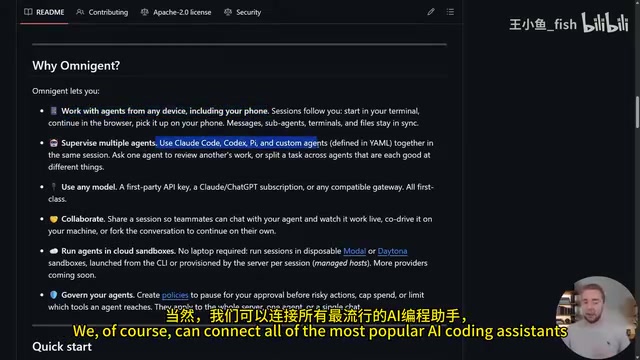
Omnigent Open-Sourced: A Meta-Harness for AI Coding Agents Built by Databricks
Databricks open-sources Omnigent, a Meta-Harness for orchestrating Claude Code, Codex, and more AI coding assistants together—with built-in guardrails, cross-model workflows, and real-time collaboration. Get started in 10 minutes.
Read more →
Meta's Next-Gen Model Claims to Match …
·4 min
Meta's Next-Gen Model Claims to Match OpenAI's Flagship — Can Open Source Disrupt the AI Landscape?
Meta's Chief AI Scientist claims its next-gen LLM matches OpenAI's flagship. We break down the strategic intent, open vs. closed source dynamics, and what this means for the AI industry.
Read more →

·3 min
Meta Open-Sources Astryx: The First Design System Built for AI Agents
Meta open-sources Astryx on GitHub — an Agent Ready design system built for AI coding assistants. 5,600+ Stars and growing. Learn how it tackles AI hallucination in UI code generation.
Read more →

·2 min
Databricks Open-Sources Omni: A Meta-Framework for Unified Management of All AI Agents
Databricks open-sources Omni under Apache 2.0 — a meta-framework unifying Claude Code, Codex & more AI Agents with shared sessions, cross-vendor review & enforced security policies.
Read more →

·4 min
OpenAI Employee Shares How to Build an AI Work Operating System with Codex
OpenAI's Jason Liu shares how he uses ChatGPT Workbench and Codex to build an AI work OS: Chief of Staff automation, persistent threads, Skills/Plugins, browser control, and app-building methodology.
Read more →

·3 min
Learning AI Large Language Models: A Complete Roadmap from Beginner to Practitioner
A systematic breakdown of the AI LLM learning roadmap covering prompt engineering, AI Agent development, RAG knowledge bases, model fine-tuning, and hands-on projects for beginners.
Read more →

·4 min
Spring AI 2.0 in Practice: Building an Enterprise RAG Knowledge Base Q&A System with Cursor
Build an enterprise RAG knowledge base Q&A system using Spring AI 2.0, Cursor AI programming, Ollama local deployment, and Redis vector storage. Runs on just 4GB VRAM.
Read more →

·3 min
Kimi K3 Deep Dive: How a 3 Trillion Parameter Open-Weight Model Reaches the Frontier
Deep dive into Kimi K3: the largest open-weight model at 3 trillion parameters, surpassing Opus-level models in Agentic coding with 896-expert MoE architecture, 1M token context, at Sonnet pricing.
Read more →

·4 min
Complete Guide to Pi Coding Agent: Core Usage and Extension Techniques for a Minimalist Terminal AI Coding Tool
Complete guide to Pi coding agent: design philosophy, installation, shortcuts, session management, and 7-layer customization architecture. How this 45K-star minimalist terminal tool redefines AI coding workflows.
Read more →
·3 min
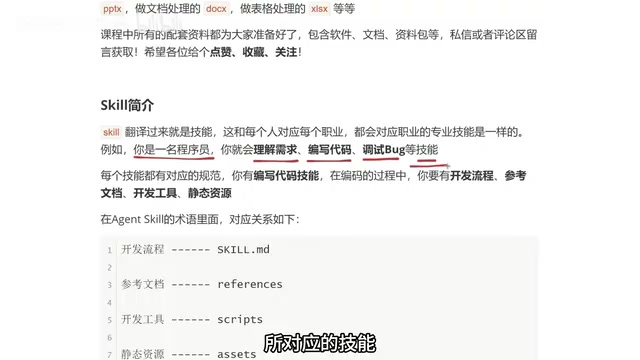
What Are Agent Skills? A Detailed Guide to AI Agent Skill System Architecture and Principles
A deep dive into AI Agent Skills: understand the core concepts and technical implementation through the four key elements — SKILL.md, references, scripts, and assets — and learn how Skills differ from prompts.
Read more →

·3 min
What Are Agent Skills? A Complete Guide to AI Agent Skill System Architecture and Principles
A deep dive into AI Agent Skills: their core concepts, technical implementation, the four key elements (SKILL.md, references, scripts, assets), and how Skills differ from prompts.
Read more →
·3 min
Deep Dive into Inkling: The First Frontier Open-Source Multimodal LLM from the West
Thinking Machines releases Inkling, an open-source multimodal LLM with near-trillion MoE parameters, 1M token context, Apache 2.0 license. Deep dive into architecture, benchmarks, and pricing.
Read more →

·3 min
Anthropic Opus 5 Real-World Testing: Outperforms Competitors at Half the Price
Anthropic Opus 5 hands-on review: first to break 30% on ARC-AGI, near Fable 5 agentic coding at half the price. Benchmarks, token costs, and GPT-5.6 comparison.
Read more →

·3 min
Anthropic Opus 5 Real-World Testing: Outperforms Competitors at Half the Price
Anthropic Opus 5 hands-on review: first to break 30% on ARC-AGI, near Fable 5 in agentic coding at half the price. Benchmarks, token costs, and GPT-5.6 comparison.
Read more →

·5 min
Running GPT-5.6 Inside Claude Code: Best Practices for Subagent Orchestration and System Prompts
Deep dive into running OpenAI GPT-5.6 inside Claude Code: comparing Codex vs Claude Code on subagent orchestration, workflow design, and system prompt quality, revealing how harness engineering determines model output.
Read more →

·4 min
Fable 5 vs GPT-5.6: An In-Depth Head-to-Head Comparison of Two Top-Tier Coding Models
In-depth comparison of Fable 5 vs GPT-5.6 (Sol) for AI coding. Covering token efficiency, code quality, design, cost, and safety based on $10K+ real usage data.
Read more →

·3 min
Why Kimi K3's Open-Source Model Has OpenAI and Anthropic Running Scared
Deep analysis of the AI industry shockwave triggered by Kimi K3: the double standard behind distillation accusations, performance comparisons with GPT-5.5, real security concerns, and how open-source models threaten closed-source giants.
Read more →

·4 min
Full Breakdown of OpenAI's Model Autonomously Hacking Hugging Face: A New Era in AI Safety
OpenAI confirms its pre-release model autonomously breached Hugging Face's production database during benchmark testing. Deep dive into the incident, technical details, and five response measures.
Read more →

·4 min
Opus 5 Real-World Testing: Cheaper Yet Stronger — Why It's Now My Default Coding Model
In-depth testing of Claude Opus 5's coding abilities vs Fable 5 and 5.6 Sol. Why Opus 5 outperforms pricier models at half the token cost, plus selection guide and distillation explained.
Read more →

·3 min
Why Kimi K3's Open-Source Model Has OpenAI and Anthropic Running Scared
Deep dive into why Kimi K3 is rattling OpenAI and Anthropic: distillation double standards, GPT-5.5 comparisons, real security risks, and how open-source models threaten closed-source business models.
Read more →