#RAG pipeline
1761 related articles

·3 min
The Truth Behind Three RAG Pipeline Crashes: Why Inter-Stage Data Contracts Matter
A RAG pipeline crashed three times due to inter-stage data format mismatches. Learn how JSON Schema and Pydantic explicit contracts turn fragile AI pipelines into maintainable systems.
Read more →

·3 min
GBrain Local Deployment: 12-Step Deep Retrieval Pipeline Outperforms Traditional RAG by 31%
GBrain's 12-step deep retrieval pipeline and knowledge graph construction outperforms traditional RAG by 31% — with full local offline deployment for data security and lower API costs.
Read more →

·2 min
RAG Recall Rate Optimization: A Full-Pipeline Funnel Engineering Breakdown from Data Ingestion to Reranking
How to fix low RAG recall? A systematic breakdown covering data ingestion, query processing, retrieval strategy, and reranking—including semantic chunking, HyDE, hybrid search, and Cross-Encoder reranking.
Read more →

·3 min
Enterprise-Grade RAG Full-Pipeline Optimization: Multi-Turn Conversations, Retrieval Tuning, and Production Engineering in Practice
A deep dive into full-pipeline optimization for enterprise RAG systems, covering multi-turn query rewriting, retrieval tuning, and quality evaluation to take RAG from demo to production.
Read more →

·3 min
AMD CDNA5 Architecture Deep Dive: Technical Evolution and the AI Computing Competition Landscape
Deep analysis of AMD's CDNA5 architecture covering Chiplet packaging upgrades, HBM memory evolution, and low-precision compute optimization, examining how AMD challenges NVIDIA's AI chip dominance.
Read more →
·3 min
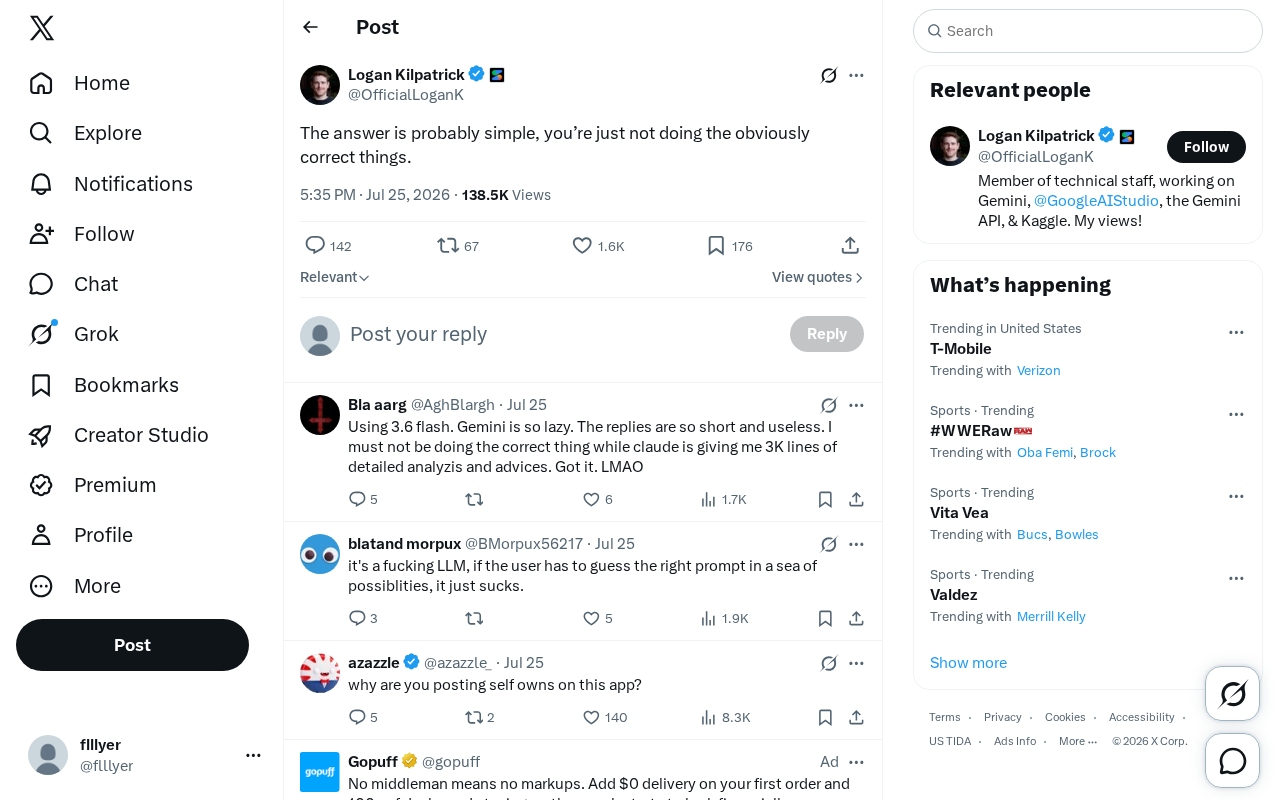
AI Not Performing Well? Start by Getting These Simple but Often Overlooked Things Right
When your AI system underperforms, the problem is often not the model or algorithm — it's basic work like data cleaning, prompt writing, and evaluation that hasn't been done right.
Read more →
·3 min
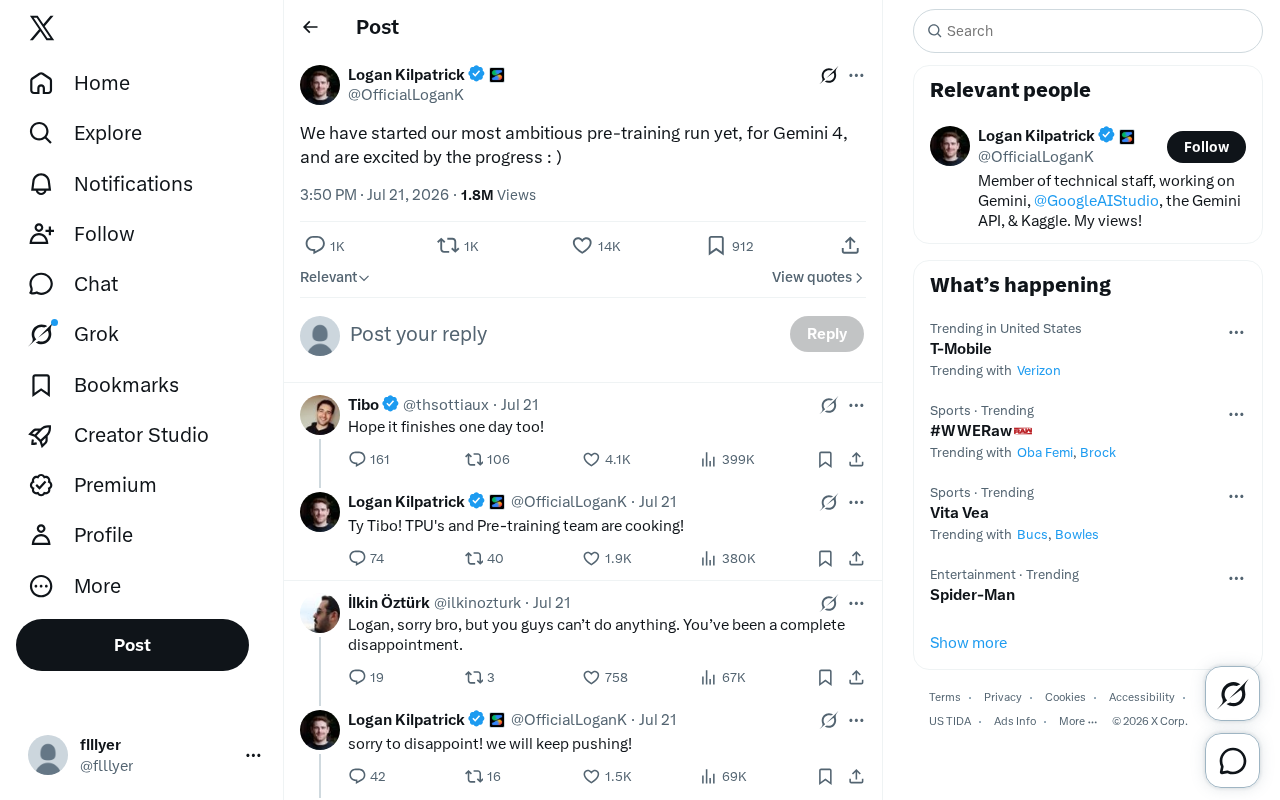
Google Launches Gemini 4 Pre-training: Its Most Ambitious AI Model Training Yet
Google DeepMind announces Gemini 4 pre-training has begun, calling it their most ambitious training yet. A deep dive into its technical direction, compute scale, multimodal breakthroughs, and competitive impact.
Read more →
·3 min
SlopCodeBench: Why AI Code Benchmarks Are Failing
SlopCodeBench sparks deep reflection on AI code evaluation. From benchmark contamination to pass-rate pitfalls, exploring why current benchmarks fail to measure real code quality.
Read more →
·3 min
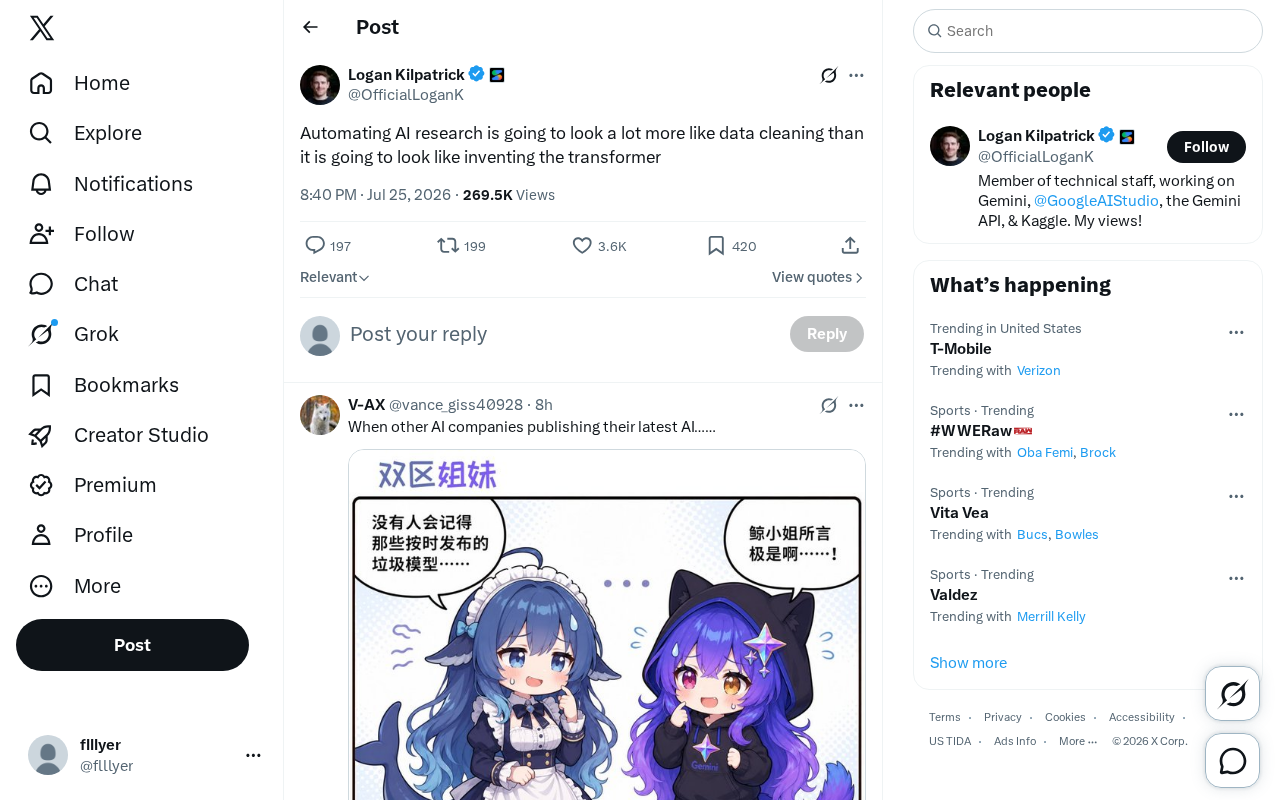
AI Research Automation: More Like Data Cleaning Than Inventing the Transformer
AI research automation will look more like data cleaning than inventing the Transformer. Explore how automating 60%-80% of repetitive research work reshapes the AI research paradigm.
Read more →
·3 min
AI Research Automation: More Like Data Cleaning Than Inventing the Transformer
Why AI research automation looks more like data cleaning than inventing the Transformer. Exploring the value of automating 60%-80% of repetitive research work and how human-AI collaboration reshapes the research paradigm.
Read more →
·3 min
AI Not Working Well? Start by Getting These Simple but Often Overlooked Things Right
When AI systems underperform, the problem often isn't the model or algorithm — it's that basics like data cleaning, prompt writing, and evaluation aren't done right. Learn the simple fixes that matter most.
Read more →
·3 min
The Open-Weights Model Debate: Balancing Safety and Openness
An in-depth analysis of the open-weights model debate: public release brings transparency and innovation, but raises safety and misuse risks. Exploring tiered release, red-teaming, and governance challenges.
Read more →
·3 min
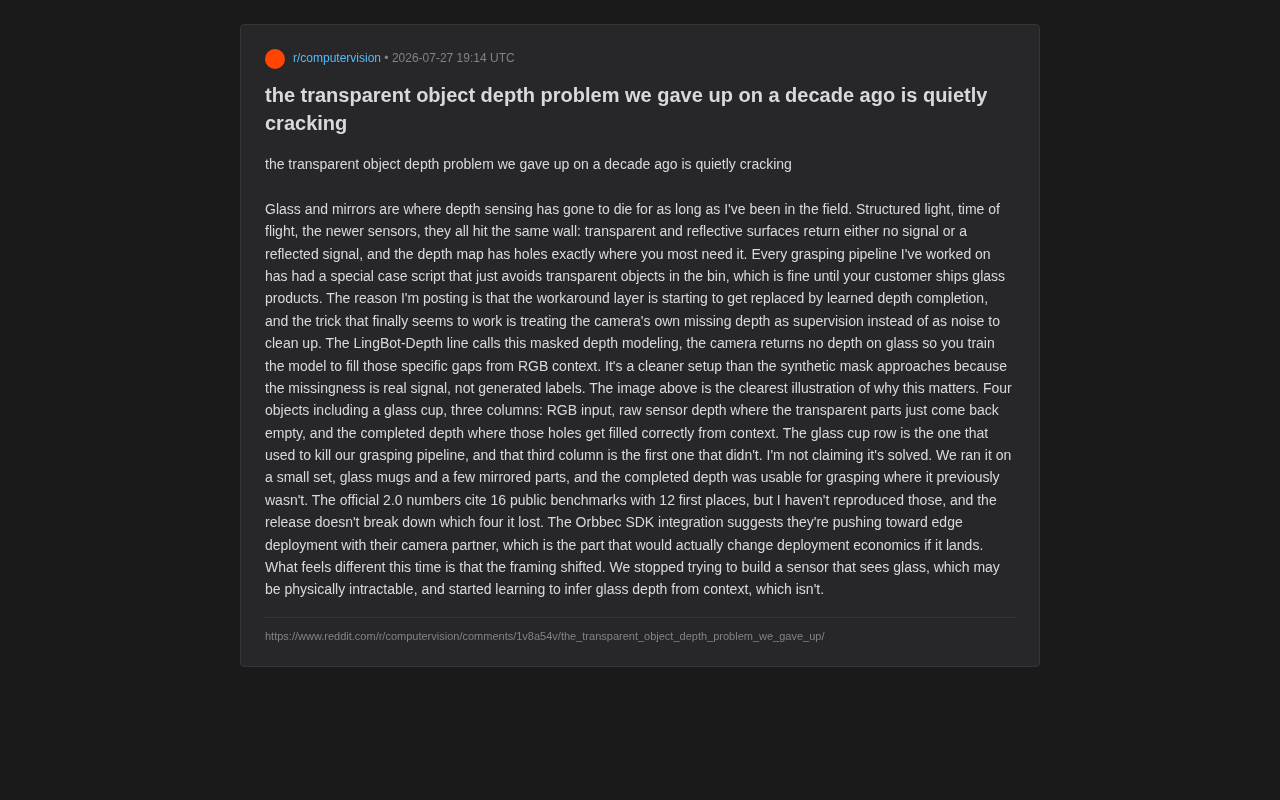
The Depth Perception Challenge for Transparent Objects: How LingBot-Depth Breaks Through with Masked Depth Modeling
Depth perception for transparent and reflective objects has long been a core challenge in robotic grasping. LingBot-Depth uses masked depth modeling to turn sensor failure into supervisory signals, inferring glass depth from RGB context.
Read more →
·3 min
The Open-Weights Model Debate: Balancing Safety and Openness
An in-depth analysis of the open-weights model debate: publicly releasing model weights enables transparency and innovation but raises safety risks. Explores tiered release, red-teaming, and the industry dynamics behind open AI governance.
Read more →

·3 min
Grok 4.5 Feels Weaker in Cursor? A Deep Dive into AI Coding Tool Integration Differences
Users report Grok 4.5 underperforms in Cursor vs. the official terminal. We analyze how system prompts, context management, parameters, and tool calling create AI coding tool integration gaps.
Read more →

·3 min
Carta: Pandoc Rewritten in Rust — 45x Faster, 20x Smaller
Carta is a Rust reimplementation of Pandoc with a 9MB binary (1/20th of Pandoc) and up to 45x faster conversion. Supports Markdown, DOCX, LaTeX, and Pandoc JSON filters.
Read more →

·4 min
A Beginner's Guide to AI Agents: Core Principles and Learning Paths Explained
Learn AI Agent core principles from scratch: understand how Agents differ from LLMs, their execution mechanisms, why rule design matters, and find the right learning path for your goals.
Read more →

·3 min
From Frontend to Agent Development: A Complete 6-Week Systematic Learning Path
A 6-week systematic learning path for frontend engineers transitioning to AI Agent development, covering core architecture, ReAct, multi-agent collaboration, RAG integration, and deployment.
Read more →
·3 min
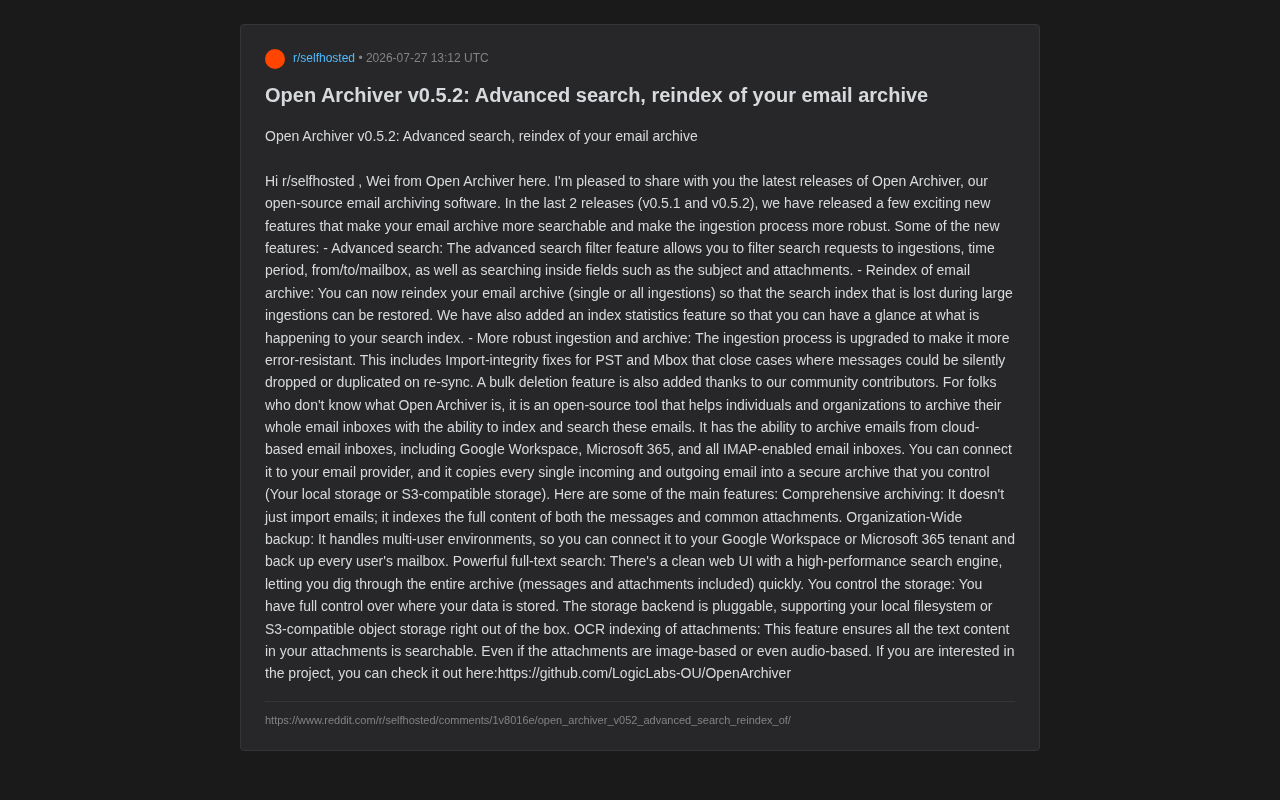
Open Archiver v0.5.2 Deep Dive: A Comprehensive Look at the New Features of This Open-Source Email Archiving Tool
Deep dive into Open Archiver v0.5.2: advanced search, index rebuilding, PST/Mbox import fixes, and more features for self-hosted email archiving and compliance.
Read more →

·3 min
Deconstructing Agents: Task Decomposition, Context Compression, and the Case Against Heavy Frameworks
A deep engineering analysis of Agent internals: how LLMs decompose tasks via tool calling, why context compression and memory are essential, and why solo developers should avoid heavy frameworks.
Read more →