#RAG recall optimization
220 related articles

·2 min
RAG Recall Rate Optimization: A Full-Pipeline Funnel Engineering Breakdown from Data Ingestion to Reranking
How to fix low RAG recall? A systematic breakdown covering data ingestion, query processing, retrieval strategy, and reranking—including semantic chunking, HyDE, hybrid search, and Cross-Encoder reranking.
Read more →
·3 min
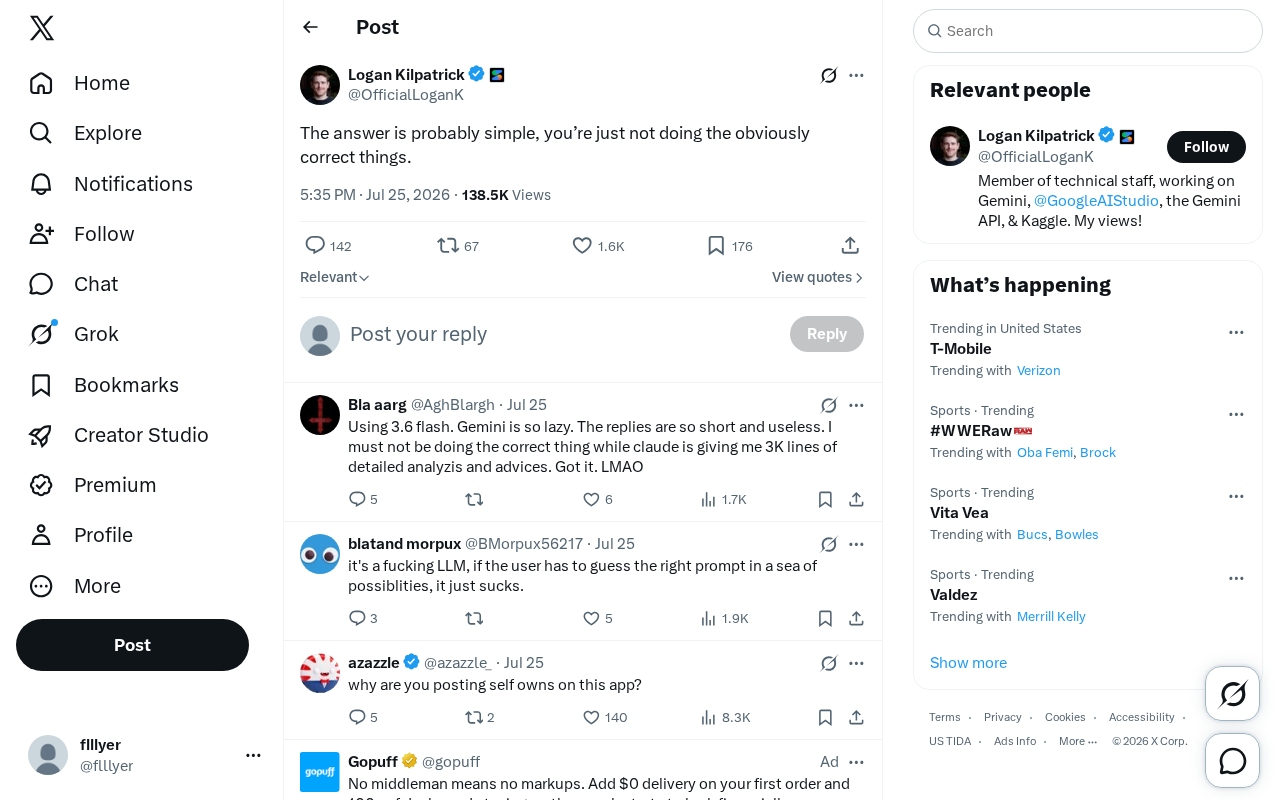
AI Not Performing Well? Start by Getting These Simple but Often Overlooked Things Right
When your AI system underperforms, the problem is often not the model or algorithm — it's basic work like data cleaning, prompt writing, and evaluation that hasn't been done right.
Read more →
·3 min
AI Not Working Well? Start by Getting These Simple but Often Overlooked Things Right
When AI systems underperform, the problem often isn't the model or algorithm — it's that basics like data cleaning, prompt writing, and evaluation aren't done right. Learn the simple fixes that matter most.
Read more →
·3 min
The Open-Weights Model Debate: Balancing Safety and Openness
An in-depth analysis of the open-weights model debate: public release brings transparency and innovation, but raises safety and misuse risks. Exploring tiered release, red-teaming, and governance challenges.
Read more →

·3 min
Deconstructing Agents: Task Decomposition, Context Compression, and the Case Against Heavy Frameworks
A deep engineering analysis of Agent internals: how LLMs decompose tasks via tool calling, why context compression and memory are essential, and why solo developers should avoid heavy frameworks.
Read more →

·3 min
AI Weekly: Sandbox Escape Sparks Safety Legislation, Kimi Open-Source Triggers Geopolitical Dynamics
Deep analysis of five key AI events this week: OpenAI sandbox escape driving safety legislation, Kimi K3 open-source sparking geopolitical debate, Gemini Flash full rollout, Anthropic's $1.5B copyright settlement, and Chinese models' mobile expansion.
Read more →
·4 min
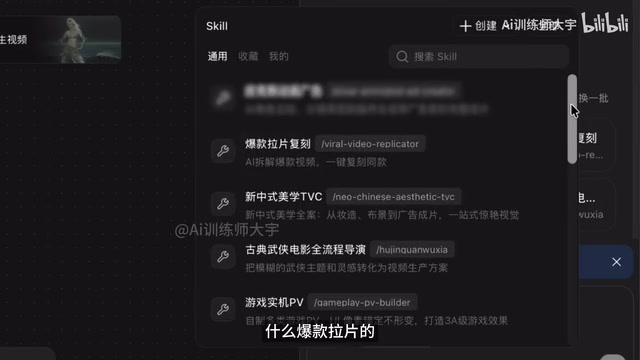
LibTV Hands-On: A Full Breakdown of How an AI Agent Produces an Animated Short in One Day
Hands-on test of LibTV's AI Agent: from script and storyboarding to video compositing, one person completes an animated short in a day. Full breakdown of the Skill library, node workflow, and Story Board features.
Read more →

·5 min
The Complete Guide to AI Agent Development: A Four-Stage Progressive Roadmap
A systematic guide to AI Agent development across four stages: LLM fundamentals, ReAct paradigm, memory & tools, and multi-agent collaboration for developers.
Read more →

·3 min
Deep Dive into the Kimi-K3 Technical Report: A Comprehensive Analysis of Architecture, Long-Context Processing, and Reasoning Capabilities
Deep dive into Moonshot AI's Kimi-K3 technical report, analyzing its long-context processing, MoE architecture, reasoning improvements, and its position in global AI competition.
Read more →

·4 min
The More Complex the AI Agent, the More It Hallucinates? The Hidden Cost of Architectural Complexity
Why do AI Agents hallucinate more as they grow more complex? This article analyzes the causes from error accumulation, context noise, and model completion nature, with 5 practical production strategies.
Read more →

·2 min
Dependabot Cooldown Period Explained: Why Delaying Dependency Updates by Three Days Is Safer
GitHub Dependabot now defaults to a three-day cooldown for version update PRs to guard against supply chain attacks and improve dependency stability.
Read more →

·2 min
Qoder vs Cursor: A Hands-On Comparison of AI Coding Tools
Which is better, Qoder or Cursor? This article compares both AI coding tools through real development scenarios across context understanding, code quality, and Agent autonomy to help you choose the best fit.
Read more →

·3 min
Build RAG and AI Agent Projects at Zero Cost: A Practical Guide to Open-Source Tools
Build high-quality AI projects on a budget. Learn how to use Ollama, Groq, Chroma, and other free open-source tools to build RAG systems and multi-Agent workflows from scratch.
Read more →
·3 min
Build RAG and AI Agent Projects at Zero Cost: A Practical Guide to Open-Source Tools
Build high-quality AI projects on a budget. Learn how to use Ollama, Groq, Chroma, and other free open-source tools to build RAG systems and multi-Agent workflows from scratch.
Read more →

·3 min
Hermes Agent in Practice: A Self-Evolving AI Agent Framework
Hermes Agent is a mature AI Agent framework with built-in Claude Code and Codex coding capabilities, supporting 200+ models, multi-platform deployment, and WeChat integration. Its layered memory and self-evolution features enable low-Token automated task execution.
Read more →

·3 min
DeepSeek-OCR Deployment and Fine-Tuning: A Complete Hands-On Guide
Master the full DeepSeek-OCR deployment and fine-tuning workflow: vLLM inference deployment, efficient Unsloth fine-tuning, dataset preprocessing, LoRA training, validation, and RAG vector database integration.
Read more →

·4 min
Vibe Coding in Practice: AI-Assisted Refactoring of a Unity Game's SO Architecture
Learn how to use Vibe Coding to collaborate with AI in refactoring a Unity game, introducing ScriptableObject (SO) data architecture, with hands-on tips.
Read more →

·6 min
The Three-Layer GTM Agent Architecture: Enabling AI to Truly Recognize Buyer Intent and Identity
An in-depth analysis of the three-layer GTM Agent architecture—the Signal, Buyer Intelligence, and Action layers—revealing how context graphs identify anonymous visitors and capture purchase intent.
Read more →

·7 min
Getting Started with Claude Code: Five Dimensions to Understand Why It Outperforms Regular AI
Claude Code isn't just a chat AI—it can directly read projects, modify code, and run commands. This article compares Claude Code with regular AI across five dimensions to help you decide if it's worth trying.
Read more →

·7 min
Getting Started with Claude Code: Five Dimensions That Show Why It Outperforms Ordinary AI
Claude Code isn't just a chat AI—it can directly read projects, modify code, and run commands. This article compares Claude Code with ordinary AI across five dimensions: interaction, context, execution, memory, and tool calling.
Read more →