#Vision Transformer
424 related articles

·3 min
A Beginner's Guide to AI Agents: Two Learning Paths for Developers and Practitioners
How to learn AI Agents from scratch? This guide covers two clear paths: developers go from Python to LLMs to open-source framework source code; practitioners use Claude Code or similar tools to get results fast.
Read more →
·3 min
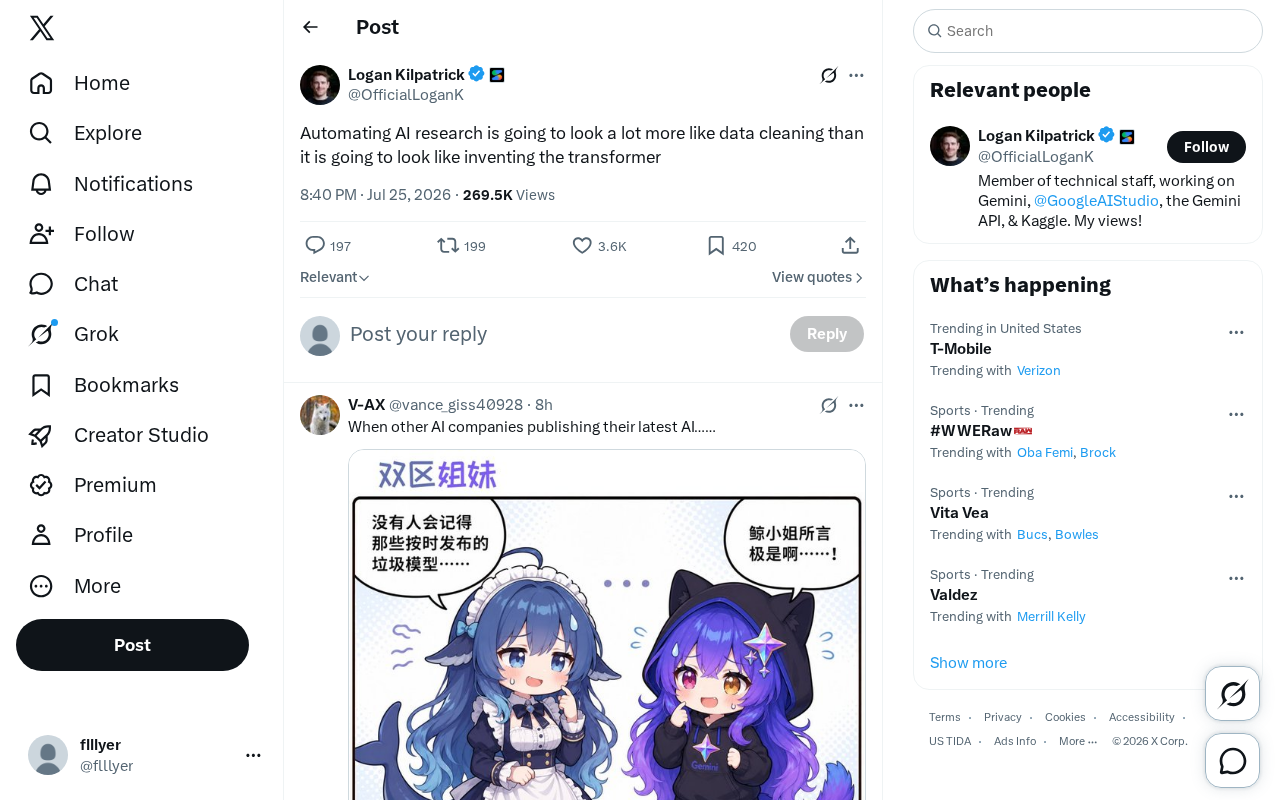
AI Research Automation: More Like Data Cleaning Than Inventing the Transformer
AI research automation will look more like data cleaning than inventing the Transformer. Explore how automating 60%-80% of repetitive research work reshapes the AI research paradigm.
Read more →
·3 min
AI Research Automation: More Like Data Cleaning Than Inventing the Transformer
Why AI research automation looks more like data cleaning than inventing the Transformer. Exploring the value of automating 60%-80% of repetitive research work and how human-AI collaboration reshapes the research paradigm.
Read more →
·3 min
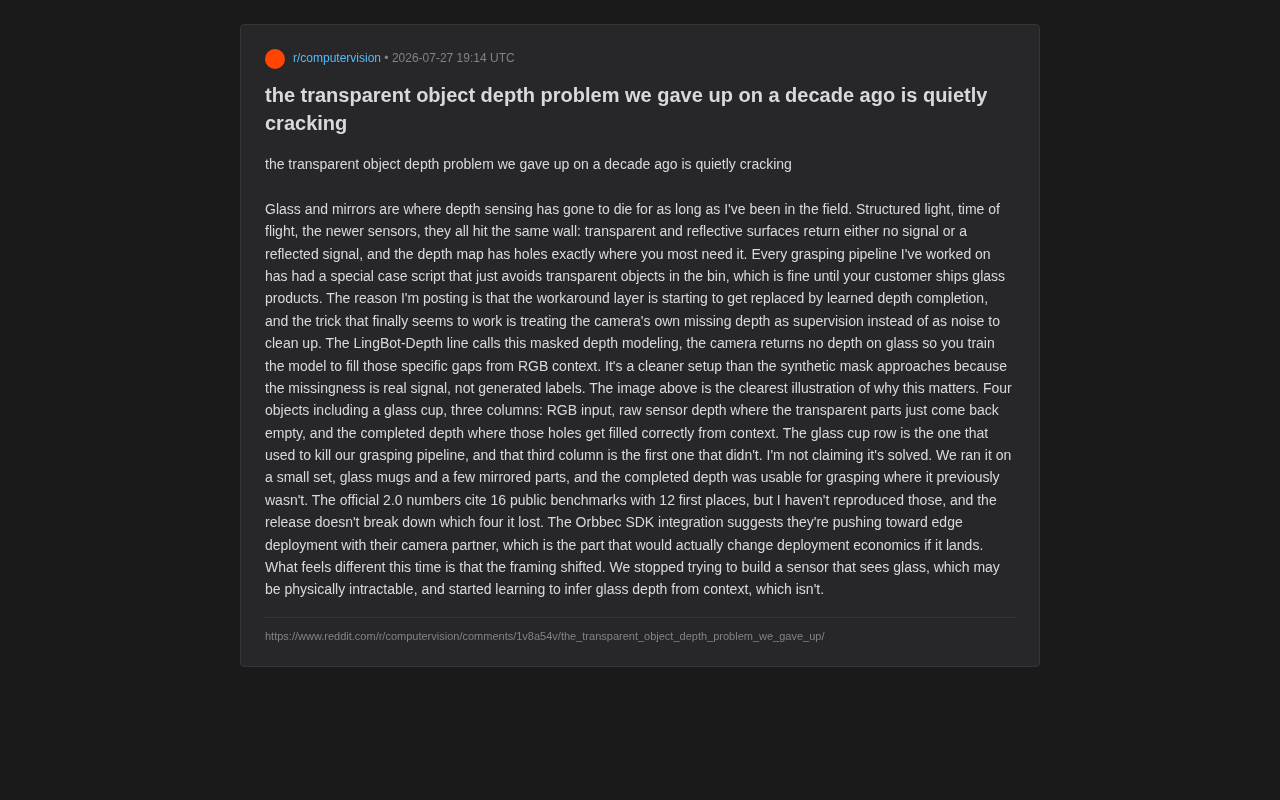
The Depth Perception Challenge for Transparent Objects: How LingBot-Depth Breaks Through with Masked Depth Modeling
Depth perception for transparent and reflective objects has long been a core challenge in robotic grasping. LingBot-Depth uses masked depth modeling to turn sensor failure into supervisory signals, inferring glass depth from RGB context.
Read more →

·3 min
Deconstructing Agents: Task Decomposition, Context Compression, and the Case Against Heavy Frameworks
A deep engineering analysis of Agent internals: how LLMs decompose tasks via tool calling, why context compression and memory are essential, and why solo developers should avoid heavy frameworks.
Read more →
·3 min
The Depth Perception Challenge for Transparent Objects: How LingBot-Depth Breaks Through with Masked Depth Modeling
Transparent and reflective object depth perception is a core challenge in robotic grasping. LingBot-Depth uses masked depth modeling to turn sensor failure into supervision, inferring glass depth from RGB context.
Read more →
·3 min
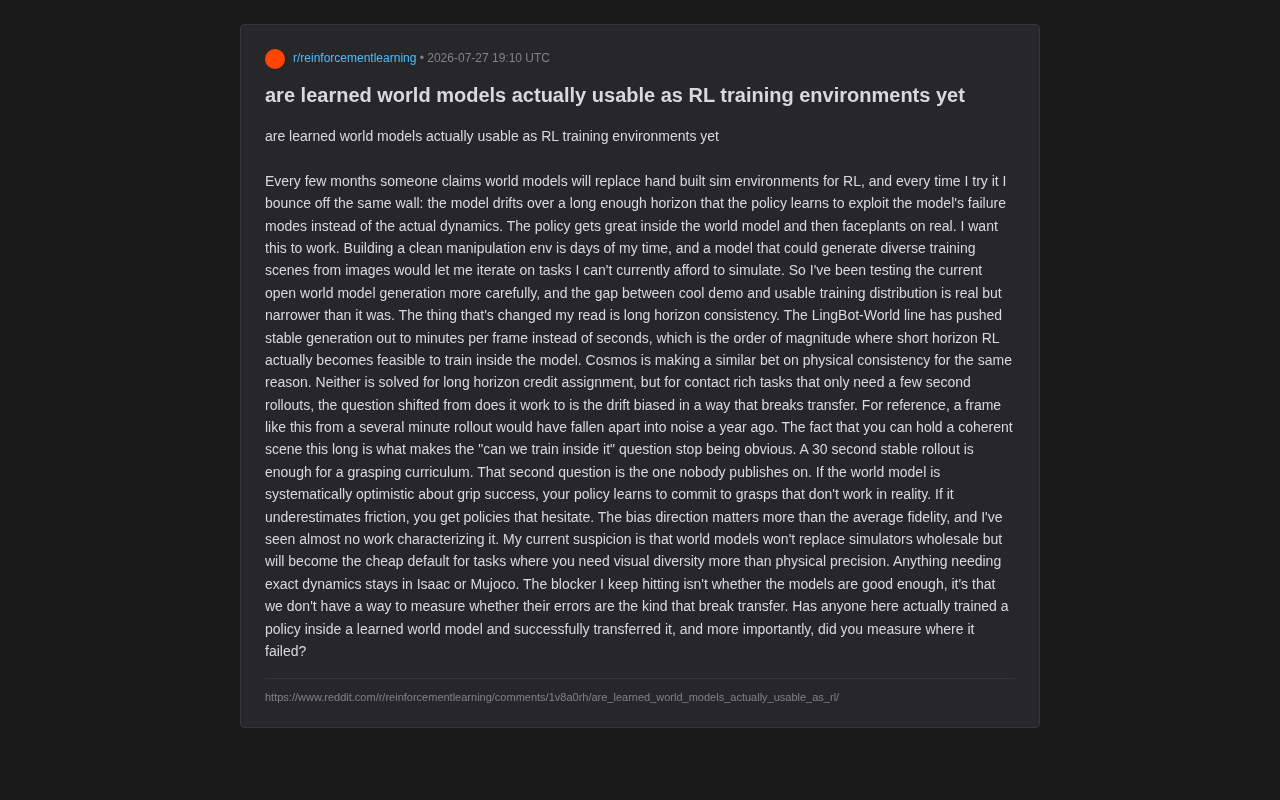
Can World Models Replace RL Training Environments? The Key Lies in the Direction of Error Bias
Analysis of world models as RL training environments: long-horizon consistency progress, how systematic error bias poisons policy transfer, and the emerging division of labor with traditional simulators.
Read more →

·2 min
LightlyStudio: Open-Source Image Embedding Exploration Tool with Million-Scale Data Visualization
LightlyStudio is an Apache-2.0 open-source tool for image embedding visualization, hover preview, and distribution analysis, tested at million-scale to help developers explore, debug, and curate visual datasets.
Read more →
·3 min
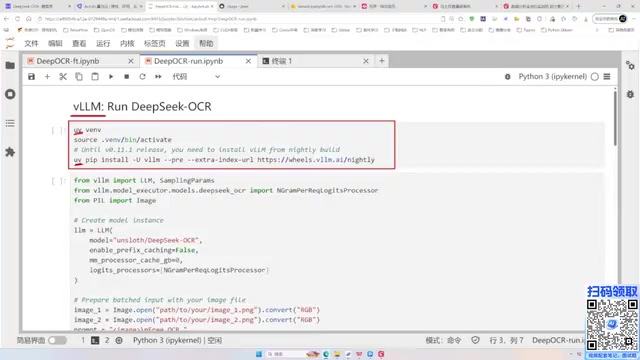
DeepSeek-OCR Deployment & Fine-Tuning in Practice: From vLLM Inference to Unsloth Fine-Tuning
Complete guide to DeepSeek-OCR from vLLM inference deployment and Unsloth model loading to fine-tuning, covering cloud server setup, GPU selection, and code examples — all on a single 4090 GPU.
Read more →

·4 min
The Dao of DeepSeek: Liang Wenfeng on Vision, Restraint, and the Philosophy of Open Source
Analysis of DeepSeek founder Liang Wenfeng's rare investor dialogue, exploring the company's vision-driven culture, strategic restraint toward AGI, and open-source philosophy in the US-China AI race.
Read more →

·3 min
If Digital Computers Have Consciousness, It Exists Only at the Hardware Level — Not in Software
If digital computers can produce consciousness, does it reside in software algorithms or physical hardware? Exploring causal closure, substrate independence, and implications for AI consciousness.
Read more →

·3 min
Flux 3 Hands-On: Generating Dual-Camera Synchronized Video from a Single Prompt — How Good Is It?
Flux 3 demo generates dual-camera synchronized video from one complex prompt, featuring fluid dynamics, multi-view consistency, and precise temporal control.
Read more →

·4 min
30+ Free Classic AI/ML Books Recommended: All Collected in One GitHub Repository
An open-source GitHub repo curates 30+ legally free AI/ML classic books covering deep learning, RL, NLP, computer vision & more, with automated link checking.
Read more →
Terence Tao on AI and Mathematics: For…
·4 min
Terence Tao on AI and Mathematics: Formal Proofs, Human-AI Collaboration, and the Road Ahead
Fields Medalist Terence Tao analyzes AI's impact on math research, discussing LLM-assisted proofs, Lean formal verification, large-scale collaboration, and the future of math education in the AI era.
Read more →

·4 min
FPGA Softmax Approximation in Practice: A Detailed Guide to Taylor Expansion and Padé Approximation Methods
A detailed guide on efficiently implementing Softmax on FPGAs, comparing Taylor series and Padé approximation methods for accuracy and resource trade-offs, with Python simulation and range reduction techniques.
Read more →
·3 min
Flux 3 Hands-On: Generating Dual-Camera Synchronized Video from a Single Prompt — How Good Is It?
Flux 3 demo generates dual-camera synchronized video from a single complex prompt, featuring fluid dynamics, multi-view consistency, and precise temporal control.
Read more →

·3 min
Midjourney's Multi-Industry Expansion: The Cross-Domain Logic Behind Its Move from AI Art to Healthcare and Astrology
Midjourney expands from AI image generation into medical scanning, spas, and astrology apps. Behind the seemingly chaotic diversification lies a clear strategic logic of generative AI's horizontal penetration.
Read more →

·4 min
How Should Legal Education Transform in the AI Era? A Complete Guide from Curriculum Reform to Talent Development
Generative AI is profoundly disrupting the legal profession. This article explores AI's impact on law, law school curriculum reform, and the core competencies future lawyers need, including critical judgment, AI proficiency, and ethical literacy.
Read more →

·5 min
30+ Free AI & Machine Learning Classic Textbooks: All in One GitHub Repository
Awesome Free AI Books is an open-source repo with 30+ legally free AI & ML classic textbooks covering deep learning, reinforcement learning, NLP, LLMs, and more — all linking to official sources with weekly automated link checks.
Read more →

·2 min
GPT-5.6 Goes Live with Dual Quota Reset as AI Models Update Rapidly
GPT-5.6 fully launches with enhanced coding, computer operation, and long-horizon agent tasks, plus a dual quota reset. Meanwhile, ByteDance opens its C-Dance 2.5 API and Mistral debuts a single-RGB-camera natural language navigation model.
Read more →