#concentrated investing
36 related articles

·2 min
The AI Compute Arms Race: Why Tech Giants Are Betting Everything on Data Centers
Tech giants are frantically investing in AI compute infrastructure driven by FOMO. This deep dive analyzes the logic, capital scale, energy challenges, and industry reshaping of the compute arms race.
Read more →
·2 min
The AI Computing Arms Race: Why Tech Giants Are Betting Everything on Data Centers
Tech giants are pouring billions into AI computing infrastructure driven by FOMO. This deep dive analyzes the arms race logic, capital scale, energy challenges, and industry reshaping.
Read more →

·5 min
DeepSeek's Five-Step Ladder to AGI: A Restrained Roadmap Built on Twenty Thousand GPUs
DeepSeek founder Liang Wenfeng reveals a five-step AGI roadmap from chain-of-thought to embodied intelligence. How does TileLang crack domestic GPU substitution under a 20,000-card constraint?
Read more →

·5 min
DeepSeek's Five-Step Ladder to AGI: A Restrained Roadmap Built on 20,000 GPUs
DeepSeek founder Liang Wenfeng reveals a five-step AGI roadmap—from chain-of-thought to embodied intelligence—under a 20,000-GPU constraint, using the TileLang compiler to break domestic substitution challenges while API cash flow backs AGI exploration.
Read more →

·3 min
DeepSeek Open-Sources DeepSpec: A Full-Stack Speculative Decoding Library with 60–85% Inference Speedup
DeepSeek open-sources DeepSpec, a full-stack speculative decoding library delivering 60–85% inference speedup and up to 661% throughput gains in production. MIT license, 9 checkpoints, 9 benchmarks.
Read more →

·5 min
Why Are China's Open-Source AI Models Getting Stronger? A Deep Dive Into Three Comeback Strategies
Facing US chip bans and closed-source monopoly, how do China's open-source AI models keep fighting back? A deep dive into three core paths: open-source pricing games, optical interconnect positioning, and on-device scenarios.
Read more →

·5 min
Why Are China's Open-Source AI Models Getting Stronger? A Deep Dive into Three Comeback Paths
Facing US chip bans and closed-source monopolies, how do China's open-source AI models keep striking back? A deep dive into three core paths: open-source pricing-power games, optical interconnect positioning, and edge-side use cases.
Read more →

·3 min
DeepSeek's In-House AI Chip: A Critical Step Toward Breaking China's NVIDIA Dependence
DeepSeek is reportedly developing its own AI chip, moving from algorithms to hardware to achieve software-hardware co-optimization. An in-depth analysis of its strategic rationale, key challenges, and implications for China's AI industry autonomy.
Read more →

·3 min
The Complete Beginner's Guide to Vibe Coding: Core Logic and Practical Learning Path
Vibe Coding is the new AI-era programming paradigm. Describe what you want in plain language; let AI generate the code. Learn the 3-stage path: mindset, quality, and real projects.
Read more →

·2 min
Qwen3 Max Benchmarked, Seed Audio 1.0, and Matrix-3.5: A Deep Dive into Three Major Chinese AI Releases
Alibaba's Qwen3 Max (2.4T MoE), ByteDance's Seed Audio 1.0 with precise timestamp control, and Kunlun Wanwei's Matrix-3.5 open-source world model — a deep dive into three major Chinese AI releases.
Read more →
Why We Must Actively Fund Open Source …
·2 min
Why We Must Actively Fund Open Source AI: A Public Goods Perspective on Technology Democratization
Open source AI faces soaring compute costs and fierce talent competition that markets alone can't solve. This deep dive explores why actively funding open source AI is essential for tech democratization.
Read more →

·3 min
Building 'Beat the Couch' with Claude: Can You Outperform Doing Nothing?
Beat the Couch is a minimalist web game built with Claude that challenges you to outperform a buy-and-hold strategy using real S&P 500 history. 25,000+ plays prove market timers almost always lose to the couch.
Read more →

·2 min
Meta Abruptly Pulls AI Image Feature: The Industry Warning Behind a Privacy Controversy
Meta pulled a newly launched AI image feature within days amid strong user backlash. This article analyzes the privacy authorization controversy, the challenges of deploying generative AI, and lessons for the tech industry.
Read more →

·3 min
Computer Science vs. AI & Robotics: How Should You Choose?
Computer Science or AI & Robotics—which is more stable and promising? This article analyzes major nature, job prospects, and risk hedging to help you plan wisely.
Read more →

·4 min
Fizz Lawsuit: VC Allegedly Leaked Confidential Fundraising Information to Competitor Sidechat
Fizz expands its lawsuit against rival Sidechat, alleging a Maveron VC partner leaked confidential fundraising information to the competitor — exposing a critical gray area around trade secrets and conflict-of-interest management in startup investing.
Read more →

·6 min
SK Hynix's Record $26.5B IPO: The AI Memory Chip Boom and the U.S. Factory Chess Game
SK Hynix completed a record $26.5B IPO—the largest by a foreign company in U.S. history. Explore the HBM memory boom, U.S. pressure to build local fabs, and the geopolitical restructuring of chip supply chains amid the AI wave.
Read more →

·5 min
Google Doubles Down on Virginia: The Energy and Employment Dynamics Behind Data Center Expansion
Google launches new community investment in Virginia focused on energy affordability and tech workforce. Analysis of how data center expansion reshapes local energy and employment dynamics.
Read more →

·3 min
GPT-5.6 Three-Model Architecture Explained: Sol/Terra/Luna Pricing and Performance Overview
GPT-5.6 introduces a Sol/Terra/Luna three-model architecture. Terra delivers near-flagship performance at half the price, with new Max and Ultra reasoning tiers.
Read more →
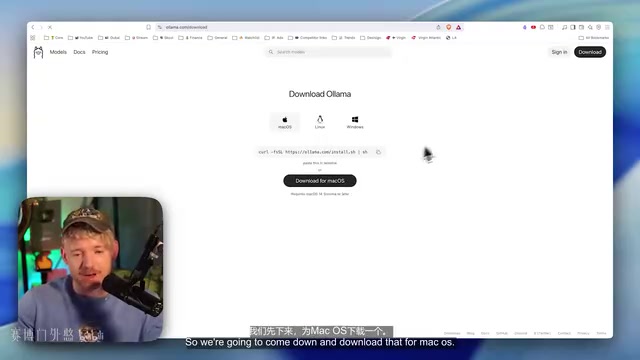
·7 min
Ollama + Hermes Local AI Deployment: Building a 100% Private Personal AI Operating System
Build a fully private local AI system with Ollama + Hermes: zero cost, no rate limits, data stays local. Learn deployment steps, model selection tips, and private/cloud hybrid workflows.
Read more →

·6 min
GPT-5.6 Released: Three-Tier Soul/Terra/Luna Lineup, Orchestration Baked Into the Model
OpenAI releases the GPT-5.6 series with Soul, Terra, and Luna models. Ranked first on Terminal Bench coding evaluation, Ultra mode natively bakes agent orchestration into the model, while revealing Agentic Trace data as the core competitiveness of next-gen AI training.
Read more →