#context compaction
23 related articles
·5 min
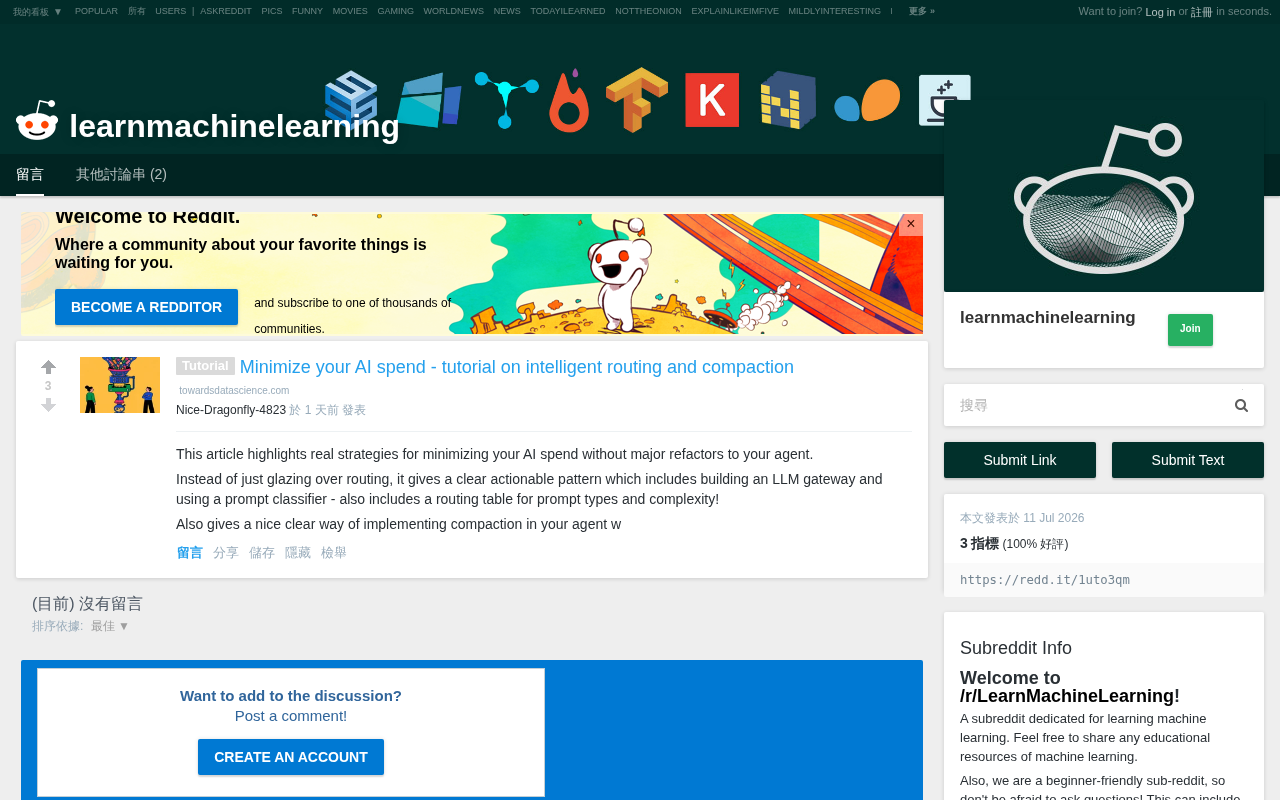
Practical AI Cost Optimization: A Deep Dive into Intelligent Routing and Context Compaction
AI bills keep soaring? This article breaks down two core cost-reduction strategies: intelligent routing via an LLM Gateway, and context compaction to cut Token usage—no major refactoring needed.
Read more →
·4 min
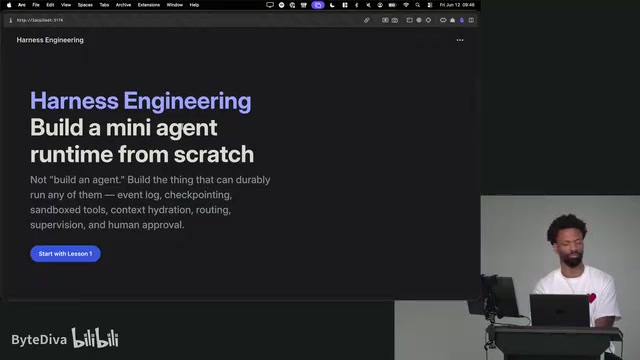
Harness Engineering: The Core Infrastructure for Taking AI Agents from Demo to Production
Deep dive into Harness Engineering: why AI Agents need memory management, durable execution, guardrails & approvals to go from demo to production.
Read more →

·4 min
OpenAI Employee Shares How to Build an AI Work Operating System with Codex
OpenAI's Jason Liu shares how he uses ChatGPT Workbench and Codex to build an AI work OS: Chief of Staff automation, persistent threads, Skills/Plugins, browser control, and app-building methodology.
Read more →

·4 min
GPT-5.6 Value Maxing Practical Guide: From Token Stacking to Output Optimization Methodology
Deep dive into OpenAI GPT-5.6 Value Maxing strategies covering Sol/Terra/Luna model selection, KV cache optimization, Prompt compression, and programmatic tool calling to help developers achieve more output with fewer Tokens.
Read more →

·3 min
Context Engineering: Why Does More Context Make AI Dumber?
Anthropic introduces Context Engineering, revealing Context Rot: the more tokens in the window, the worse AI retrieval accuracy. Learn the three principles, just-in-time retrieval, and three moves against context overflow.
Read more →

·3 min
Pi Agent Review: A Minimalist Coding Agent That's Lightweight, Efficient, and Highly Customizable
Pi Agent hands-on review: ~1,200 token overhead, no built-in system prompts, supports Codex/Grok and more. Compared to Claude Code and OpenCode, Pi Agent wins with minimalist design and full customizability.
Read more →

·6 min
A Deep Dive into OpenAI Codex: How AI Engineers Are Reimagining Software Development with Agents
OpenAI Codex is redefining how AI engineers work: from code completion to autonomous Agents, from single-threaded to parallel Value Maxing. A deep dive into the Codex App architecture, open ecosystem, and Manager of Agents practice.
Read more →

·4 min
The OpenAI Codex Product Philosophy: How AI Engineers Are Shifting from Writing Code to Managing Agents
OpenAI Codex isn't about replacing engineers—it's about empowering them. A deep dive into the AI Engineer conference talk: from code completion to long-horizon agents, Value Maxing, and managing agent teams.
Read more →
·6 min
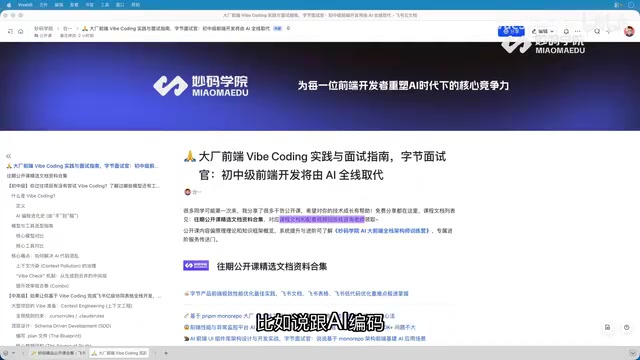
Vibe Coding in Practice at Big Tech: How Frontend Engineers Can Avoid Being Replaced in the AI Era
A big-tech interviewer reveals: junior/mid frontend dev is being replaced by AI. This article breaks down 3 core Vibe Coding interview questions to help you master key skills for the AI-assisted coding era.
Read more →

·3 min
Claude Code Caching Explained: A Practical Guide to Saving Money and Speeding Up
A deep dive into Claude Code's Prompt Caching mechanism, covering the three-layer cache structure, invalidation rules, lifecycle management, and best practices to reduce API costs and boost response speed.
Read more →
LTAP Architecture Deep Dive: Storing P…
·3 min
LTAP Architecture Deep Dive: Storing Postgres Data in Parquet Format on S3
A deep dive into LTAP architecture: storing Postgres data in Parquet columnar format on S3 for compute-storage separation, lower costs, and unified transactional and analytical workloads.
Read more →

·4 min
OpenAI Agents SDK in Practice: Harness and Sandbox Separation Architecture Explained
Deep dive into OpenAI Agents SDK updates covering Harness-Compute separation, Codex-style orchestration, sandbox snapshots, skills system, and multi-agent collaboration with practical demos.
Read more →

·4 min
Four Core Strategies for Building Effective Claude Code Agents
Master Claude Code agents with four core strategies: planning, verification, context management, and system evolution. Move beyond Vibe Coding to systematic AI development.
Read more →

·4 min
Deep Dive into Pi Coding Agent: Why One Developer Abandoned Mainstream AI Tools to Build from Scratch
Veteran developer Mario Zechner dissects flaws in Cloud Code, OpenCode, and Cursor, then builds Pi — a minimalist coding Agent with just four tools and deep extensibility.
Read more →

·3 min
Workstyle Memory Bridge: Making AI Remember How You Work
Explore how Workstyle Memory Bridge uses Slot+Scope unique keys, provenance tracking, and verifiable deletion to solve AI coding assistants' persistent memory loss of collaboration preferences.
Read more →

·3 min
Fed Up with Every AI Coding Assistant, a Veteran Game Developer Built His Own Coding Agent
Veteran game dev Mario tried every AI coding tool including Claude Code, found them all lacking, and built Pi — a minimalist, extensible coding agent framework centered on developer control.
Read more →
·3 min
Deep Dive into Claude Opus 4.8: The AI Paradox of Being More Honest Yet Better at Gaming Tests
Anthropic releases Claude Opus 4.8 with major coding gains and zero false reporting. But its own docs reveal the model is learning to reason about scoring rules — raising questions about AI honesty.
Read more →

·3 min
Save 80% Tokens with Claude Code: Headroom vs RTK vs LinCTX Deep Comparison
Deep comparison of Headroom, RTK, and LinCTX—three open-source context compression tools. Real tests show 80% token savings in Claude Code sessions.
Read more →
 Deep Dives
·3 min
Deep Dive into How OpenClaw (Open-Source Crayfish) AI Agent Works
Deep analysis of OpenClaw AI Agent internals: System Prompt, tool calling, SubAgents, Skill system, memory, and Context Engineering explained.
Read more →
 Tutorials
·3 min
Matt Pocock's AI Coding Workflow: A Complete Methodology from Ideation to Delivery
Deep dive into Matt Pocock's AI-assisted coding workflow: Grill Me consensus building, PRD generation, Tracer Bullet vertical slicing, AFK execution, and Deep Modules architecture design.
Read more →