#convolutional neural network
107 related articles

·3 min
AI Research Automation: More Like Data Cleaning Than Inventing the Transformer
Why AI research automation looks more like data cleaning than inventing the Transformer. Exploring the value of automating 60%-80% of repetitive research work and how human-AI collaboration reshapes the research paradigm.
Read more →
·3 min
AI Research Automation: More Like Data Cleaning Than Inventing the Transformer
AI research automation will look more like data cleaning than inventing the Transformer. Explore how automating 60%-80% of repetitive research work reshapes the AI research paradigm.
Read more →

·3 min
Facial Recognition Training Data: The Real-World Dilemma of Consent and Bias
Exploring the consent and bias challenges in facial recognition training data, analyzing the ethical and cost tradeoffs of scraping, licensing, and self-collection approaches.
Read more →

·3 min
Building a YOLO26 Inference Engine from Scratch in ARM64 Assembly: A Deep Dive into Low-Level Optimization
Deep dive into building a YOLO26n object detection inference engine from scratch using ARM64 assembly and C, covering NEON SIMD, Winograd convolution, GEMM micro-kernels, and cache tiling optimizations.
Read more →

·4 min
30+ Free Classic AI/ML Books Recommended: All Collected in One GitHub Repository
An open-source GitHub repo curates 30+ legally free AI/ML classic books covering deep learning, RL, NLP, computer vision & more, with automated link checking.
Read more →

·3 min
Midjourney's Multi-Industry Expansion: The Cross-Domain Logic Behind Its Move from AI Art to Healthcare and Astrology
Midjourney expands from AI image generation into medical scanning, spas, and astrology apps. Behind the seemingly chaotic diversification lies a clear strategic logic of generative AI's horizontal penetration.
Read more →
·7 min
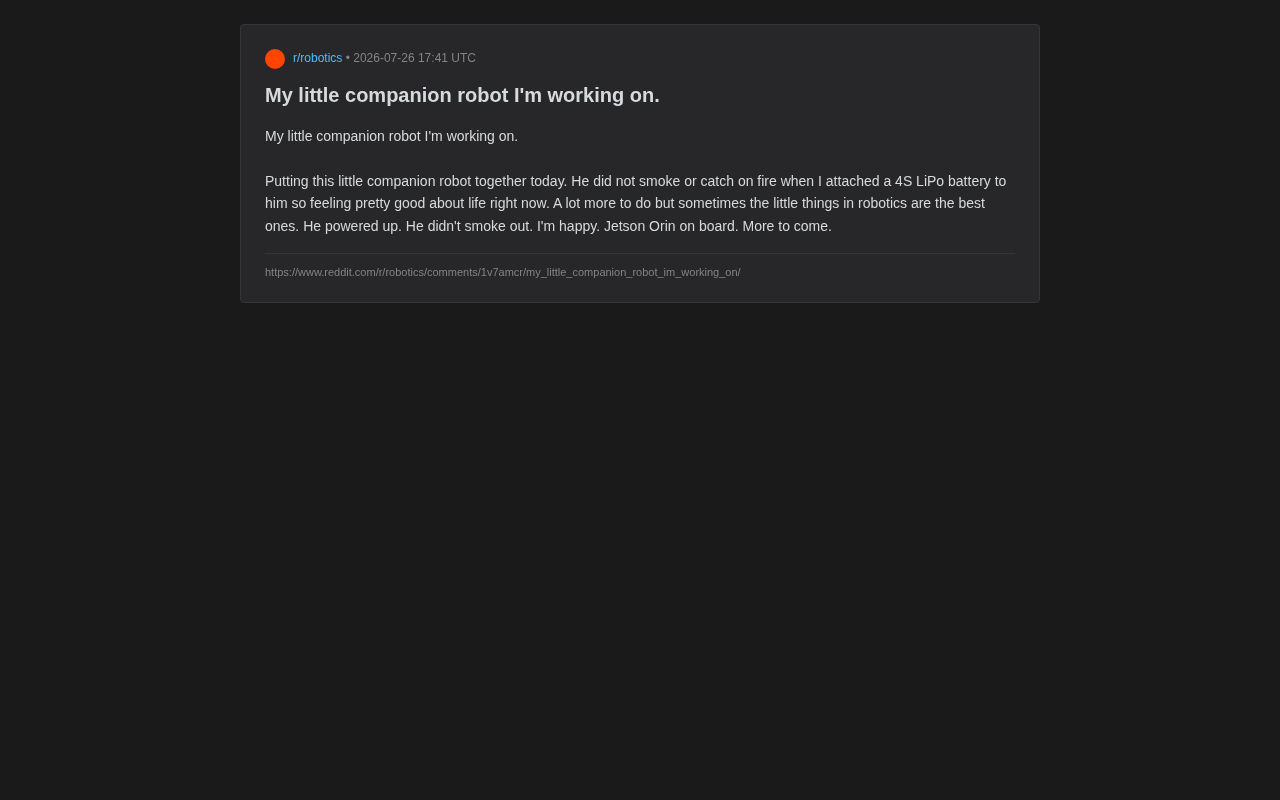
DIY Companion Robot: Building Your AI Desktop Buddy with Jetson Orin
A maker builds a DIY companion robot with NVIDIA Jetson Orin and 4S LiPo battery. Explore the full development journey from first power-up to AI interaction, including edge computing, power design, and companion robot trends.
Read more →

·5 min
30+ Free AI & Machine Learning Classic Textbooks: All in One GitHub Repository
Awesome Free AI Books is an open-source repo with 30+ legally free AI & ML classic textbooks covering deep learning, reinforcement learning, NLP, LLMs, and more — all linking to official sources with weekly automated link checks.
Read more →

·2 min
From Zero to AI Career: A Complete Breakdown of a 3-Month Self-Study Roadmap
Want to break into AI from scratch? This article breaks down an efficient self-study roadmap: from Python, math, and machine learning basics to PyTorch, then to CV, NLP, and data mining—reaching entry-level career-switching intensity in 3 months.
Read more →

·6 min
The CivitAI Early Access Controversy: Where Is the Boundary Between Open-Source Ethos and Commercialization?
CivitAI's paid "Early Access" mechanism has sparked heated debate on Reddit: should functional models stay locked behind paywalls long-term? An in-depth look at creator monetization, community consensus, and platform responsibility.
Read more →
·6 min
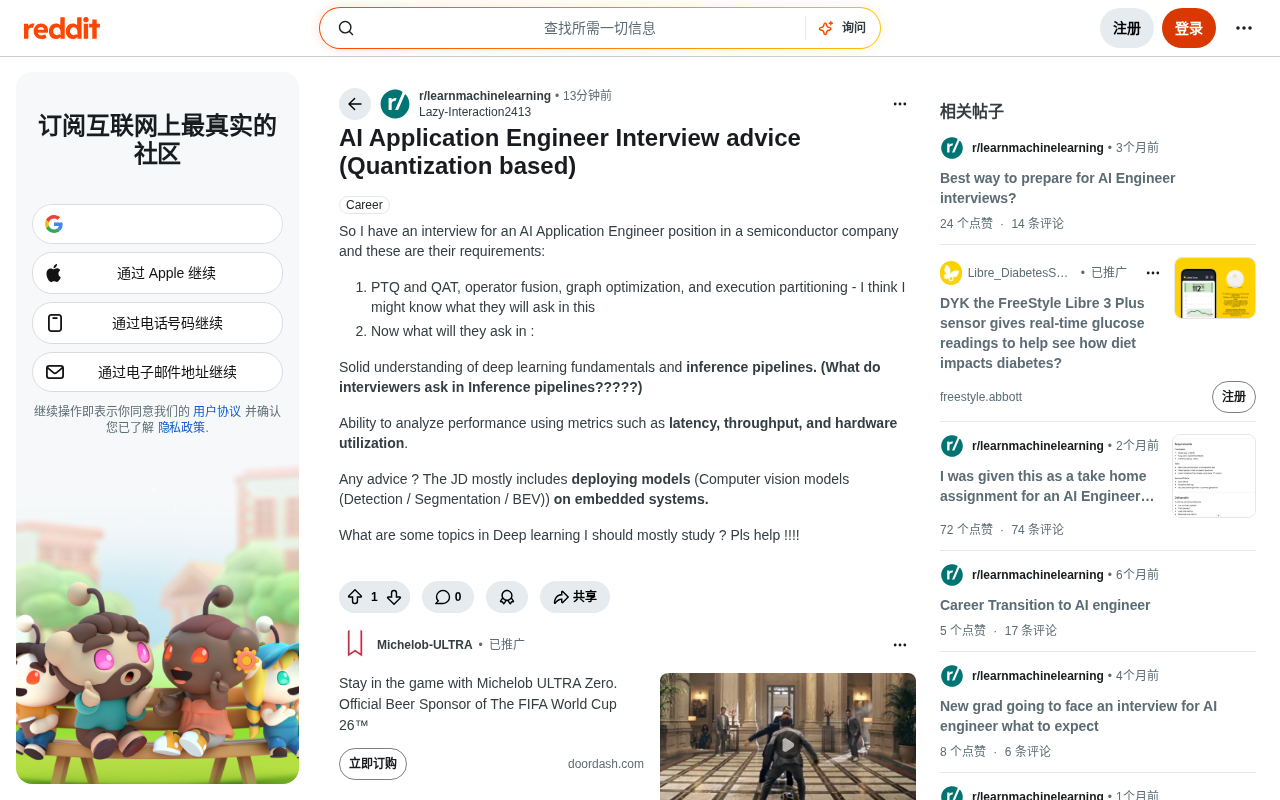
AI Application Engineer Interview Guide: Core Topics on Model Quantization and Inference Deployment
A systematic guide to must-know AI application engineer interview topics: PTQ/QAT quantization, operator fusion, inference pipelines, latency/throughput analysis, and edge deployment of detection/segmentation/BEV models.
Read more →
·6 min
AI Application Engineer Interview Guide: Core Topics in Model Quantization and Inference Deployment
A systematic review of must-know topics for AI Application Engineer interviews: PTQ/QAT quantization, operator fusion, inference pipelines, latency/throughput analysis, and edge deployment of detection/segmentation/BEV models.
Read more →

·6 min
Tongyi Qianwen Qwen-Image-3.0: The Leap of AI Image Generation from Toy to Productivity Tool
Tongyi Qianwen Qwen-Image-3.0 image generation model gets a comprehensive upgrade: supporting 4,500-token ultra-long instructions, pixel-level detail rendering, 12-language knowledge understanding, and ancient painting restoration. This article analyzes its three core capabilities.
Read more →

·3 min
AI Manga Drama Production: Full Workflow from Image Generation to Monetization
A complete guide to AI manga drama production: covering Jimeng, Hailuo, ComfyUI video generation, MiniMax voiceover, Topaz upscaling, and editing — for everyday creators.
Read more →

·2 min
ATLAS: The GeoGuessr AI That Can Guess Any Location — 81% Accuracy Tested
ATLAS is a solo-built AI geolocation tool that identifies global locations from street-view images alone — no metadata. 81% country accuracy, 111 countries, 3-second response, ~4000 avg score.
Read more →

·3 min
Interpretability: The Science and Practice of Opening the Neural Network Black Box
Why do neural networks make the decisions they do? This article explores AI interpretability — mechanistic interpretability, CoT monitoring, and safety auditing — and how researchers reverse-engineer large models for AI safety.
Read more →

·3 min
Google Gemma 4 On-Device Model: Optimized for Pixel 10 TPU — Offline Multimodal Capabilities Tested and Analyzed
Google's Gemma 4 E2B for TPU runs offline on Pixel 10's Tensor G5 chip, enabling local AI chat, image recognition, and audio transcription. We break down the features and real-world test results.
Read more →

·2 min
American Communities Are Fighting Back Against Flock Surveillance Cameras: Privacy Rights vs. AI Surveillance
U.S. communities are organizing to resist Flock Safety ALPR cameras — from petitions to physical destruction — revealing deep public anxiety over AI surveillance, data privacy, and governance gaps.
Read more →

·2 min
Variable-Length Matrix Classification: Choosing the Right Neural Network Architecture for Unordered Set Data
Why do CNNs and RNNs fail on unordered matrix data? Learn about permutation invariance, Deep Sets, and Set Transformer to pick the right architecture for set-based classification.
Read more →

·6 min
Multimodal and Embodied Intelligence: A Comprehensive Look at Progress, Pitfalls, and Opportunities
At the Microsoft Research India summit, top experts explore the real progress of multimodal AI and embodied intelligence: fusing classical robotics with large models, healthcare AI deployment challenges, perceptual bottlenecks in reasoning, and possibilities beyond scaling.
Read more →