#cross-validation
80 related articles

·2 min
Call Codex Directly Inside Claude Code: A Dual-AI Cross-Validation Workflow
Codex Plugin for Claude Code lets developers invoke Codex reviews directly inside Claude Code. Supports code review, proposal review, background task delegation, and context handoff for a dual-AI workflow.
Read more →

·3 min
Claude Code + Codex Cross-Validation: Dramatically Reducing AI Coding Bug Rates
Learn how to combine Claude Code and Codex in a cross-validation workflow — a develop-review-fix loop that dramatically reduces AI coding bug rates.
Read more →
·3 min
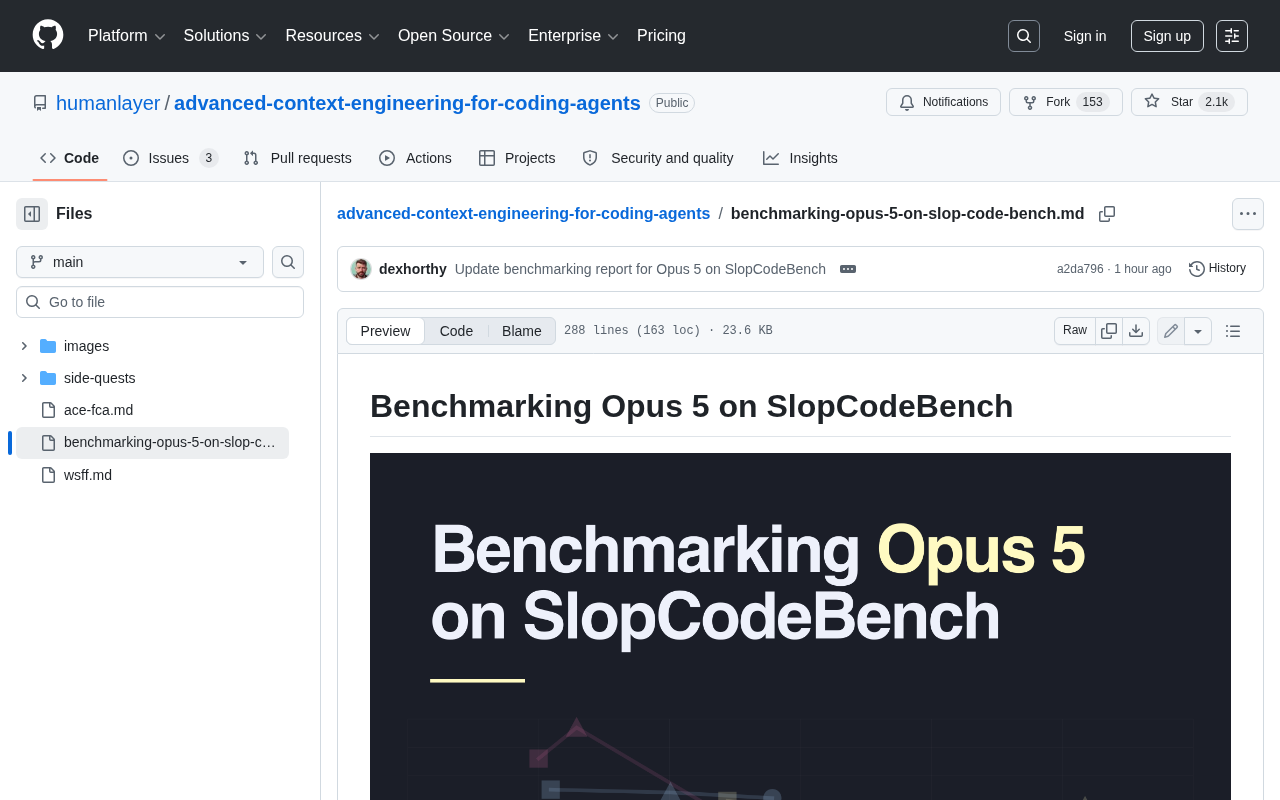
SlopCodeBench: Why AI Code Benchmarks Are Failing
SlopCodeBench sparks deep reflection on AI code evaluation. From benchmark contamination to pass-rate pitfalls, exploring why current benchmarks fail to measure real code quality.
Read more →

·3 min
Claude Opus 5 Officially Released: Performance Approaching the Top Tier as the Open-Weight Debate Heats Up Again
Anthropic releases Claude Opus 5 with near-frontier performance at lower prices. Same day, Jensen Huang co-signs open-weight letter with 20+ companies while DeepSeek fundraising rumors surface.
Read more →
·3 min
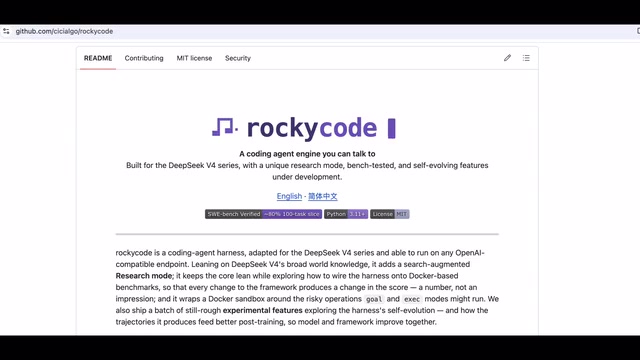
Rocky: An Open-Source Coding Agent with Minimal Architecture and Native DeepSeek Integration
Rocky is a minimal, transparent open-source coding agent with a core loop under a few hundred lines of Python, native DeepSeek search, Research mode, and built-in SWE benchmarking for reproducible agent experiments.
Read more →

·8 min
A Complete Guide to Agent Testing: Five Core Dimensions and Automation in Practice
In-depth analysis of the five core dimensions of AI Agent testing: command safety, tool-calling accuracy, task planning, output consistency, and error self-repair. Master automated testing and the transition path for test engineers.
Read more →

·8 min
The Complete Guide to Agent Testing: Five Core Dimensions and Automation in Practice
An in-depth analysis of the five core dimensions of AI Agent testing: command safety, tool-calling accuracy, task planning, output consistency, and error self-repair. Master automated testing methods and the transition path for test engineers.
Read more →
·7 min
Auditing Cryptographic Libraries with AI: What We Found in Cloudflare's CIRCL
An in-depth look at using AI LLMs to audit Cloudflare's open-source cryptographic library CIRCL, covering constant-time detection, side-channel vulnerabilities, and human-AI collaboration.
Read more →

·3 min
AI-Accelerated Reverse Engineering: Cracking SM2/SM4 Encrypted Freelance Jobs in 30 Minutes
Real freelance case study: how to use DeepSeek and LLMs to reverse-engineer SM2/SM4 encrypted API parameters in 30 minutes, covering anti-debug bypass, call stack backtrace, and AI-assisted deobfuscation.
Read more →

·3 min
Zero-Code Research: Using AI Agents to Run Complete Machine Learning Experiments
No coding required: use AI agents like Codex and Claude Code to complete full ML experiments via natural language. A real case study with a heart disease dataset.
Read more →

·3 min
No-Code Research: Using AI Coding Tools to Complete the Full Machine Learning Pipeline
No coding skills? No problem. Learn how AI tools like Codex and Claude Code let researchers complete ML workflows — data cleaning, model training, visualization — using only natural language.
Read more →

·2 min
GLM Open-Source Model: Can a Million-Token Context Window Challenge Claude Code?
GLM open-source LLM claims 1M-token context, local deployment, and coding ability rivaling Claude Code. We break down the three key selling points and evaluate the hype vs. reality.
Read more →

·2 min
SVM Training Taking 10 Minutes? A Deep Dive into Grid Search Performance Pitfalls for Beginners
SVM training taking 10 minutes on 8,000 samples? This post dissects GridSearchCV combinatorial explosion, probability=True overhead, and redundant params — with actionable fixes.
Read more →

·2 min
Variable-Length Matrix Classification: Choosing the Right Neural Network Architecture for Unordered Set Data
Why do CNNs and RNNs fail on unordered matrix data? Learn about permutation invariance, Deep Sets, and Set Transformer to pick the right architecture for set-based classification.
Read more →

·2 min
Build From Scratch or Just Use sklearn? A Complete ML Engineer Learning Path Guide
Should you implement ML algorithms from scratch or just use sklearn? This guide breaks down the optimal learning path for ML engineers by career stage and company type.
Read more →

·3 min
Agent Performance Evaluation: A Three-Layer Framework and Engineering Implementation Guide
A deep dive into the three-layer AI Agent evaluation framework — outcome, process, and system layers — covering trajectory evaluation, tool call accuracy, automated testing, and key engineering challenges.
Read more →

·2 min
Vibe Coding in Practice: AI Agents Complete Full Research Experiments in Minutes
No coding required — just describe your needs in natural language. AI Agents handle data cleaning, model training, and visualization automatically. We tested Codex and Claude Code on a heart disease prediction task.
Read more →

·2 min
GPT Live Real-Time Translation Tested: What Does It Mean for Simultaneous Interpreters?
OpenAI's GPT Live achieves true full-duplex real-time translation, with English output streaming before Chinese input finishes. We analyze the tech, its limits, and what it means for simultaneous interpreters.
Read more →

·2 min
Hermes MoA Multi-Model Collaboration: A Real-World Test of Quality Leaps on Complex Problems
Real-world test of Hermes 0.18 MoA (Mixture of Agents): multiple models collaborate, advisors answer independently, a decision-maker synthesizes. Covers setup, speed, cost trade-offs, and best practices.
Read more →

·3 min
A Practical Methodology for Non-Technical Professionals to Evaluate AI Translation Quality
No technical background? Learn how to rigorously evaluate AI translation accuracy and reproducibility. A practical hybrid scoring framework for NGOs and non-technical evaluators.
Read more →