#cursorrules
80 related articles

·7 min
From Chat to Agent Platform: A Practical Guide to Engineering AI Applications
A deep dive into engineering AI applications: from a simple chat page to a multi-layer Agent platform, covering RAG knowledge bases, Workflow scheduling, multi-model management, and run tracing.
Read more →

·4 min
Vibe Coding vs. AI-Assisted Engineering: An In-Depth Look at Enterprise-Level Development
Can AI coding tools let non-developers replace programmers? This deep dive examines Vibe Coding's real limits, compares Claude Code vs. Codex, and reveals the methodology behind enterprise-grade AI-assisted software engineering.
Read more →

·3 min
ByteDance Interviewer Deep Dive: How Vibe Coding Is Reshaping Frontend Engineers' Core Competitiveness
A ByteDance interviewer breaks down the 3-layer Vibe Coding interview framework: AI tool awareness, complex product engineering, and a 1-hour full-stack challenge. Architectural thinking wins.
Read more →

·3 min
AI Coding Agents in Practice: An Efficient Configuration Guide for Cursor and Codex
How to configure Cursor, Codex, Devin, and other AI coding agents for context management, code quality, and cross-tool collaboration. Practical tips on rule files, TDD, and structured context storage.
Read more →
Ghostcommit Attack Explained: How Mali…
·2 min
Ghostcommit Attack Explained: How Malicious PNGs Bypass AI Code Review
Ghostcommit is a new supply chain attack targeting AI coding tools that hides malicious instructions in PNG pixels, bypassing automated code review to steal .env secrets via indirect prompt injection.
Read more →

·3 min
Codex Efficiency Guide: Practical Strategies to Avoid Burning Through GPT-5.6 Credits
GPT-5.6 (Sol) is powerful but burns credits fast. Learn reasoning tier selection, Fast Mode, and prompt stop-point strategies to get the most out of Codex.
Read more →

·6 min
Spec-Driven Development in Practice: The New AI Coding Paradigm from Andrew Ng × JetBrains
Andrew Ng partners with JetBrains to launch a Spec-Driven Development course, teaching how to direct AI coding agents via spec files to boost intent fidelity and build maintainable production apps.
Read more →

·5 min
The Complete OpenCode Tutorial: Installation, Commands, and Advanced Practice
Systematically learn the OpenCode AI programming tool: covering both desktop and WSL installation, core commands, model and rule configuration, MCP integration, and Agent Skills.
Read more →

·6 min
Vibe Coding in Practice at Big Tech: How Frontend Engineers Can Avoid Being Replaced in the AI Era
A big-tech interviewer reveals: junior/mid frontend dev is being replaced by AI. This article breaks down 3 core Vibe Coding interview questions to help you master key skills for the AI-assisted coding era.
Read more →

·4 min
Agent Skills Explained: A Five-Level Evolution from Prompt to AI Expert
A deep dive into Agent Skills: from basic prompts to fully encapsulated AI capability units. Five levels of human-AI interaction evolution, with clear distinctions between Skills, MCP, and Workflow.
Read more →

·5 min
From Prompts to Harness Engineering: The Evolution of AI Agent Development Paradigms
Why has AI engineering methodology evolved from prompts to context engineering and now Harness engineering? This article examines three paradigms, key bottlenecks, and the Agent = Model + Harness formula.
Read more →

·4 min
OpenWiki: A CLI Tool That Automatically Generates AI Agent Documentation for Codebases
OpenWiki is an open-source CLI tool that automatically generates and maintains structured documentation for AI agents. It addresses the context gap in AI coding assistants like Claude Code and Cursor, helping teams build effective context engineering workflows.
Read more →

·4 min
Harness Engineering: The Third Phase of AI Coding and a Practical Guide to agents.md
A deep dive into Harness Engineering — the third phase of AI coding. Based on research across 2,853 GitHub repos, explore agents.md, Skills, MCP, and eight configuration mechanisms to control your AI coding assistant.
Read more →

·6 min
Playwright E2E Builder: Engineering AI-Driven Web Automation Testing
Playwright E2E Builder is an AI Skill installed in Cursor that transforms UI automation from throwaway scripts into sustainable engineering assets through a four-step workflow, with built-in locator health checks.
Read more →
·6 min
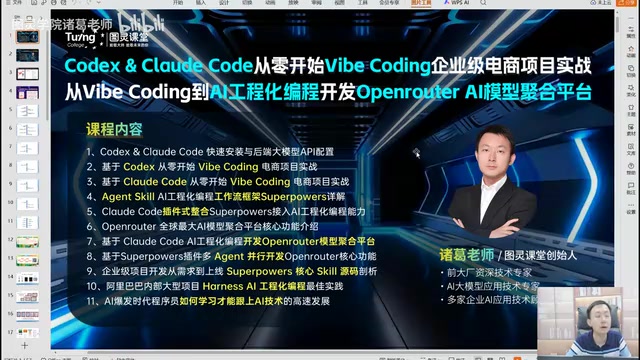
Understanding the Limits of Vibe Coding: A Practical Guide to AI Engineering-Grade Programming
An in-depth look at the difference between Vibe Coding and AI engineering-grade programming. Can AI replace programmers? From Claude Code and Codex to Cursor, revealing the real limits, enterprise pain points, and engineering solutions of AI coding tools.
Read more →

·7 min
Engineering Vibe Coding in Practice: Taming AI Programming with Superpowers and gstack
A deep dive into engineering Vibe Coding: using Superpowers for project-level decomposition and gstack for module layering and constraints to tame AI coding assistants like Codex and Claude Code.
Read more →

·6 min
Codex Beginner's Guide: Four Product Forms Explained, Plus Comparison with Claude Code and Cursor
In-depth analysis of OpenAI Codex's four usage forms, comparing Codex, Claude Code, and Cursor across price, stability, and frontend/backend fit to help developers choose the right AI programming tool.
Read more →

·7 min
A New Core Skill for Programmers: How to Effectively Lead Your AI Agent Dev Squad
Coding alone isn't enough anymore. Learn the 5 key steps to commanding AI Agents—define outcomes, split tasks, provide context, iterate small, and keep humans in the loop.
Read more →

·2 min
43k Stars: Ponytail's Six-Step Decision Framework That Cuts AI-Generated Code by 54%
Ponytail's six-step decision ladder forces AI to ask "is this necessary?" before coding. Benchmarks across 12 tasks: 54% less code, 22% fewer tokens, 100% security retained. Works with Cursor, Claude, and more.
Read more →

·3 min
Complete Guide to Harness Engineering: The Three-Layer Architecture for AI Engineering Development
A deep dive into Harness Engineering's core architecture covering the Information, Constraint, and Automation layers to systematically constrain and verify AI Agent output for reliable development.
Read more →