#diffusion model ODE solver
10 related articles

·3 min
Convergence Analysis of High-Order ODE Solvers for Diffusion Models: Error Bounds and Fast Sampling Theory
A deep dive into convergence theory for high-order ODE solvers in diffusion models: error decomposition, Ghost Flow construction, C2 regularity verification, and the mathematical foundations of DPM-Solver fast sampling.
Read more →

·4 min
RAM: First-Principles Approach to 50x Faster RL Post-Training for Diffusion Models
RAM (Reinforce Adjoint Matching) achieves 50x faster RL post-training for diffusion models by discarding path costs, combining ODE sampling with decorrelated training objectives. A deep dive into RAM's core principles and experiments vs. Flow-GRPO.
Read more →
Paper Reproduction as an Entry Point i…
·4 min
Paper Reproduction as an Entry Point into Scientific Machine Learning: Path Selection and Pitfall Guide
How can applied math students efficiently enter Scientific Machine Learning (SciML)? This guide covers the value and pitfalls of paper reproduction, with a layered path from numerical PDEs to research.
Read more →

·4 min
LingBot-World 2.0 Meets SGLang: A Deep Dive into the Evolution of Real-Time Interactive World Models
SGLang-Diffusion now officially supports LingBot-World 2.0, delivering leaps in resolution and temporal consistency. With live sessions, chunked streaming, and camera control, world models achieve low-latency controllable interaction.
Read more →

·5 min
In-Depth Comparison of AI Image Generation Tools: How to Choose Between Flux, Midjourney, and Gemini?
A comprehensive comparison of mainstream AI image generation tools: Flux, Midjourney, Grok, Gemini, and Stable Diffusion. Dissecting their pros and cons across quality, freedom, and usability to help you find the right AI drawing solution.
Read more →

·3 min
Seedream 5.0 Pro In-Depth Review: A Complete Analysis of Its Chinese-Language Image Generation
First-look review of ByteDance Seedream 5.0 Pro covering art, Chinese text layout, character sheets, and commercial UI — benchmarked against GPT Image 2 and Nano Banana Pro.
Read more →

·7 min
Krea2 Tested: Does the FP8 vs BF16 Quality Gap Still Exist?
A Reddit user compared FP8 and BF16 precision on the Krea2 model and found almost no difference in image quality. This article analyzes the technical reasons behind the shrinking quantization gap and its real-world impact on VRAM usage and inference speed.
Read more →

·7 min
HuggingFace Open-Sources ml-intern: An AI Engineer That Reads Papers and Trains Models Autonomously
Hugging Face's open-source ml-intern autonomously reads papers, writes training scripts, and finetunes LLMs, deeply integrating the HF ecosystem and smolagents. Explore its features and impact on ML careers.
Read more →
·3 min
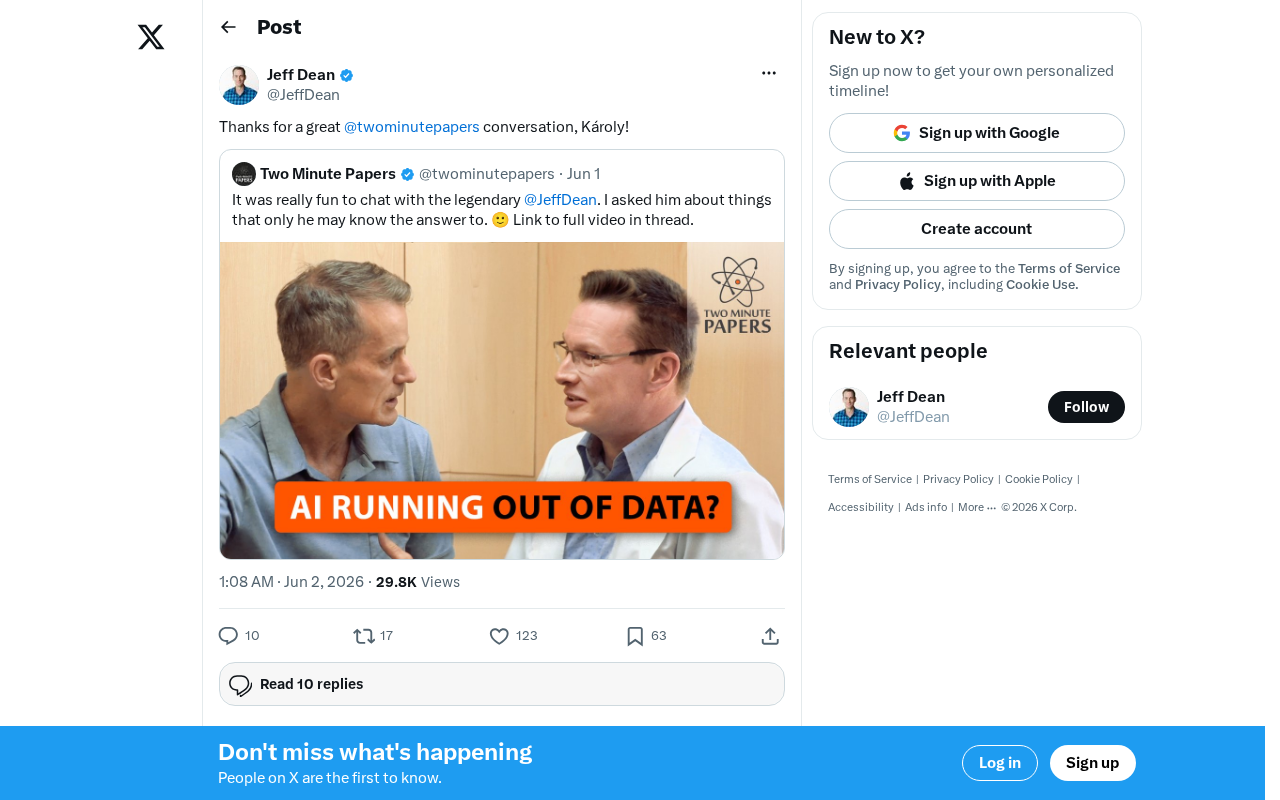
Two Minute Papers: The Gold Standard for Making Cutting-Edge AI Research Accessible
An in-depth look at how Two Minute Papers explains cutting-edge AI research in two minutes, covering Károly's methodology, topics, and lessons for science communicators.
Read more →
 Tutorials
·2 min
npcpy: An Open-Source Framework That Rethinks AI Agent Development with Software Engineering Principles
Deep dive into npcpy's four-layer architecture, multi-agent collaboration, knowledge graph lifecycle management, and deployment strategies for building stable, controllable AI Agent systems.
Read more →