#low-cost AI programming
180 related articles

·3 min
Complete Guide to Connecting Codex with DeepSeek: Low-Cost AI Programming with Codex++
Learn how to connect DeepSeek to Codex using the open-source tool Codex++. Complete setup guide covering provider config, connection testing, and launch steps to slash AI coding costs.
Read more →

·2 min
Trae + Claude Code + DeepSeek: A Low-Cost AI Programming Combo Explained
A detailed guide to the Trae, Claude Code, and DeepSeek AI programming combo — just 20 RMB/week in API costs. Covers setup steps, practical tips, and layered collaboration strategies.
Read more →
 Tutorials
·3 min
Low-Cost Solution for Using GPT Models with Claude Code: Build an AI Programming Workflow for ~$1.50/Month
How to use ClipRoxyAPI local proxy to combine Claude Code's programming UX with GPT Codex Team models for under $1.50/month with ample quota and full privacy.
Read more →

·4 min
Cursor Start India Plan at ₹649/Month: Decoding the Regional Pricing Strategy for AI Coding Tools
Cursor launches its Start plan for India at ₹649/month (~$7.70), featuring Grok 4.5 and Composer Agent. A deep dive into the PPP pricing strategy and its market implications.
Read more →

·4 min
Spring AI 2.0 in Practice: Building an Enterprise RAG Knowledge Base Q&A System with Cursor
Build an enterprise RAG knowledge base Q&A system using Spring AI 2.0, Cursor AI programming, Ollama local deployment, and Redis vector storage. Runs on just 4GB VRAM.
Read more →

·4 min
WebMCP in Practice: How MakeMyTrip Is Reshaping the Travel Booking Experience
India's largest OTA platform MakeMyTrip uses WebMCP to standardize AI Agent interactions with web apps, replacing fragile DOM scraping with natural language-driven test automation and simplified complex booking scenarios.
Read more →

·4 min
WebMCP in Practice: How MakeMyTrip Is Reshaping the Travel Booking Experience
India's largest OTA platform MakeMyTrip uses WebMCP to standardize AI Agent interaction with web apps, solving DOM scraping fragility, enabling natural language test automation, and simplifying complex international flight bookings.
Read more →

·3 min
Claude Opus 5 Officially Released: Performance Approaching the Top Tier as the Open-Weight Debate Heats Up Again
Anthropic releases Claude Opus 5 with near-frontier performance at lower prices. Same day, Jensen Huang co-signs open-weight letter with 20+ companies while DeepSeek fundraising rumors surface.
Read more →

·3 min
Chinese Open-Source AI Conquers Silicon Valley: The Industry Upheaval Behind a 58% Compute Share
Chinese open-source AI models surged from under 10% to 58% of U.S. AI consumption. Kimi K3, DeepSeek, and Qwen are reshaping AI cost structures as DoorDash, Airbnb, and other Silicon Valley giants adopt them at scale.
Read more →

·3 min
Kimi K3 Launch: Performance Rivaling Claude at One-Third the Price, US-China AI Gap Narrows to 3 Months
Moonshot AI launches Kimi K3 reasoning model with performance rivaling Claude and OpenAI's top models at one-third the price. The US-China AI gap narrows from 6-12 months to just 3 months.
Read more →

·3 min
Open Source vs. Closed Source: Who Will Win the US-China AI Battle?
Chinese open-source models DeepSeek and Kimi K3 are challenging OpenAI's closed-source dominance. Analyzing the business logic, chip ecosystems, and US-China strategic dynamics behind the open vs. closed AI debate.
Read more →
·3 min
Chinese Open-Source AI Conquers Silicon Valley: The Industry Upheaval Behind a 58% Compute Share
Chinese open-source AI models surged from under 10% to 58% of U.S. market share. Kimi K3, DeepSeek, and Qwen are being adopted by DoorDash, Airbnb, and other Silicon Valley giants, reshaping AI costs and competition.
Read more →

·4 min
Jensen Huang Rallies 20 American Companies Behind Open-Source AI, Mounting Pressure on Closed-Model Approach
Jensen Huang's AI manifesto rallies Microsoft, Meta, Dell & 17 more companies behind open-source AI, challenging closed-model monopolies on pricing, IP, and security.
Read more →

·4 min
Chinese AI Accounts for 58% of US Compute Consumption: How Open-Source LLMs Are Disrupting Silicon Valley
OpenRouter data shows Chinese AI models now account for 58% of US AI consumption. Silicon Valley giants like DoorDash and Airbnb adopt Kimi, DeepSeek, and Qwen for their low cost and open-weight advantages.
Read more →
·4 min
Chinese AI Accounts for 58% of US Compute Consumption: How Open-Source LLMs Are Disrupting Silicon Valley
OpenRouter data shows Chinese AI models now account for 58% of US AI consumption. Silicon Valley giants like DoorDash and Airbnb adopt Kimi, DeepSeek, and Qwen, leveraging low cost, high performance, and open weights.
Read more →

·3 min
Open Source vs. Closed Source: Who Will Win the US-China AI Battle?
Chinese open-source models DeepSeek and Kimi K3 challenge OpenAI's closed-source dominance. Analysis of open vs. closed AI strategies, CUDA moat erosion, and the US-China strategic battle for AI supremacy.
Read more →

·2 min
Impeccable Open Source Project Deep Dive: A Design Language Framework That Gives AI a Designer's Eye
Deep dive into the trending open source project Impeccable — a design language framework that enables AI tools to generate professional-grade UI. Learn how it bridges the design quality gap in AI-generated interfaces.
Read more →

·3 min
Opus vs Gemini vs GPT: Top AI Model Comparison & Evaluation Methodology
In-depth analysis of Claude Opus, Gemini Pro, and ChatGPT: the real competitive landscape among top AI models, limitations of community benchmarks, and scientific methods for model selection.
Read more →

·4 min
The Truly Scarce Skills of the AI Era: Why Focus and Execution Are the New Moat
When AI tools let everyone code and design, where is your edge? A deep analysis of why focus and execution are the scarcest superpowers in the AI era.
Read more →
·3 min
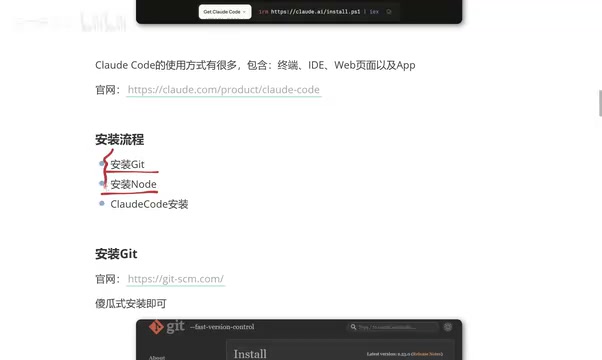
Getting Started with Claude Code: Installation, Configuration, and Three Working Modes Explained
Get started with Claude Code from scratch: detailed Windows installation, environment variable setup, China network bypass, and connecting to free Alibaba Cloud Bailian models—plus the three working modes.
Read more →