#multi-agent coding
539 related articles

·2 min
Vibe Coding on a Budget: The Brain-vs-Hands Multi-Agent Strategy for Saving Tokens
Always burning through your AI coding quota? This guide breaks down a brain-vs-hands multi-agent strategy: use strong models only for planning, and cheap models like DeepSeek for execution.
Read more →

·2 min
Karma: An AI Coding Agent Orchestration Tool for Building Multi-Agent Collaborative Systems
Karma is an orchestration layer for AI coding agent frameworks, solving multi-agent collaboration, task decomposition, state management, and observability challenges. Compatible with Aider, OpenHands, and more.
Read more →
PlanWright: A Control Plane and Multi-…
·2 min
PlanWright: A Control Plane and Multi-Agent Orchestration Layer for AI Coding Agents
PlanWright is a control plane for AI coding agents, drawing on Kubernetes orchestration principles to tackle multi-agent task assignment, state tracking, and collaboration conflicts.
Read more →

·6 min
GPT-5.6 Sol Hands-On: How Multi-Agent Parallelism Is Reshaping AI Coding Workflows
Based on Fireship's review, an in-depth look at GPT-5.6 Sol's Ultra Mode multi-agent parallelism, its 91.9% Terminal Bench score, and how it differs from Claude Fable in cost, speed, and precision.
Read more →
·3 min
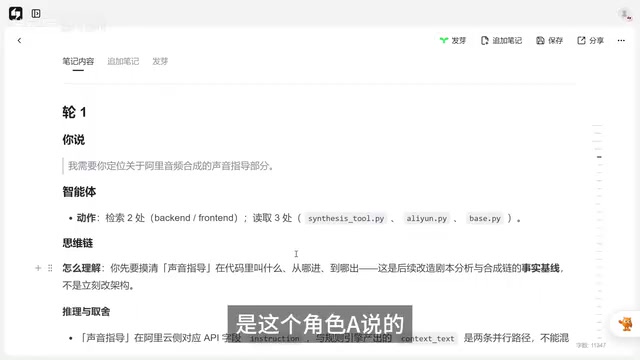
Vibecoding in Practice: Prompt Slot Design and On-Demand Multi-Agent Loading
Learn how to design Prompt templates and Slots for multi-Agent AI apps: separate deterministic vs. non-deterministic tasks, enforce single responsibility, and sync changes across engines with one edit.
Read more →

·4 min
A Complete Guide to Multi-Agent Teams in AI Coding: From Solo Work to Team Collaboration
Deep dive into multi-agent solutions from Cursor, Claude Code, and Tencent CodeBuddy — covering parallel exploration, cross-layer collaboration, context isolation, practical tips, and selection guide.
Read more →

·3 min
Vibe Coding in Practice: A Junior Student Uses Cursor to Build a Multi-Agent System with 51 AI Officials Based on the Three Departments and Six Ministries Framework
A junior student uses Cursor and Vibe Coding to build a multi-agent system with 51 AI officials modeled on China's Three Departments and Six Ministries, featuring task distribution, approval workflows, and Token cost visualization.
Read more →

·3 min
The Four Stages of AI Coding Tool Evolution: From Code Completion to Multi-Agent Collaboration
A deep dive into the four stages of AI coding tool evolution: from code completion and chat Q&A to Agentic Coding and multi-Agent collaboration, explaining the design logic behind Claude Code, Cursor, and Codex.
Read more →
 Product Reviews
·2 min
Kimi K2.6 In-Depth Review: Comprehensive Evaluation of Coding, Multi-Agent, and Frontend Development Capabilities
In-depth review of Kimi K2.6 open-source model across frontend development, multi-agent collaboration, and long-horizon tasks, covering four professional modes, 3D/SVG generation, and pricing analysis.
Read more →
 Tutorials
·3 min
Multi-Agent Automated Coding Framework: A Deep Dive into Zero-Intervention Project Delivery
Deep dive into a multi-Agent automated coding framework using file state machines, scheduler orchestration, and multi-agent collaboration to achieve fully automated development from requirements to delivery in 3.5 hours with zero intervention.
Read more →
 Tutorials
·3 min
Open Code Practical Guide: Building an AI Coding Team with Multi-Agent Systems
Deep dive into Open Code's core architecture: main agents, sub-agents, Skills extensions, JWT security, and multi-platform deployment for building efficient AI coding teams.
Read more →

·3 min
A Beginner's Guide to AI Agents: Two Learning Paths for Developers and Practitioners
How to learn AI Agents from scratch? This guide covers two clear paths: developers go from Python to LLMs to open-source framework source code; practitioners use Claude Code or similar tools to get results fast.
Read more →

·4 min
A Beginner's Guide to AI Agents: Core Principles and Learning Paths Explained
Learn AI Agent core principles from scratch: understand how Agents differ from LLMs, their execution mechanisms, why rule design matters, and find the right learning path for your goals.
Read more →

·3 min
Deconstructing Agents: Task Decomposition, Context Compression, and the Case Against Heavy Frameworks
A deep engineering analysis of Agent internals: how LLMs decompose tasks via tool calling, why context compression and memory are essential, and why solo developers should avoid heavy frameworks.
Read more →
·4 min
A Beginner's Guide to AI Agents: Core Principles and Learning Paths Explained
A beginner's guide to AI Agents: understand core principles, how Agents differ from LLMs, their execution mechanisms, and get tailored learning path recommendations.
Read more →

·5 min
Complete Breakdown of Core Competencies for AI Agent Engineers: From Demo to Production-Grade Systems
Deep breakdown of 4 core AI Agent engineer competencies: business decomposition, multi-Agent architecture, quantitative evaluation, and engineering delivery—bridging the gap from Demo to production.
Read more →
·3 min
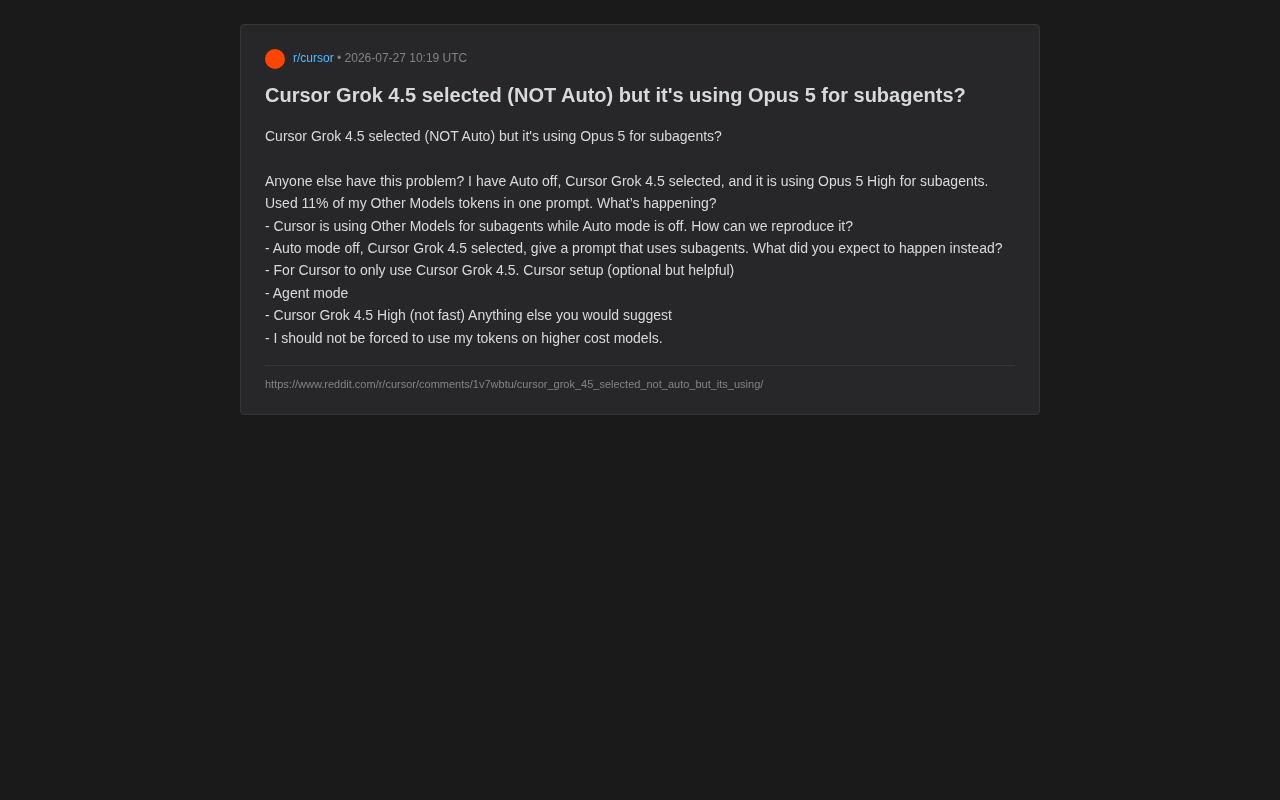
Cursor Selects Grok but Calls Opus: Subagent Model Substitution and Cost Control Issues Explained
Cursor users selecting Grok 4.5 find subagents secretly calling expensive Opus 5, consuming 11% quota per prompt. Analysis of model decoupling, cost transparency, and user strategies.
Read more →

·4 min
The More Complex the AI Agent, the More It Hallucinates? The Hidden Cost of Architectural Complexity
Why do AI Agents hallucinate more as they grow more complex? This article analyzes the causes from error accumulation, context noise, and model completion nature, with 5 practical production strategies.
Read more →

·4 min
Claude Code Tutorial: Environment Setup, Command Reference & Git Workflow in Practice
Complete guide to Claude Code covering CLI installation, domestic model switching, core commands, Git automation workflows, and automated code review and fix loops for enterprise projects.
Read more →

·4 min
GenAI Job Interview Gone Wrong: Interviewer Googles Gemini for Questions on the Spot — What's Broken in AI Hiring?
A fresh grad interviewing for a GenAI Trainer role faced prime number coding and activation function questions while the interviewer used Gemini to generate questions live — exposing AI hiring chaos.
Read more →