#neural style transfer
92 related articles

·4 min
Are AI Coding Tools Making Developers Dumber? The Efficiency vs. Competence Dilemma
After heavy use of AI coding tools like Cursor and Claude, an indie developer discovers his debugging and code comprehension skills are eroding. Exploring the skill atrophy risks behind AI-boosted productivity.
Read more →

·3 min
PIRL Framework Explained: A Smooth Transition from Open-Loop Exploration to Closed-Loop Reinforcement Learning
Deep dive into the PIRL reinforcement learning framework: how to smoothly transition from open-loop exploration to closed-loop RL, mitigating the exploration-exploitation dilemma and improving sample efficiency.
Read more →
·3 min
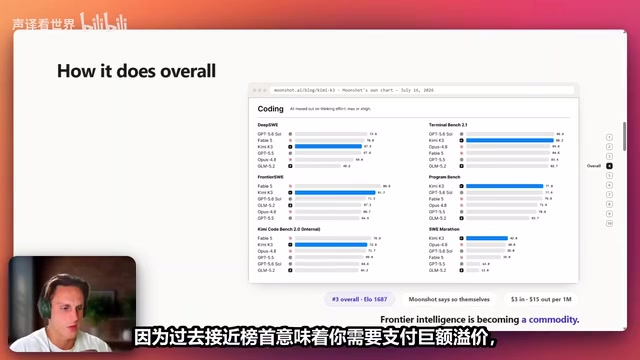
Kimi K3 Hands-On Tutorial: Claude Code Sub-Agent Configuration & GPT-5.6 Comparison Test
Complete guide to configuring Kimi K3 as a Claude Code sub-agent, including API setup, YFlow workflow building, and head-to-head comparison with GPT-5.6 and Claude Fable 5.
Read more →

·4 min
Laguna S 2.1 Deep Dive: Hands-On Local Deployment of a 118B Parameter Coding Model
In-depth review of Poolside's Laguna S 2.1 open-source coding model: MoE architecture, RL training, DGX Spark local deployment, and real-world agentic coding tests with 8B active parameters.
Read more →

·3 min
Deepfake Detection Datasets: A Complete Guide to AI-Generated Faces, Face Swaps, and Real Face Public Resources
A systematic guide to public face datasets for deepfake detection research, covering FaceForensics++, Celeb-DF, FFHQ, and more, organized by AI-generated, deepfake, and real face categories.
Read more →

·3 min
Midjourney's Multi-Industry Expansion: The Cross-Domain Logic Behind Its Move from AI Art to Healthcare and Astrology
Midjourney expands from AI image generation into medical scanning, spas, and astrology apps. Behind the seemingly chaotic diversification lies a clear strategic logic of generative AI's horizontal penetration.
Read more →

·7 min
DIY Companion Robot: Building Your AI Desktop Buddy with Jetson Orin
A maker builds a DIY companion robot with NVIDIA Jetson Orin and 4S LiPo battery. Explore the full development journey from first power-up to AI interaction, including edge computing, power design, and companion robot trends.
Read more →

·4 min
Burning Through 80 Billion Tokens: Why Vibe Coding Is Doomed to Fail
A creator spent 40 days and 80 billion tokens testing the real limits of Vibe Coding. This article dissects why AI programming crashes in production: complexity, context limits, and compression loss.
Read more →

·6 min
The CivitAI Early Access Controversy: Where Is the Boundary Between Open-Source Ethos and Commercialization?
CivitAI's paid "Early Access" mechanism has sparked heated debate on Reddit: should functional models stay locked behind paywalls long-term? An in-depth look at creator monetization, community consensus, and platform responsibility.
Read more →

·7 min
DeepSeek's Mysteriously Retracted Paper: Breaking AI's Multimodal Reasoning Bottleneck with Visual Primitives
DeepSeek's paper 'Thinking with Visual Primitives' was online for just 4 hours before being pulled. It uses bounding boxes and points as reasoning primitives, letting models 'point at' images to outperform GPT, Gemini, and Claude on maze navigation and counting.
Read more →

·8 min
LangChain Crash Course: A Complete Roadmap from Zero to Agent Development
A systematic roadmap from LangChain and LangGraph to multi-agent development, covering RAG, Tool Calling, MCP, and more, helping developers break into AI app development.
Read more →

·3 min
From Word Vectors to Large Language Models: The Complete Evolution of AI 2.0 Technology
From word vectors and embeddings to RNNs, BERT, Transformers, and ChatGPT — a complete guide to the technical evolution of large language models and the AI 2.0 era.
Read more →

·6 min
Hands-On with Qwen 3.8 Max: How an Open-Source Model Closes In on Top-Tier Closed Models
Qwen 3.8 Max has 2.4 trillion parameters and will be open-sourced. In KingBench testing it scored 81.25%, ranking second, beating Claude Opus 4.8 and trailing only Fable 5. A deep dive into its performance across 8 tests.
Read more →

·6 min
Tongyi Qianwen Qwen-Image-3.0: The Leap of AI Image Generation from Toy to Productivity Tool
Tongyi Qianwen Qwen-Image-3.0 image generation model gets a comprehensive upgrade: supporting 4,500-token ultra-long instructions, pixel-level detail rendering, 12-language knowledge understanding, and ancient painting restoration. This article analyzes its three core capabilities.
Read more →

·7 min
AI Daily: T-Head Open-Sources SAIL Software Stack at WAIC, Flurry of Large Model Releases
T-Head open-sources AI software stack T-Head SAIL at WAIC to lower the barrier for domestic chip development; Kimi K3 tops the WebDev leaderboard; Qwen 3.8 Max Preview cuts prices aggressively; Moonshot prepares a Hong Kong IPO; and Oracle switches its data center to a fuel cell microgrid.
Read more →

·2 min
OpenAI's New Voice Assistant Tested: It Interrupts, Simultaneous Interprets, and Gets Flustered
OpenAI's upgraded voice assistant can speak dialects, do real-time simultaneous interpretation, teach English, and even get flustered. Here's what changed.
Read more →

·3 min
How CS Students Should Use AI to Learn Programming — Without the "Used It But Learned Nothing" Trap
Many CS students use AI to learn programming but later feel they didn't truly learn. This article breaks down the two AI learning traps and offers Socratic questioning, the Feynman Technique, and more to turn AI into a real learning accelerator.
Read more →
Bonsai Open Source Project Deep Dive: …
·2 min
Bonsai Open Source Project Deep Dive: A Fresh Approach to Edge AI with Lightweight Machine Learning
Bonsai is a Shell-based lightweight ML open source project that gained 196 GitHub stars in one day. This deep dive covers its TinyML positioning, edge AI use cases, and value for embedded AI developers.
Read more →

·3 min
How to Defend Against AI Scams: Three Essential Strategies Every Person Should Know
AI face-swapping and voice cloning make fraud nearly free. Learn how deepfake tech evolved, why detection tools fall short, and three practical strategies to verify real identity.
Read more →
Painterly: Turning Photos into Oil Pai…
·2 min
Painterly: Turning Photos into Oil Paintings with Algorithms — No Generative AI Required
Painterly transforms photos into digital paintings using NPR stroke-rendering algorithms — no Stable Diffusion or generative AI required. Explore its tech, privacy benefits, and copyright advantages.
Read more →