#observability
351 related articles

·3 min
Unified Prompt Management, Evaluation & Observability: A Comprehensive Comparison of LangSmith and Other Leading Platforms
In-depth comparison of LangSmith, Langfuse, PromptLayer, Helicone, and Orq.ai across Prompt management, Evals, and observability to help teams choose the best unified LLM Ops platform.
Read more →
·2 min
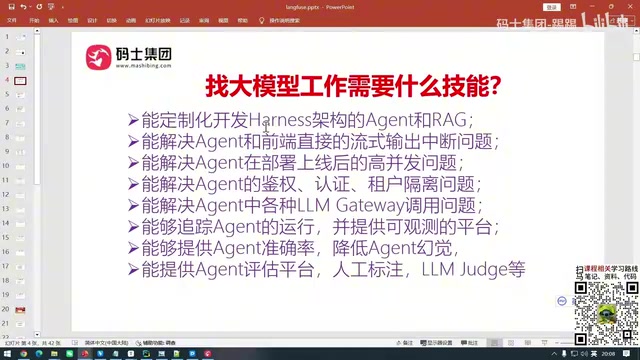
The New Bar for AI/LLM Roles: A Practical Guide to Agent Observability and Evaluation
Enterprise AI/LLM roles now demand engineering skills: streaming recovery, high concurrency, multi-tenancy, LLM gateways, Langfuse observability, and evaluation platforms. Master these 8 core competencies.
Read more →
·2 min
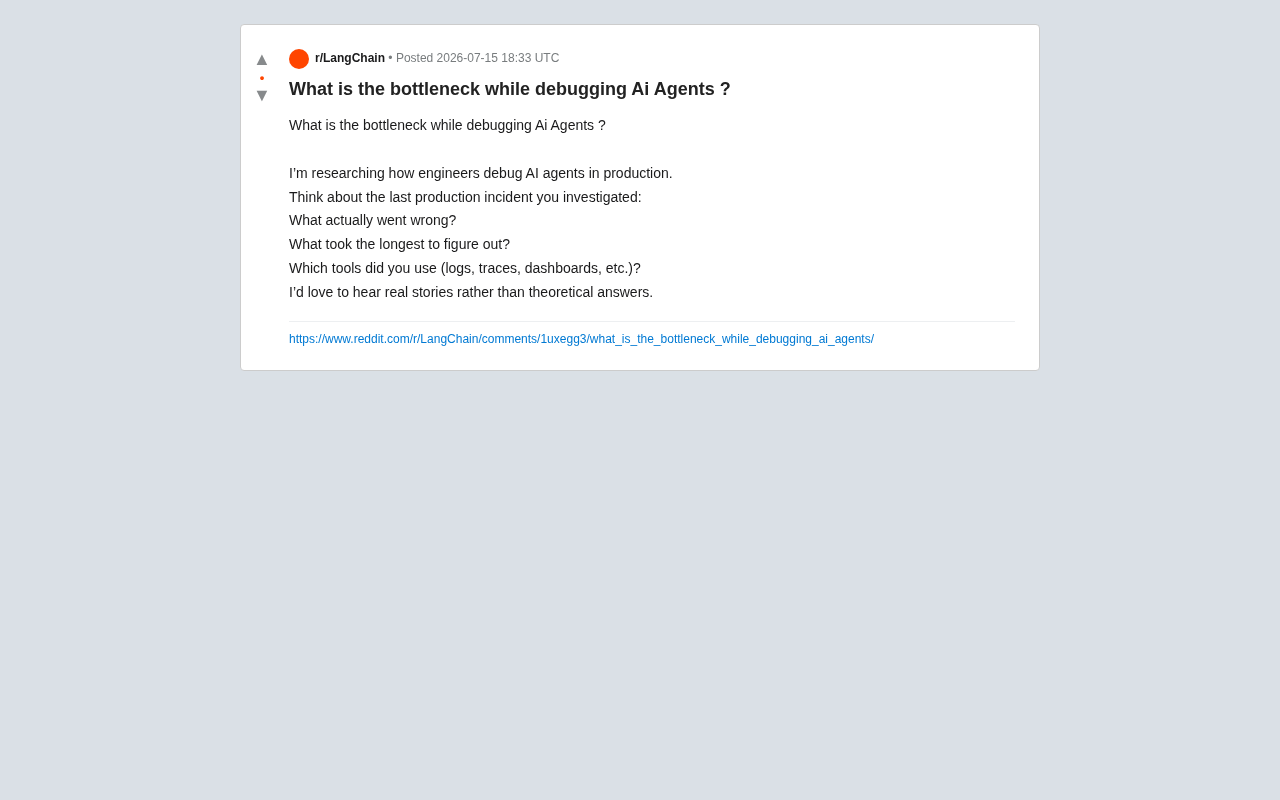
AI Agent Debugging Bottlenecks: A Practical Guide to Production Observability
Explore core AI Agent debugging challenges in production: non-determinism, multi-step error propagation, and observability gaps — with practical guidance on LangSmith and tracing tools.
Read more →
PostHog Deep Dive: The Open-Source All…
·2 min
PostHog Deep Dive: The Open-Source All-in-One Platform for Product Analytics and AI Observability
PostHog is an open-source all-in-one platform combining product analytics, session replay, feature flags, A/B testing, and AI Observability. Supports self-hosting and MCP protocol.
Read more →

·5 min
The Five Unsolved Challenges of Production MLOps: A Deep Dive into GPU Scheduling, Fault-Tolerant Training, and Model Observability
A deep dive into the five genuinely tough challenges of production MLOps: fault-tolerant training on Spot instances, cross-team GPU scheduling, data reproducibility, model observability, and inference cost optimization.
Read more →

·3 min
Claude Code Debugging Guide: From Context Management to the Observability Flywheel
A systematic guide to Claude Code debugging and observability, covering Token monitoring, context management, Compact compression, security, and Skills ecosystem.
Read more →

·2 min
LLM Observability & Eval in Practice: A Complete Guide to Monitoring and Evaluating Large Models in Production
A deep dive into LLM observability, evaluation systems, and experimentation loops for production AI. Covers OpenTelemetry, trace monitoring, five eval signal types, four scope levels, and automated improvement flywheels.
Read more →
Deep Dives
The Complete Guide to OpenTelemetry: T…
·4 min
The Complete Guide to OpenTelemetry: The Three Pillars of Observability & DevOps in Practice
Deep dive into OpenTelemetry's core architecture, the three pillars of observability (logs, metrics, traces), with a real-world food delivery app crash debugging case showing how distributed tracing locates microservice bottlenecks and how AI is revolutionizing DevOps monitoring.
Read more →
 Product Reviews
·1 min
Tracea: Open-Source Observability Platform for AI Agents with One-Click Self-Hosted Deployment
Tracea is an open-source AI Agent observability platform offering end-to-end tracing, cost monitoring, automated RCA, and a team memory system. Self-hosted via Docker with data staying on-premise.
Read more →
·3 min
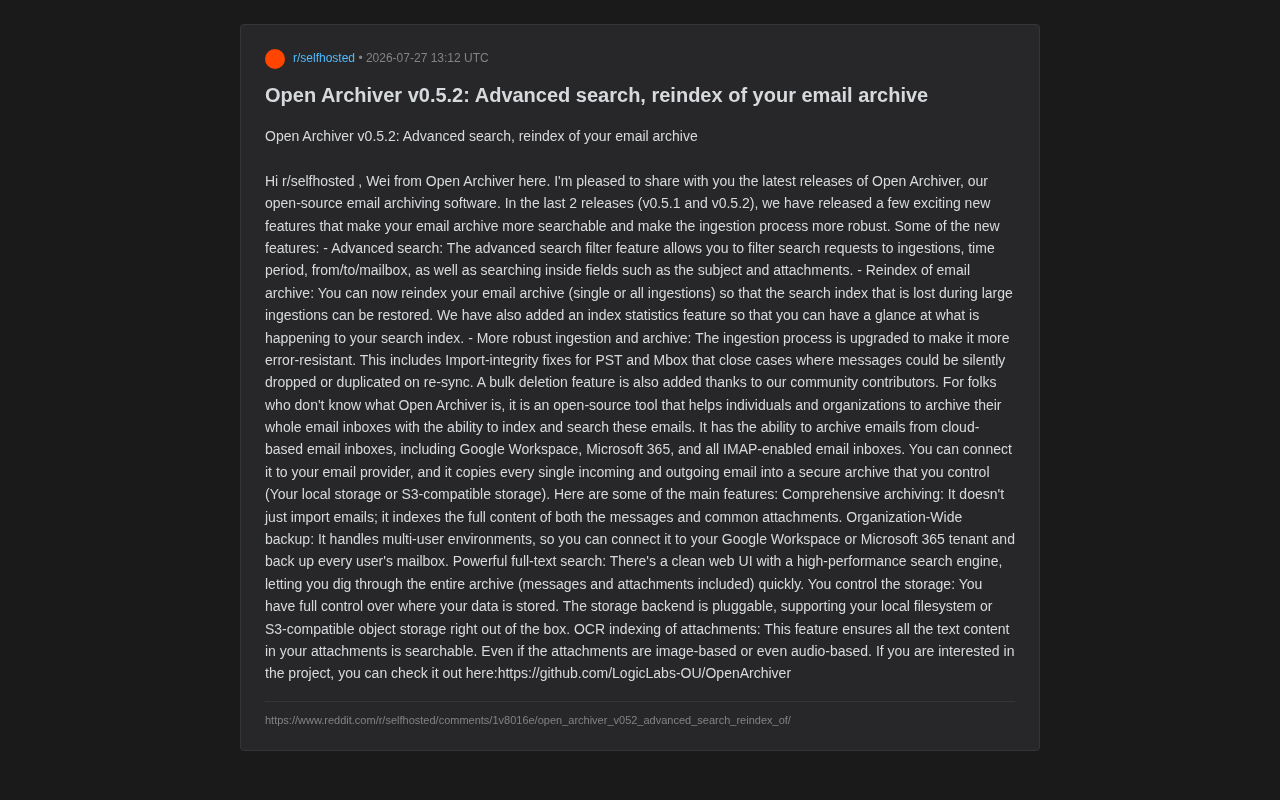
Open Archiver v0.5.2 Deep Dive: A Comprehensive Look at the New Features of This Open-Source Email Archiving Tool
Deep dive into Open Archiver v0.5.2: advanced search, index rebuilding, PST/Mbox import fixes, and more features for self-hosted email archiving and compliance.
Read more →

·3 min
How to Fix AI Tool Error 1076? Root Cause Analysis and Solutions
Getting "Something went wrong 1076" from an AI service? This article analyzes common causes including server overload and session issues, with practical troubleshooting steps to restore normal usage.
Read more →

·5 min
The Five Stages of AI Agent Architecture Evolution: The Real Path from Model Calls to Production Runtime
Deep dive into the five evolution stages of AI Agent architecture: model calls, tool calls, workflows, Agent loops, and production runtime. Learn the responsibility boundaries and design principles.
Read more →

·5 min
Complete Breakdown of Core Competencies for AI Agent Engineers: From Demo to Production-Grade Systems
Deep breakdown of 4 core AI Agent engineer competencies: business decomposition, multi-Agent architecture, quantitative evaluation, and engineering delivery—bridging the gap from Demo to production.
Read more →

·5 min
The Complete Guide to AI Agent Development: A Four-Stage Progressive Roadmap
A systematic guide to AI Agent development across four stages: LLM fundamentals, ReAct paradigm, memory & tools, and multi-agent collaboration for developers.
Read more →

·3 min
Open Archiver v0.5.2 Deep Dive: A Complete Look at the New Features of This Open-Source Email Archiving Tool
Deep dive into Open Archiver v0.5.2: advanced search, index rebuilding, PST/Mbox import fixes, and more for self-hosted enterprise email archiving.
Read more →

·3 min
The Jargon Trap: Why Engineers Can Never Seem to Speak Plain Language
Why do engineers struggle to communicate in plain language? Exploring the curse of knowledge, jargon as identity, and practical tips for clearer technical communication.
Read more →

·3 min
API Mock vs. Sandbox in Agent Testing: A Detailed Layered Strategy Guide
API Mock is fast but misses bugs; Sandbox is realistic but costly. This article analyzes their core differences and provides a layered testing strategy for building reliable Agent test systems.
Read more →

·3 min
HuggingHack Update: S3 Storage, Dual-Engine Scheduling, and GGUF Inspection Get Major Upgrades
HuggingHack releases major updates with S3/MinIO storage, Ollama + vLLM dual-engine scheduling, GGUF inspection, and local accounts for enterprise-grade local LLM management.
Read more →
In-Depth Analysis of the Claude Opus 5…
·3 min
In-Depth Analysis of the Claude Opus 5 Elevated Error Rate Incident and Response Strategies
Deep analysis of the Claude Opus 5 elevated error rate incident, exploring LLM service reliability challenges and providing developers with practical strategies including multi-model redundancy, retry mechanisms, and graceful degradation.
Read more →

·3 min
Build RAG and AI Agent Projects at Zero Cost: A Practical Guide to Open-Source Tools
Build high-quality AI projects on a budget. Learn how to use Ollama, Groq, Chroma, and other free open-source tools to build RAG systems and multi-Agent workflows from scratch.
Read more →