#self-evolving AI agent
30 related articles

·3 min
Hermes Agent in Practice: A Self-Evolving AI Agent Framework
Hermes Agent is a mature AI Agent framework with built-in Claude Code and Codex coding capabilities, supporting 200+ models, multi-platform deployment, and WeChat integration. Its layered memory and self-evolution features enable low-Token automated task execution.
Read more →

·2 min
Hermes Agent: A Complete Beginner's Guide to the Self-Evolving Open-Source AI Agent
Hermes Agent is an open-source autonomous AI Agent with long-term memory and self-evolution. Learn its core innovations, how it compares to Open Cloud, and why it hit 121K GitHub stars.
Read more →
·5 min
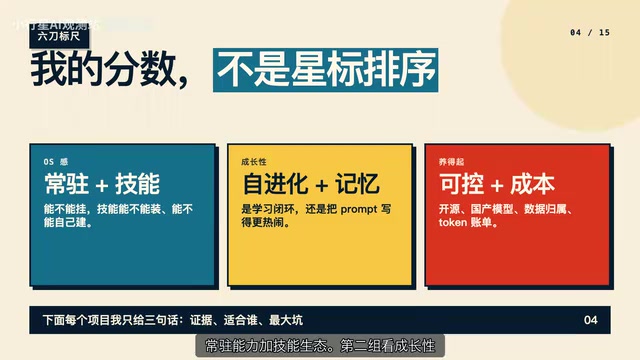
6 Self-Hosted AI Agents Compared: Which One Is a Truly Self-Evolving Digital Employee?
An open-source AI Agent with 380K stars ranks only third? This comparison of 6 self-hosted AI Agents scores them on persistence, self-evolution, and data control—revealing why Generic Agent won with just 3,000 lines of code.
Read more →
Autoresearch: How Self-Evolving AI Age…
·2 min
Autoresearch: How Self-Evolving AI Agents Are Reshaping the Software Factory
Autoresearch lets AI agents automatically explore and refine better solutions during task execution. This article breaks down agent recipes, self-improvement loops, and human-AI collaboration boundaries.
Read more →

·3 min
Hermes Agent Deep Dive: Anatomy of a Self-Evolving AI Agent Architecture
Deep dive into Hermes Agent's core architecture including the Skills system, GPA governance mechanism, and 47 built-in tools. Learn how Hermes self-evolves to get smarter with use.
Read more →

·3 min
Hermes Agent: How a Self-Evolving AI Framework Earned 120K Stars in Two Months
Deep dive into Hermes Agent, the open-source AI Agent framework with lower Token costs, persistent long-term memory, and self-learning evolution that earned 120K GitHub stars in two months.
Read more →

·3 min
Hermes Desktop Officially Launched: A Forever-Free, Self-Evolving AI Agent for Your Desktop
Hermes Desktop is now available for Windows, macOS, and Linux. This MIT-licensed AI Agent features persistent memory, self-evolution, skill management, and multi-platform integration — completely free.
Read more →
 Tutorials
·2 min
Hermes Agent Local Deployment Tutorial: Installing and Configuring a Self-Evolving AI Assistant
Complete guide to deploying Hermes Agent locally on Windows, covering WSL2 setup, Git configuration, and DeepSeek model integration for a self-learning AI Agent.
Read more →
 Tutorials
·1 min
Hermes Agent Local Deployment Tutorial: Installing and Configuring a Self-Evolving AI Assistant
Complete guide to deploying Hermes Agent locally, covering WSL2 installation, Git setup, and DeepSeek model integration on Windows to build a self-learning open-source AI Agent.
Read more →
 Tutorials
·3 min
The Complete Guide to Hermes Agent: Building a Self-Evolving AI Assistant from Scratch
Complete guide to Hermes Agent's five core pillars: Memory, Skills, Soul, Crons & self-evolution. Covers VPS deployment, Telegram setup, security management & best practices for building an AI assistant that grows stronger over time.
Read more →
 Tech Frontiers
·3 min
Generic Agent: A Self-Evolving AI Agent Built with Just 3,000 Lines of Code
Generic Agent builds a self-evolving AI agent with just 3,000 lines of code, 9 atomic tools, and a five-layer memory architecture — using only one-sixth the tokens of competitors.
Read more →
 Product Reviews
·3 min
Hermes Agent Desktop App: The Self-Evolving Open-Source AI Agent
Deep dive into Hermes Agent desktop app: closed-loop learning, persistent cross-session memory, multi-agent management, and tool integration. Discover how this open-source AI agent self-evolves to become a true productivity powerhouse.
Read more →

·2 min
Comparing Three Self-Hosted AI Agents: How to Choose Between OpenClaw, Odysseus, and Hermes
An in-depth comparison of three leading self-hosted AI agents: OpenClaw, Odysseus, and Hermes. From positioning to core features and security risks, find the right tool for your needs.
Read more →

·3 min
Java AI Tech Stack Explained: Framework Selection & Learning Path Guide
A complete guide to Java AI development: Spring AI, LangChain4j, Spring AI Alibaba, and AgentScope4j — framework comparisons, selection tips, and a clear learning path.
Read more →

·3 min
Metaview in Practice: Building a Prompt System That Evolves With User Preferences
Metaview engineer Nick Mayhew explains how to build self-evolving prompt systems: Markdown over rules, layered workflows to cut token costs, and agents that learn user preferences for human-centered AI recruiting.
Read more →

·4 min
Agent Loop in Practice: A Guide to Building Self-Improving Automation with Guardrails
A deep dive into building verifiable, self-evolving Agent automation loops with Claude Code and Codex — covering Loop Contracts, four trigger types, three-phase execution architecture, and Evolve Loops.
Read more →
·6 min
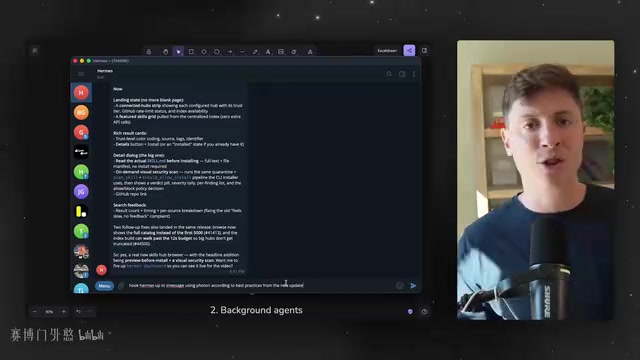
Hands-On With Hermes Agent's Eight Major Updates: A Complete Guide to AI Automation and Self-Evolution
The Hermes Agent gets a major upgrade with eight new features: native iMessage, parallel background sub-agents, Unreal Engine MCP support, a self-evolving Skill Hub, and more. A hands-on breakdown of the core changes and their real impact on personal AI automation workflows.
Read more →

·6 min
From Vibe Coding to AI Engineering: A Complete Practical Guide to Codex and Claude Code
An in-depth analysis of the practical use of Codex and Claude Code, comparing Vibe Coding and AI engineering, covering Super Power plugins, Spec-Driven Development, and Chinese LLM integration strategies.
Read more →

·3 min
Harness Architecture Explained: The Next-Generation Design Paradigm for Agent Development
A deep dive into Harness Architecture — the next-gen Agent design paradigm. Covers its evolution from prompt engineering and context engineering, multi-agent collaboration, sandbox security, feedback loops, and why it's a must-have for LLM developer interviews.
Read more →

·4 min
From Vibe Coding to Enterprise-Grade AI Programming: A Complete Progression Path with Practical Analysis
Deep analysis of Vibe Coding's limitations, comparison of Claude Code vs Codex, and a three-layer AI engineering methodology for progressing from casual AI coding to enterprise-grade development.
Read more →