#shared capacity
304 related articles
·3 min
Deep Dive into Inkling: The First Frontier Open-Source Multimodal LLM from the West
Thinking Machines releases Inkling, an open-source multimodal LLM with near-trillion MoE parameters, 1M token context, Apache 2.0 license. Deep dive into architecture, benchmarks, and pricing.
Read more →

·4 min
Colibri: Running a 744-Billion-Parameter LLM on an Ordinary Laptop
Colibri uses MoE hot-cold separation and 4-bit quantization to run 744B-parameter models like GLM 5.2 on consumer hardware. Learn about its three-tier memory architecture and speculative decoding.
Read more →

·2 min
How Gamma Uses AI to Reinvent Presentations: A Complete Revolution from Product to Workflow
Gamma CEO Grant Lee shares how the company deeply integrates OpenAI technology to drive presentation innovation with AI—from image generation to content creation and internal development workflows.
Read more →

·3 min
Legora's Legal AI Practice: How Vertical AI Empowers Law Firms and Corporate Legal Transformation
Explore Legora's legal vertical AI practice, covering AI model selection strategies, enterprise legal transformation challenges, and the path to deploying vertical AI in the legal industry.
Read more →
·3 min
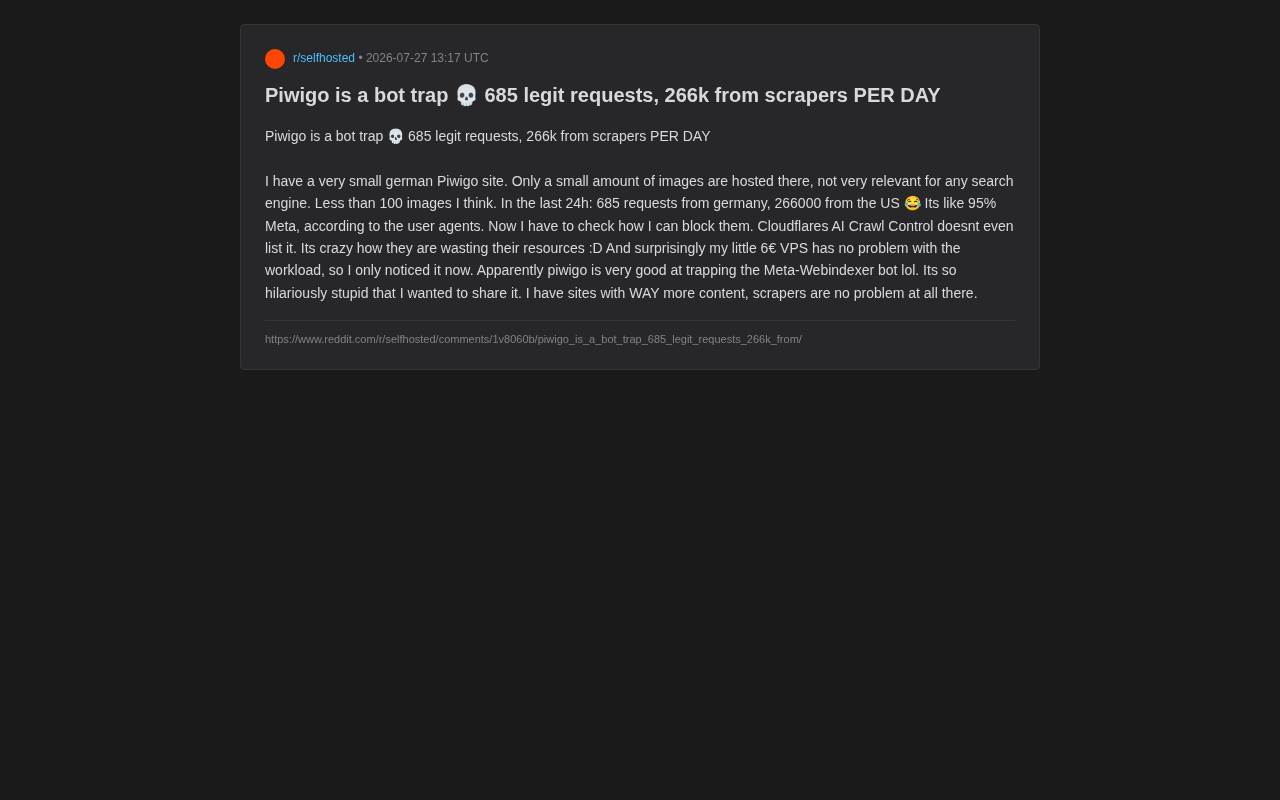
Small Site Besieged by AI Crawlers: Under 100 Images, 266K Crawl Requests
A Piwigo gallery with under 100 images received 266K AI crawler requests in 24 hours. Analysis of why gallery CMS becomes a bot trap and how to defend against it.
Read more →

·2 min
LightlyStudio: Open-Source Image Embedding Exploration Tool with Million-Scale Data Visualization
LightlyStudio is an Apache-2.0 open-source tool for image embedding visualization, hover preview, and distribution analysis, tested at million-scale to help developers explore, debug, and curate visual datasets.
Read more →
·4 min
Choosing the Wrong Agent Ruins Everything: Why the Same Model Can Perform Like Two Completely Different AIs
The same LLM API performs drastically differently under different Agent frameworks. Through a real database crash case, this article analyzes why choosing the right Agent matters more than switching models.
Read more →
·4 min
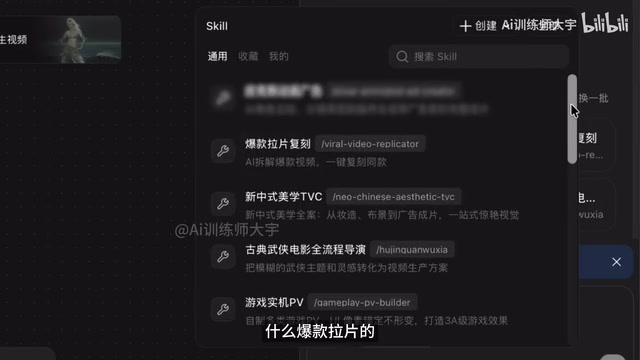
LibTV Hands-On: A Full Breakdown of How an AI Agent Produces an Animated Short in One Day
Hands-on test of LibTV's AI Agent: from script and storyboarding to video compositing, one person completes an animated short in a day. Full breakdown of the Skill library, node workflow, and Story Board features.
Read more →

·5 min
Complete Breakdown of Core Competencies for AI Agent Engineers: From Demo to Production-Grade Systems
Deep breakdown of 4 core AI Agent engineer competencies: business decomposition, multi-Agent architecture, quantitative evaluation, and engineering delivery—bridging the gap from Demo to production.
Read more →

·3 min
If Digital Computers Have Consciousness, It Exists Only at the Hardware Level — Not in Software
If digital computers can produce consciousness, does it reside in software algorithms or physical hardware? Exploring causal closure, substrate independence, and implications for AI consciousness.
Read more →

·1 min
Radxa Cubie A7Z Real-World Test: 330ms End-to-End Object Detection Latency Under Full NPU Load
Deep analysis of Radxa Cubie A7Z achieving 330ms glass-to-glass object detection latency under full NPU load, covering latency breakdown, practical use cases, and edge AI optimization strategies.
Read more →

·3 min
Krea 2 Identity Edit Lora Hidden Technique: Precise Image Control Through Text Annotations
Deep dive into Krea 2 Identity Edit Lora's hidden feature: add text annotations to input images for precise spatial control of generated content. Learn the technique, mechanism, and workflow impact.
Read more →

·2 min
Recreating the GTA San Andreas Art Style: An Open-Source RenderWare-Style LoRA Model
A creator open-sourced a LoRA model replicating GTA San Andreas' RenderWare engine art style, delivering stable PS2-era visuals in complex scenes. We explore its technical features and nostalgic value.
Read more →

·3 min
PeaNUT: Deployment and Usage Guide for the NUT Open-Source UPS Monitoring Dashboard
PeaNUT is an open-source UPS monitoring Web dashboard built on NUT, offering real-time battery, load, and voltage metrics. Learn its features, deployment, and home lab best practices.
Read more →

·2 min
Qoder vs Cursor: A Hands-On Comparison of AI Coding Tools
Which is better, Qoder or Cursor? This article compares both AI coding tools through real development scenarios across context understanding, code quality, and Agent autonomy to help you choose the best fit.
Read more →

·3 min
Ideogram 4.0 Turbo Workflow: An AI Image Generation Solution Balancing Speed and Quality
Detailed look at the Ideogram 4.0 mixed turbo workflow: RTX 4090 inference in just 15 seconds, rivaling Krea2 speed, with stable output up to 8K resolution.
Read more →
·3 min
Ideogram 4.0 Turbo Workflow: An AI Image Generation Solution Balancing Speed and Quality
Detailed look at the Ideogram 4.0 mixed turbo workflow: RTX 4090 tested at just 15s inference, matching Krea2 speed with up to 8K resolution output.
Read more →
·7 min
DIY Companion Robot: Building Your AI Desktop Buddy with Jetson Orin
A maker builds a DIY companion robot with NVIDIA Jetson Orin and 4S LiPo battery. Explore the full development journey from first power-up to AI interaction, including edge computing, power design, and companion robot trends.
Read more →

·5 min
Ollama Performance Degrades After Connecting to OpenWebUI? A Complete Troubleshooting Guide
Complete guide to troubleshooting Ollama performance degradation with OpenWebUI, covering num_ctx truncation, sampling parameter differences, GPU resource contention, and system prompt interference.
Read more →

·5 min
DeepSeek's Five-Step Ladder to AGI: A Restrained Roadmap Built on 20,000 GPUs
DeepSeek founder Liang Wenfeng reveals a five-step AGI roadmap—from chain-of-thought to embodied intelligence—under a 20,000-GPU constraint, using the TileLang compiler to break domestic substitution challenges while API cash flow backs AGI exploration.
Read more →