#slow is fast
635 related articles
 Tutorials
·2 min
The Five-Step Rhythm Method for AI Programming: A Practical Strategy Where Slow Is Fast
A methodology for rhythm control in AI programming: use a five-step strategy (identify, plan, minimal change, test, risk assessment) to prevent AI from going off-track and causing rework.
Read more →

·3 min
Agent Skill Routing: Engineering Trade-offs Between Retrieval and LLM, and the Two-Stage Layered Architecture
Deep dive into Agent skill routing: comparing pure model vs. pure retrieval approaches, with a detailed two-stage layered architecture balancing accuracy, latency, and cost.
Read more →

·4 min
Colibri: Running a 744-Billion-Parameter LLM on an Ordinary Laptop
Colibri uses MoE hot-cold separation and 4-bit quantization to run 744B-parameter models like GLM 5.2 on consumer hardware. Learn about its three-tier memory architecture and speculative decoding.
Read more →

·4 min
Laguna S 2.1 Deep Dive: Hands-On Local Deployment of a 118B Parameter Coding Model
In-depth review of Poolside's Laguna S 2.1 open-source coding model: MoE architecture, RL training, DGX Spark local deployment, and real-world agentic coding tests with 8B active parameters.
Read more →

·4 min
Framework 13 Pro In-Depth Review: The Modular Laptop That Finally Stops Compromising
Framework 13 Pro in-depth review covering build quality, display, performance, and Linux experience. This modular laptop achieves 85% of MacBook Pro's refinement with far superior repairability and upgradeability.
Read more →

·3 min
How to Choose an AI Agent Platform for Your Team: 5 Evaluation Dimensions and a Decision Framework
Choose the right AI Agent platform by evaluating model flexibility, observability, tool integration, security compliance, and total cost. A complete decision framework to help technical leaders avoid vendor lock-in.
Read more →

·4 min
Fable 5 vs GPT-5.6: An In-Depth Head-to-Head Comparison of Two Top-Tier Coding Models
In-depth comparison of Fable 5 vs GPT-5.6 (Sol) for AI coding. Covering token efficiency, code quality, design, cost, and safety based on $10K+ real usage data.
Read more →

·4 min
Fable 5 vs GPT-5.6: An In-Depth Head-to-Head Comparison of Two Top-Tier Coding Models
In-depth comparison of Fable 5 vs GPT-5.6 (Sol) for AI coding. Real-world data on token efficiency, code quality, design capability, and cost from $10K+ testing.
Read more →

·4 min
Opus 5 Real-World Testing: Cheaper Yet Stronger — Why It's Now My Default Coding Model
In-depth testing of Claude Opus 5's coding abilities vs Fable 5 and 5.6 Sol. Why Opus 5 outperforms pricier models at half the token cost, plus selection guide and distillation explained.
Read more →

·3 min
Why Kimi K3's Open-Source Model Has OpenAI and Anthropic Running Scared
Deep dive into why Kimi K3 is rattling OpenAI and Anthropic: distillation double standards, GPT-5.5 comparisons, real security risks, and how open-source models threaten closed-source business models.
Read more →

·2 min
Breaking Through CI/CD Storage Bottlenecks: Why Senior Engineers Are Returning to the Storage Domain
Exploring overlooked storage and caching bottlenecks in CI/CD pipelines, how Blacksmith redesigns storage architecture to accelerate builds, and why storage is a rebirth opportunity in cloud-native.
Read more →

·4 min
Deep Dive into AI Short Drama "Nido de Villanas": How AIGC Mass-Produces Binge-Worthy Content
Using AI-generated Spanish short drama Nido de Villanas as a case study to analyze AIGC script generation, character consistency, multilingual dubbing, and the commercial logic of scaled AI drama production.
Read more →

·4 min
Deep Dive into AI Short Drama "Nido de Villanas": How AIGC Mass-Produces Binge-Worthy Content
Using AI-generated Spanish short drama "Nido de Villanas" as a case study, this deep dive analyzes AIGC script generation, character consistency, multilingual dubbing, and the industry trends of scaled AI drama production.
Read more →

·3 min
Replacing spaCy's Sentencizer with yasbd: Accuracy Jumps from 55% to 98.9%
spaCy's default Sentencizer achieves only 55.4% accuracy on edge cases, while open-source library yasbd reaches 98.9%. Analysis of limitations and integration code examples.
Read more →

·2 min
The Rise of AI-Powered Short Dramas: How Spanish-Language Micro-Series Are Reshaping Content Production
Explore how AI empowers Spanish-language micro-drama production—from script generation and voice synthesis to multilingual distribution—and its profound impact on the global content industry.
Read more →

·2 min
Kimi K3 Launches on Telnyx Inference API: A New Path for Chinese LLMs Going Global
Moonshot AI's Kimi K3 is now available on Telnyx Inference API. Explore how Chinese LLMs are entering global developer ecosystems through third-party inference platforms.
Read more →
·3 min
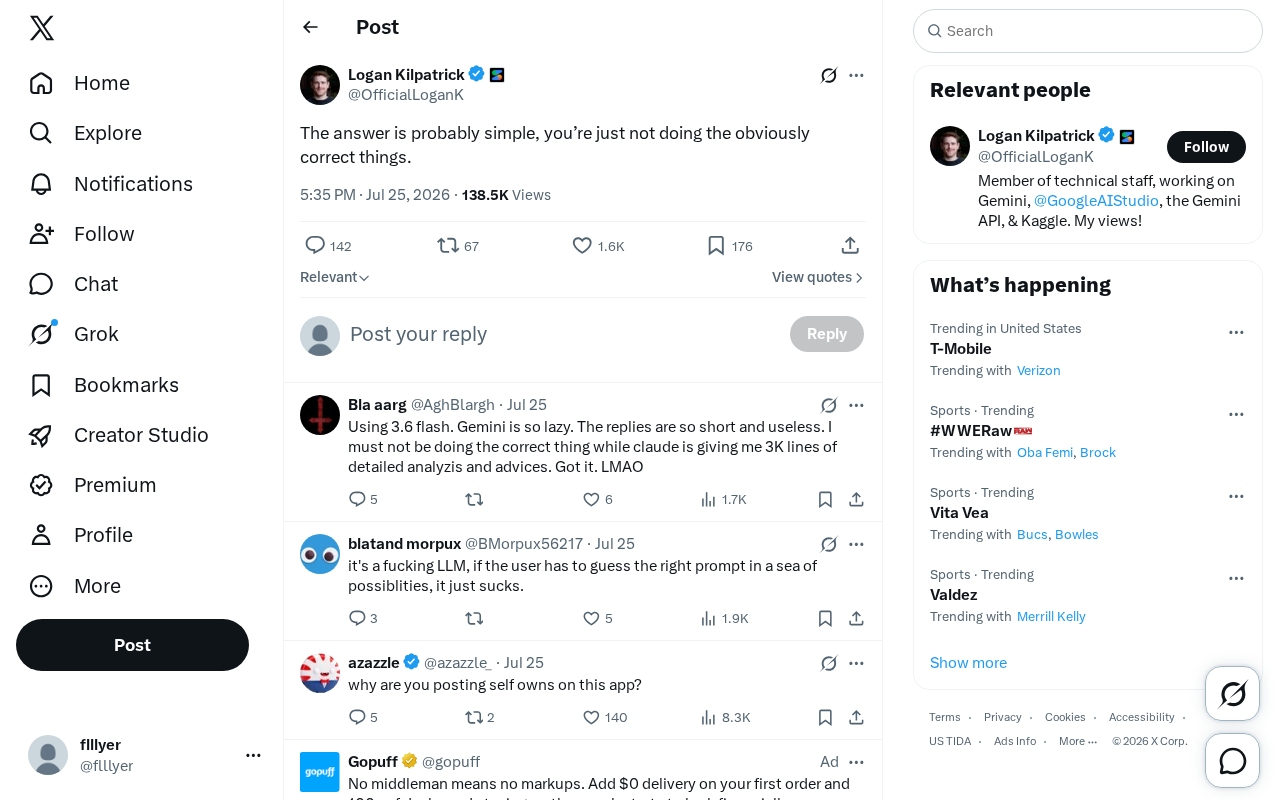
AI Not Performing Well? Start by Getting These Simple but Often Overlooked Things Right
When your AI system underperforms, the problem is often not the model or algorithm — it's basic work like data cleaning, prompt writing, and evaluation that hasn't been done right.
Read more →
·3 min
AI Not Working Well? Start by Getting These Simple but Often Overlooked Things Right
When AI systems underperform, the problem often isn't the model or algorithm — it's that basics like data cleaning, prompt writing, and evaluation aren't done right. Learn the simple fixes that matter most.
Read more →

·2 min
Will AI End Human History? The Deep Anxiety Behind Technological Optimism
A viral Reddit post asks: will AI end human history? This article analyzes the blind spots of tech accelerationism, the governance mismatch, and how to rationally navigate AI transformation.
Read more →

·2 min
LightlyStudio: Open-Source Image Embedding Exploration Tool with Million-Scale Data Visualization
LightlyStudio is an Apache-2.0 open-source tool for image embedding visualization, hover preview, and distribution analysis, tested at million-scale to help developers explore, debug, and curate visual datasets.
Read more →