#structured output
1913 related articles
Outlines: The Open-Source Tool for Get…
·2 min
Outlines: The Open-Source Tool for Getting Structured Output from LLMs
Outlines is an open-source Python library for structured LLM output. Using constrained decoding with FSMs, it guarantees JSON, regex, and Pydantic-compliant generation with near-zero overhead.
Read more →

·4 min
Six Layers of Defense: Engineering Reliable Structured Output from LLMs
LLM JSON output unstable in your Agent? This guide covers 6 engineering layers: constrained decoding, validation retry, fake tool calls, Logit Masking, Schema contracts, and anti-pattern locking.
Read more →

·3 min
OpenAI Academy Hands-On Training: How Small Business Owners Can Use ChatGPT to Boost Operational Efficiency
OpenAI Academy hosted hands-on ChatGPT training for small businesses in California. This article analyzes the training design, core value, and practical insights for entrepreneurs.
Read more →

·2 min
ChatGPT Voice Upgrade: Driving Complete Workflows Through Natural Conversation
OpenAI demos ChatGPT voice on desktop driving full workflows — blog drafting, code debugging, and team collaboration through natural conversation.
Read more →

·3 min
ChatGPT Plugins Get a Major Upgrade: From Conversational Tool to Workflow Hub
Deep dive into ChatGPT's plugin upgrade: how AI connects email, docs, calendars & more to transform from a chatbot into a workflow hub with cross-app aggregation.
Read more →

·3 min
OpenAI Academy Hands-On Training: How Small Business Owners Can Use ChatGPT to Boost Efficiency
OpenAI Academy hosted hands-on ChatGPT training for small businesses in California. Learn the training's design philosophy, core value, and practical takeaways for entrepreneurs.
Read more →

·3 min
7 Vibe Coding Agents Tested & Ranked: Which AI Coding Tool Should Beginners Choose?
Hands-on comparison of 7 Vibe Coding agents including Trae, Cursor, Claude Code, Codex, WorkBuddy & CoderWork, ranked by beginner-friendliness and performance.
Read more →

·3 min
7 Vibe Coding Agents Tested & Ranked: Which AI Coding Tool Should Beginners Choose?
Side-by-side review of 7 Vibe Coding agents including Trae, Cursor, Claude Code, Codex, WorkBuddy, and CoderWork, ranked by beginner-friendliness, performance, and ease of use.
Read more →

·2 min
AI-Generated Short Drama "Nido de Villanas": A New Form of Industrialized Short-Video Content
Deep analysis of the AI-generated Spanish short drama Nido de Villanas, exploring how generative AI is transforming short drama production and driving content industrialization.
Read more →

·5 min
WebMCP in Practice: Building Browser AI Agent Tools & DevTools Debugging Guide
A detailed guide to Google's WebMCP standard proposal, covering imperative and declarative tool building, smart home and car configuration demos, and Chrome DevTools debugging for AI agent tools.
Read more →

·3 min
A 9B Model Beats Frontier LLMs After Just $500 in RL Fine-Tuning
Just $500 in RL fine-tuning enables a 9B open-source model to outperform frontier LLMs on catalog review tasks. Analysis of when small-model RL works and its enterprise implications.
Read more →

·4 min
Getting Started with AI Agent Development: A Complete Guide from Concept to Practice
A comprehensive guide to AI Agent architecture and development, covering automated marketing, intelligent customer service, and investment analysis scenarios with single and multi-agent collaboration.
Read more →

·3 min
Using AI Agents to Write Research Experiment Logs: A Complete Methodology and Workflow
A detailed guide on using AI Agents to build Research Logs for scientific experiments, covering skeleton structure, daily workflows, pre-experiment thinking standards, code change tracking, and Agent-researcher division of labor.
Read more →

·5 min
A Beginner's Guide to Prompt Engineering: From One-Off Instructions to a Systematic Methodology
A beginner's guide to prompt engineering covering the four functions of prompts, the key differences from prompt engineering, a six-step systematic workflow, and critical technical and practical limitations.
Read more →

·3 min
Three Essential Hard Skills Traditional Product Managers Need to Transition into AI PM
How can traditional product managers transition to AI PM? This article analyzes the essential differences and details three must-have skills: AI product cognition, advanced Prompt engineering, and large model technical logic.
Read more →

·3 min
Using AI Agents to Write Research Experiment Logs: A Complete Methodology and Workflow
Learn how to use AI Agents to build a Research Log for scientific experiments, covering structure, daily workflows, pre-experiment thinking, code change tracking, and human-AI division of labor.
Read more →
·3 min
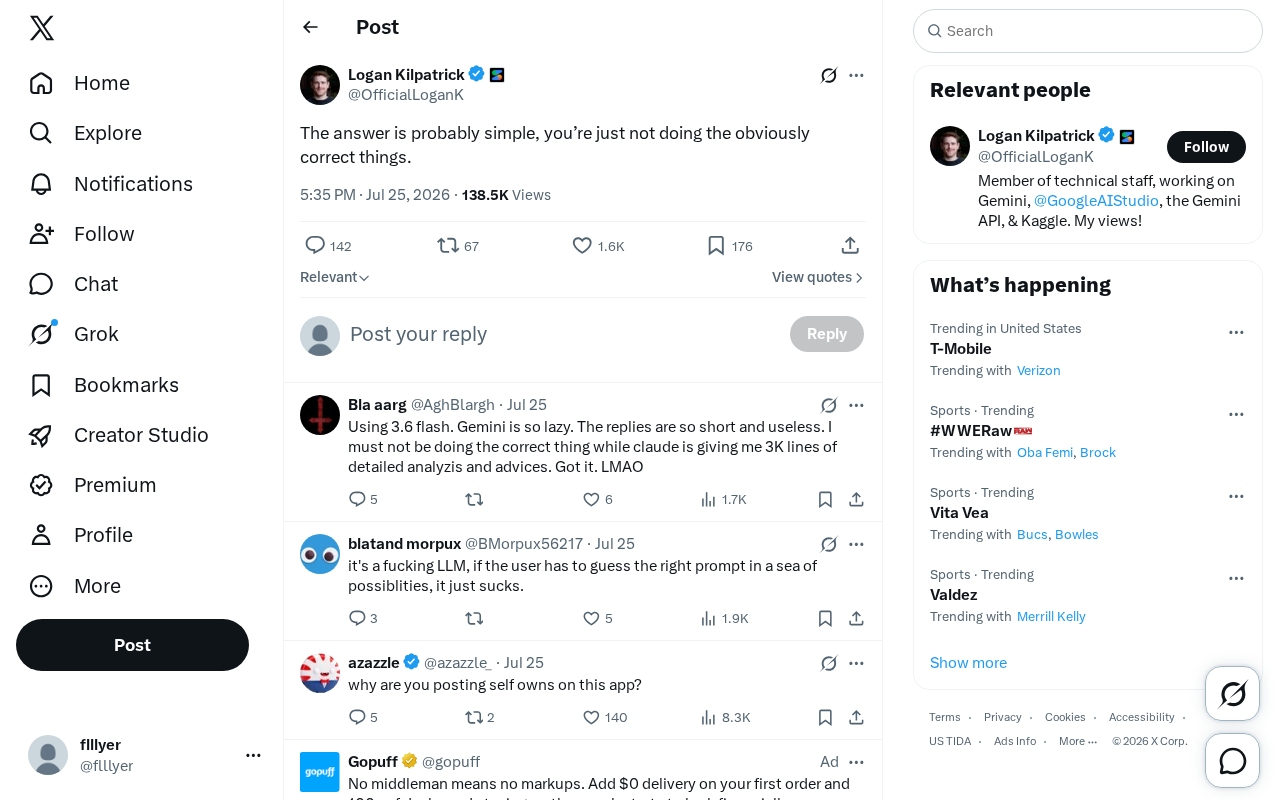
AI Not Performing Well? Start by Getting These Simple but Often Overlooked Things Right
When your AI system underperforms, the problem is often not the model or algorithm — it's basic work like data cleaning, prompt writing, and evaluation that hasn't been done right.
Read more →
·3 min
AI Not Working Well? Start by Getting These Simple but Often Overlooked Things Right
When AI systems underperform, the problem often isn't the model or algorithm — it's that basics like data cleaning, prompt writing, and evaluation aren't done right. Learn the simple fixes that matter most.
Read more →
·3 min
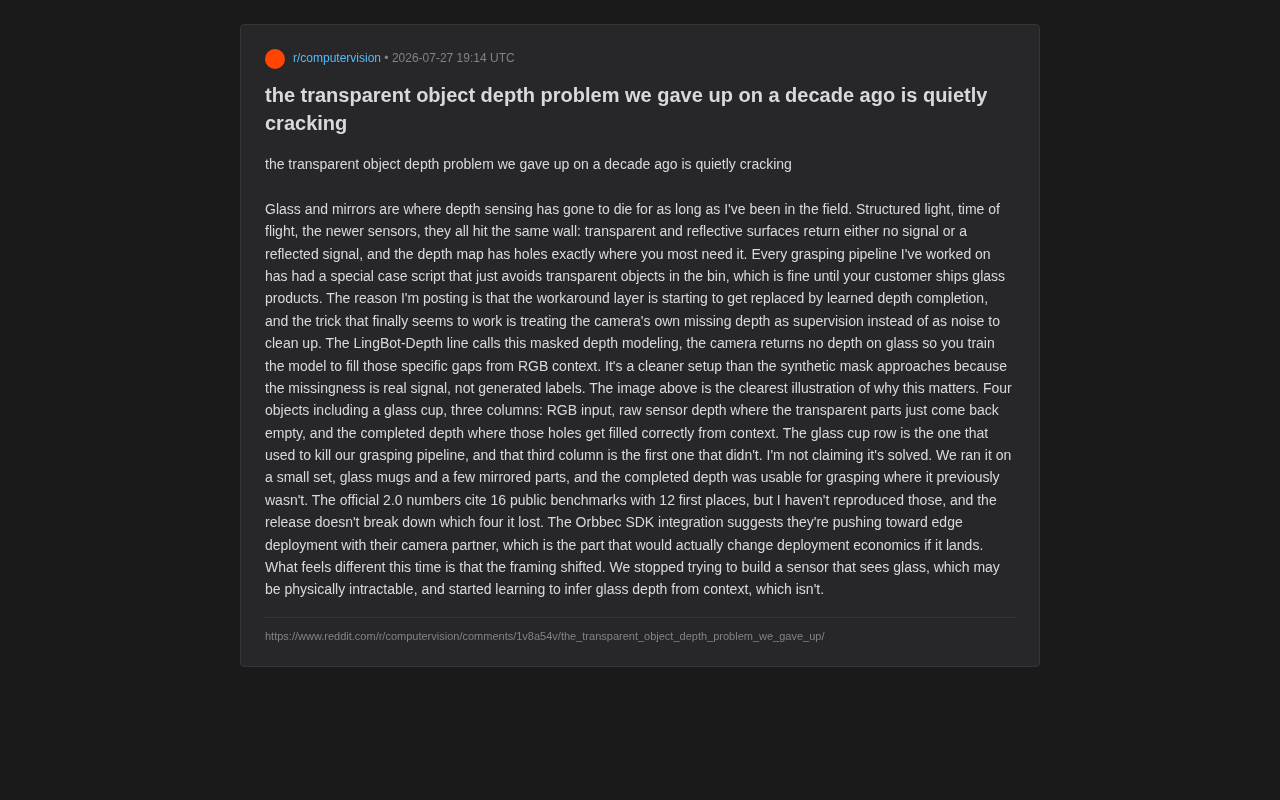
The Depth Perception Challenge for Transparent Objects: How LingBot-Depth Breaks Through with Masked Depth Modeling
Depth perception for transparent and reflective objects has long been a core challenge in robotic grasping. LingBot-Depth uses masked depth modeling to turn sensor failure into supervisory signals, inferring glass depth from RGB context.
Read more →

·3 min
Grok 4.5 Feels Weaker in Cursor? A Deep Dive into AI Coding Tool Integration Differences
Users report Grok 4.5 underperforms in Cursor vs. the official terminal. We analyze how system prompts, context management, parameters, and tool calling create AI coding tool integration gaps.
Read more →