#token saving
436 related articles

·2 min
Vibe Coding on a Budget: The Brain-vs-Hands Multi-Agent Strategy for Saving Tokens
Always burning through your AI coding quota? This guide breaks down a brain-vs-hands multi-agent strategy: use strong models only for planning, and cheap models like DeepSeek for execution.
Read more →

·4 min
Codex Plans, DeepSeek Executes: A Practical Guide to Multi-Model Collaboration for Saving Tokens
AI programming burning through Tokens too fast? This guide covers the open-source Hand of Labor project's multi-model approach: Codex plans, DeepSeek executes—cutting AI coding costs while boosting output quality.
Read more →

·3 min
Claude Code Skills Mechanism Explained: On-Demand Loading for Token Savings and Better Performance
Deep dive into Claude Code's Skills mechanism: on-demand loading replaces bulk context dumping, cutting Token costs and boosting output quality with modular expertise.
Read more →
 Tutorials
·3 min
OpenClaw + Claude Code Token-Saving Guide: Zero-Polling with Hooks Callbacks
How to solve high Token consumption when OpenClaw calls Claude Code. Achieve zero-polling with Stop Hook and Session End dual callbacks, combined with Agent Teams for fully automated dev workflows.
Read more →
 Tutorials
·2 min
Claude Code Monitor Tool Explained: Event-Driven Replaces Polling, Saving Tokens More Efficiently
Deep dive into Claude Code's new built-in Monitor tool. Learn how event-driven monitoring replaces polling via Stream Filter and Poll and Diff modes, dramatically reducing token consumption.
Read more →
 Product Reviews
·2 min
GPT-5 Codex Deep Dive: 93% Token Savings But Tool Ecosystem Still Needs Work
Deep testing GPT-5 Codex: 93.7% Token savings on simple tasks with deeper reasoning on complex ones. But UI quality drops, search is poor, and tool ecosystem fragmentation remains a major issue.
Read more →

·4 min
Fable 5 vs GPT-5.6: An In-Depth Head-to-Head Comparison of Two Top-Tier Coding Models
In-depth comparison of Fable 5 vs GPT-5.6 (Sol) for AI coding. Real-world data on token efficiency, code quality, design capability, and cost from $10K+ testing.
Read more →

·3 min
Why Kimi K3's Open-Source Model Has OpenAI and Anthropic Running Scared
Deep analysis of the AI industry shockwave triggered by Kimi K3: the double standard behind distillation accusations, performance comparisons with GPT-5.5, real security concerns, and how open-source models threaten closed-source giants.
Read more →

·4 min
Opus 5 Real-World Testing: Cheaper Yet Stronger — Why It's Now My Default Coding Model
In-depth testing of Claude Opus 5's coding abilities vs Fable 5 and 5.6 Sol. Why Opus 5 outperforms pricier models at half the token cost, plus selection guide and distillation explained.
Read more →

·3 min
Using AI Agents to Write Research Experiment Logs: A Complete Methodology and Workflow
A detailed guide on using AI Agents to build Research Logs for scientific experiments, covering skeleton structure, daily workflows, pre-experiment thinking standards, code change tracking, and Agent-researcher division of labor.
Read more →

·5 min
A Beginner's Guide to Prompt Engineering: From One-Off Instructions to a Systematic Methodology
A beginner's guide to prompt engineering covering the four functions of prompts, the key differences from prompt engineering, a six-step systematic workflow, and critical technical and practical limitations.
Read more →

·3 min
Using AI Agents to Write Research Experiment Logs: A Complete Methodology and Workflow
Learn how to use AI Agents to build a Research Log for scientific experiments, covering structure, daily workflows, pre-experiment thinking, code change tracking, and human-AI division of labor.
Read more →

·3 min
Chinese Open-Source AI Conquers Silicon Valley: The Industry Upheaval Behind a 58% Compute Share
Chinese open-source AI models surged from under 10% to 58% of U.S. AI consumption. Kimi K3, DeepSeek, and Qwen are reshaping AI cost structures as DoorDash, Airbnb, and other Silicon Valley giants adopt them at scale.
Read more →

·3 min
How to Fix AI Tool Error 1076? Root Cause Analysis and Solutions
Getting "Something went wrong 1076" from an AI service? This article analyzes common causes including server overload and session issues, with practical troubleshooting steps to restore normal usage.
Read more →

·3 min
Getting Started with Codex: A Complete Guide to AI Agent Programming Tools
Compare Codex and Claude Code AI agent programming tools. Learn AI Agent concepts, tool selection, cost analysis, and GPT account setup in this complete beginner's guide.
Read more →

·3 min
Kimi K3 Launches on Ollama Cloud: Free Tier, User Experience, and Developer Guide
Kimi K3 officially launches on Ollama Cloud as an "extra high usage" model. This guide covers free tier quotas, cloud inference experience, technical advantages, and how developers can seamlessly call this high-performance LLM.
Read more →

·4 min
IntelliJ IDEA Efficiency Configuration Guide: Lessons from Seven Years of Java Development
A senior Java developer shares 7 years of IntelliJ IDEA configuration tips: JVM tuning, AI-assisted coding, Testcontainers testing, debugging tricks, and Spring toolchain setup.
Read more →
·3 min
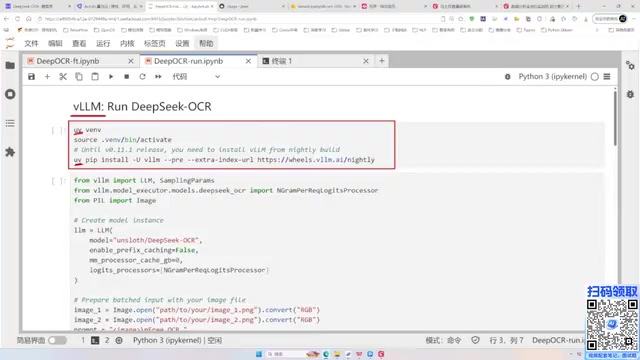
DeepSeek-OCR Deployment & Fine-Tuning in Practice: From vLLM Inference to Unsloth Fine-Tuning
Complete guide to DeepSeek-OCR from vLLM inference deployment and Unsloth model loading to fine-tuning, covering cloud server setup, GPU selection, and code examples — all on a single 4090 GPU.
Read more →

·5 min
Will Chinese Open-Source Models Burst the US AI Bubble? A Deep Dive into the Transmission Chain
Chinese open-source models like Kimi K3 and DeepSeek approach US closed-source performance at a fraction of the cost. This deep dive analyzes the transmission chain from price competition to valuation reassessment.
Read more →
·3 min
Chinese Open-Source AI Conquers Silicon Valley: The Industry Upheaval Behind a 58% Compute Share
Chinese open-source AI models surged from under 10% to 58% of U.S. market share. Kimi K3, DeepSeek, and Qwen are being adopted by DoorDash, Airbnb, and other Silicon Valley giants, reshaping AI costs and competition.
Read more →