#tool calling
2116 related articles

·2 min
Forge: Adding Reliability Guardrails to Local Model Tool Calling
Forge is an open-source Python middleware for local models (Ollama, llama.cpp, vLLM) that boosts tool-calling reliability via three-layer guardrails: validation, rescue parsing, and retry.
Read more →

·2 min
The Four Core Concepts of AI Agents Explained: Function Calling, Tool, MCP, and Skill
A clear breakdown of the four core AI Agent concepts: Function Calling, Tool, MCP, and Skill — understand the full tech stack behind intelligent agent development.
Read more →

·2 min
AI Agent Development in Practice: A Complete Guide to Framework Selection, Tool Calling, and Production Deployment
A comprehensive guide to AI Agent development: covering Agent vs. Chatbot differences, framework selection, tool calling design, RAG pipeline setup, and production deployment best practices.
Read more →

·3 min
Local Gemma 3 12B as an AI Agent: A Practical Guide to Tool Calling and Framework Selection
Running Gemma 3 12B locally via Ollama and want to build an AI Agent? This guide covers tool calling, n8n/LangChain/CrewAI comparisons, context limits, and more.
Read more →
·5 min
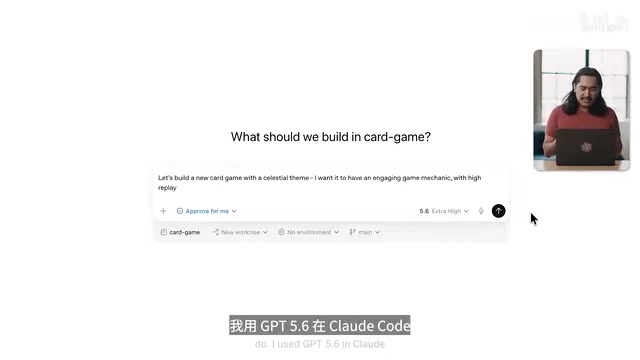
GPT-5.6 Released: Hands-On Analysis of Programmatic Tool Calling and Autonomous Agents
GPT-5.6 is officially released with core upgrades including programmatic tool calling, autonomous subagent delegation, and higher token information density. A hands-on card game build reveals its Agentic power.
Read more →

·4 min
The Three Eras of AI Agents: The Capability Leap from Tool Calling to Autonomous Orchestration
An in-depth look at the three core eras of AI Agent development: reliable tool calling, coherent long-task execution, and autonomous orchestration with metacognition. Helps developers match tasks to model capabilities.
Read more →

·3 min
Unsloth v0.1.46-beta Update: DiffusionGemma Tool Calling Disabled and Artifacts Canvas Enabled by Default
Unsloth v0.1.46-beta is out with key DiffusionGemma changes: tool calling disabled by default, artifacts canvas enabled. A deep dive for LLM fine-tuning devs.
Read more →

·4 min
Enterprise AI Agent Development Guide: Multi-Task Recognition and Dynamic Tool Calling in Practice
A deep dive into AI Agent architecture and enterprise deployment. From LangChain and ReAct design to dynamic tool calling and multi-task recognition — build autonomous enterprise AI assistants.
Read more →

·4 min
Building an AI Agent Framework from Scratch: Deep Dive into Tool Calling, Memory, and Dual-Model Scheduling
Build an AI Agent from scratch — no frameworks. Deep dive into Function Call schema design, MCP remote mirroring, dual-model routing, and short-term memory management.
Read more →
Stronger Models, Worse Tools? The Hidd…
·4 min
Stronger Models, Worse Tools? The Hidden Pitfalls of Tool Calling in Claude's New Models
Developers found Claude's flagship models Opus and Sonnet perform worse with third-party editing tools than older versions — likely due to RL over-optimization on built-in tools degrading generalization.
Read more →

·3 min
Needle: Fine-Tuning a 26M Ultralight Tool-Calling Model Locally — Full Walkthrough
Needle is a 26M-parameter tool-calling model. Learn how to replace Gemini with Ollama for local training data generation and fine-tune on a single GPU, achieving 96.7% F1 — ideal for edge AI deployment.
Read more →

·3 min
LFM2.5 Local Deployment Hands-On: An 8B Parameter Model That Outperforms GPT-o3s in Tool Calling
Hands-on test of Liquid AI's LFM2.5 local deployment: architecture breakdown, 16GB VRAM troubleshooting, and GraphRAG tool-calling benchmarks vs GPT-o3s.
Read more →

·1 min
Runway Adds Tool Calling to Real-Time Video Characters, Moving from Conversation to Intelligent Execution
Runway upgrades real-time video Characters with tool calling, enabling AI video agents to execute queries, tasks, and operations—marking a shift from content generation to intelligent agent platform.
Read more →
 Tutorials
·3 min
ReAct vs. CodeAct: Two Core Approaches to Agent Tool Calling
In-depth comparison of ReAct and CodeAct — two core Agent tool-calling architectures. From paper principles to code implementation, learn the trade-offs between reasoning+action and code execution.
Read more →
 Tutorials
·3 min
MCP Protocol Explained: Differences from Function Calling and Agent Tool Development in Practice
Deep dive into MCP (Model Context Protocol): its principles, communication architecture, and practical applications. Compare MCP vs Function Calling, explore client-server communication and security.
Read more →
 Deep Dives
·3 min
MCP (Model Context Protocol): Solving the Three Core Pain Points of AI Tool Calling
Deep dive into how MCP (Model Context Protocol) solves three core pain points of Tool Calling: verbose descriptions, unstable invocations, and lack of unified standards.
Read more →
 Deep Dives
·3 min
MCP Protocol Explained: The Unified Standard and Complete Workflow for LLM Tool Calling
Deep dive into MCP (Model Context Protocol): core concepts, role definitions, and complete workflow. Learn how MCP Server, Client, and Host work together to standardize LLM tool calling.
Read more →
 Tutorials
·3 min
Spring AI + MCP Protocol in Practice: Tool Calling, Security Authentication, and Enterprise Deployment
Deep dive into Spring AI and MCP protocol integration, covering tool calling, OAuth security, horizontal scaling, and context optimization for enterprise AI Agent services.
Read more →

·3 min
Anthropic Opus 5 Real-World Testing: Outperforms Competitors at Half the Price
Anthropic Opus 5 hands-on review: first to break 30% on ARC-AGI, near Fable 5 agentic coding at half the price. Benchmarks, token costs, and GPT-5.6 comparison.
Read more →

·3 min
Anthropic Opus 5 Real-World Testing: Outperforms Competitors at Half the Price
Anthropic Opus 5 hands-on review: first to break 30% on ARC-AGI, near Fable 5 in agentic coding at half the price. Benchmarks, token costs, and GPT-5.6 comparison.
Read more →