AI Coding Assistant System Prompts Collection: Open-Source Repository Featuring Claude Code, Cursor, and Other Leading Tools

Open-source project collects system prompts from leading AI coding assistants for developer reference
awesome-system-prompts is a GitHub open-source project that systematically collects system prompts and tool definitions from mainstream AI coding assistants including Claude Code, Cursor, Gemini, Codex, and Devin AI. The project provides developers with invaluable reference material for learning production-grade prompt engineering, understanding AI product differentiation, building custom AI agents, and studying AI safety and alignment practices.
Project Overview: An Open-Source Repository Collecting System Prompts from Leading AI Coding Assistants
In an era where AI coding assistants are flourishing, an open-source project called awesome-system-prompts has been quietly gaining traction on GitHub. Maintained by developer EliFuzz, this project systematically collects system prompts and tool definitions from mainstream AI coding agents, offering developers and researchers a rare "looking glass" into the operational logic behind these AI assistants.
System prompts are a core component of large language model (LLM) interaction architecture. In the Chat Completions API first defined by OpenAI, messages are divided into three roles: system, user, and assistant. System prompts are injected as system-role messages before a conversation begins, defining the model's identity, behavioral guidelines, output format, and capability boundaries. They essentially serve as a "constitution" for the AI — the model follows these instructions throughout all subsequent interactions. Production-grade system prompts typically include multiple modules such as role definitions, task scope, output constraints, safety rules, and tool-calling protocols, often spanning thousands or even tens of thousands of tokens. Unlike ordinary user prompts, system prompts are meticulously designed and repeatedly A/B tested, directly determining the behavioral quality and user experience of an AI product.
Which AI Coding Assistants' System Prompts Are Included?
The project currently covers system prompts from the following mainstream AI coding tools:
Leading AI Coding Tools
- Claude Code — Anthropic's command-line AI coding assistant, whose system prompts demonstrate rigorous role definitions and tool-calling specifications. Claude Code operates in a terminal interaction mode, running directly in the command line. Through its system prompts, it gains capabilities like file read/write, shell command execution, and code search, making it particularly well-suited for full-stack development and autonomous operation on complex projects.
- Cursor — Currently the most popular AI code editor, whose prompt design reflects deep optimization for the editor scenario. Cursor is deeply integrated into the code editor, leveraging capabilities like AST (Abstract Syntax Tree) parsing and LSP (Language Server Protocol) to provide context-aware code suggestions at the cursor position. Its prompts need to handle extensive editor state information, which makes its system prompts fundamentally different in structure from command-line tools.
- Gemini — Google's AI coding capabilities, with a prompt style that stands in stark contrast to other products
- Codex — OpenAI's code generation model
- OpenAI — System prompts from products like ChatGPT
Emerging AI Coding Players
- Augment Code — An enterprise-grade AI coding assistant
- Devin AI — Billed as the "first AI software engineer," it attempts to build an autonomous agent capable of independently completing full software development tasks, encompassing the entire cycle of requirements analysis, planning, coding, and debugging. Its system prompts are far more complex than those of single-function coding assistants.
- Kiro — An AI IDE launched by AWS
- Perplexity — Prompt design from the AI search engine
- VSCode Agent — Microsoft's built-in AI agent for VS Code
- Cluely — An emerging AI coding tool
These products differ significantly in architecture — some are command-line tools, some are IDE plugins, and some are standalone autonomous agents. These architectural differences are directly reflected in their respective system prompt designs. Different product forms require entirely different instruction strategies, making this one of the most interesting dimensions to observe when comparing these prompts side by side.
Why Is This System Prompts Project Worth Following?
The Best Hands-On Study Material for Prompt Engineering
System prompts are the "soul" of an AI product. By studying these production-grade prompts that have undergone extensive iterative optimization, developers can learn:
- How to precisely define an AI's role and behavioral boundaries
- How to design tool-calling formats and specifications
- How to handle edge cases and safety constraints
- How top-tier teams balance AI capability with safety
These are practical insights you can't learn from textbooks — every prompt distills months or even years of refinement by product teams.
Prompt Engineering has evolved from an early "collection of tricks" into a systematic engineering discipline. It encompasses several core technical areas: Chain-of-Thought (CoT) guides models through step-by-step reasoning; Few-shot Learning teaches models specific task formats through examples; Role-playing activates specific knowledge domains through identity assignment; and structured output control, among others. In production environments, prompt engineering also requires consideration of token cost optimization, latency control, version management, and regression testing. Top AI companies typically have dedicated prompt engineering teams that use automated evaluation frameworks (such as OpenAI's Evals) to quantitatively assess prompts, ensuring every modification delivers measurable quality improvements. The prompts collected in this project represent the final output of these engineering practices.
The Key to Understanding AI Coding Product Differentiation
Why do different AI coding assistants, all built on large language models, perform so differently? Much of it comes down to the quality of system prompt design. By comparing these prompts side by side, we can understand:
- How each product's design philosophy differs
- How to choose the granularity and abstraction level of tool definitions
- How prompt strategies vary across different coding scenarios
Tool Definitions are a key concept in AI agent architecture, enabling LLMs to go beyond pure text generation and interact with external systems. In technical implementation, tool definitions typically describe each callable function's name, parameter types, parameter descriptions, and return value format using JSON Schema. When the model determines it needs to perform an action (such as reading a file, executing a command, or searching a codebase), it generates a structured function call request, which is executed by the host program and the result returned to the model. This mechanism is known as Function Calling or Tool Use. The design quality of tool definitions directly affects the model's accuracy in calling tools — definitions that are too vague lead to false calls, while overly complex ones consume excessive context window space. By comparing tool definitions across different products, we can clearly see the different trade-offs each company makes on this critical design decision.
Practical Reference for Building Custom AI Agents
For teams developing AI applications, these prompts serve as extremely valuable reference templates. Rather than starting from scratch, you can stand on the shoulders of giants — drawing on design patterns from mature products like Claude Code and Cursor to quickly build your own AI agents.
Understanding AI Safety and Alignment in Practice
AI Alignment refers to the technical challenge of ensuring that AI systems' behavior is consistent with human intentions and values. At the system prompt level, alignment primarily manifests in the design of safety constraints: preventing the model from generating malicious code, refusing to execute dangerous system commands, avoiding the leakage of sensitive information, and restricting file system access scope. These constraints require a delicate balance between security and usability — overly strict restrictions make the AI assistant too cautious to complete normal programming tasks, while overly lenient ones may introduce security risks. Additionally, Prompt Injection attacks remain a persistent threat, where attackers may use carefully crafted user inputs to override system prompt instructions. As a result, production-grade system prompts typically include multiple layers of defense mechanisms to resist such attacks. By studying the safety constraint designs across products in this project, we can understand how the industry addresses these challenges in real-world deployments.
Project Technical Details and Structure
The project is written in JavaScript and has currently earned 185 Stars and 33 Forks. While the star count isn't astronomical, given the specialized nature and practical value of its content, these numbers are growing rapidly.
The project structure is well-organized, categorized by different AI tools. Each tool's directory contains the complete system prompt text and related tool definition files, making it easy for developers to quickly reference and compare.
Usage Recommendations for Different Roles
For AI Application Developers
Focus on studying the prompt design of AI assistants whose product form is closest to your own, paying attention to how they handle context management, error handling, and user intent understanding. For example, teams building IDE plugins should closely examine the prompts from Cursor and VSCode Agent to see how they leverage editor context (such as currently open files, cursor position, and project structure) to enhance code suggestion accuracy. Teams building command-line tools should dive deep into Claude Code's prompts to learn how it designs safe shell command execution strategies and file operation permission controls.
For Prompt Engineers
This is an excellent case study library. Consider comparing how different products implement prompts for the same category of functionality (such as code completion, bug fixing, and refactoring suggestions) side by side, and distill reusable best practices. Pay special attention to how each product employs chain-of-thought guidance, designs error recovery mechanisms for tool calls, and efficiently organizes information within limited context windows.
For AI Technology Researchers
By analyzing the evolution of these prompts, you can track the industry's latest thinking on AI safety, alignment, and capability boundaries, and understand how commercial products solve alignment problems in real-world deployments. These prompts also serve as valuable primary source material for studying LLM behavior control, instruction-following capabilities, and tool-use abilities.
Conclusion
As competition among AI coding tools reaches a fever pitch, system prompts have become a critical component of product core competitiveness. The awesome-system-prompts project gathers the usually hidden "secret weapons" of products like Claude Code, Cursor, and Gemini in one place, providing the entire developer community with an invaluable learning resource.
Whether you're an AI developer, prompt engineer, or technology enthusiast, this project deserves a spot in your bookmarks — check back regularly for updates.
Project URL: github.com/EliFuzz/awesome-system-prompts
Related articles
 Product Reviews
The Programmer's Desk Setup Guide: Building a Workspace That Feels Like Home
Discover how programmers build productive, comfortable workspaces. From multi-monitor setups to ergonomic design, explore the desk philosophy that drives focus and flow.
 Product Reviews
Qoder vs Cursor Real-World Comparison: Which $20/Month AI IDE Is Better?
Hands-on comparison of Qoder vs Cursor AI IDEs: Agent autonomy, human interaction count, and architecture decisions. Qoder needed only 2 interactions vs Cursor's 8.
 Product Reviews
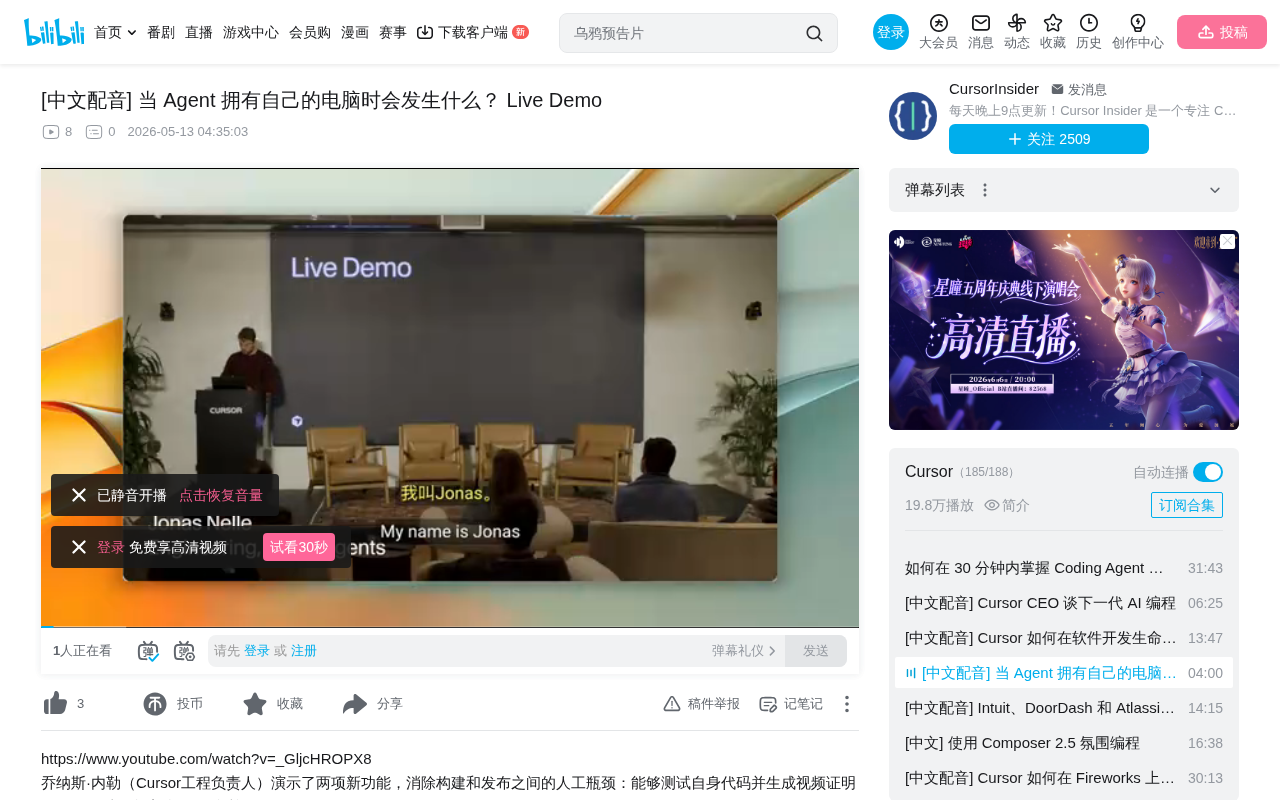
Cursor Cloud Agent Demo: Eliminating Bottlenecks Across the Entire Software Development Lifecycle
Deep analysis of Cursor's Cloud Agent demo showing how cloud VMs, automated test artifacts, and a full-chain control plane systematically eliminate human bottlenecks across the software development lifecycle.