Chatbox: An Open-Source AI Client with Nearly 40K GitHub Stars, Supporting Unified Multi-Model Management

Chatbox is an open-source AI desktop client with ~40K Stars for unified multi-model management with local data storage.
Chatbox is an open-source AI desktop client built with TypeScript, supporting Windows, macOS, and Linux. It enables simultaneous access to multiple AI services including GPT, Claude, and Ollama local models. Its core advantages include a unified multi-model management interface, complete local data storage for privacy protection, and a clean, intuitive user experience. With nearly 40K GitHub Stars, it boasts an active open-source community ecosystem.
What Is Chatbox? An Open-Source AI Client with Nearly 40K Stars
Chatbox is an open-source AI desktop client application that supports simultaneous access to multiple AI services including GPT, Claude, Ollama local models, and more. The project has earned nearly 40,000 Stars on GitHub with over 4,000 Forks, making it one of the most popular open-source AI clients available today.
Built with TypeScript, it covers all three major desktop platforms—Windows, macOS, and Linux—with all conversation data stored locally without passing through third-party servers. For users tired of constantly switching between multiple AI web interfaces, Chatbox provides a unified, efficient solution.
Why Choose Chatbox? Core Advantages Explained
One Client to Manage All AI Models
The current AI model landscape is incredibly diverse, with OpenAI, Claude, Gemini, and local open-source models each having their own web interfaces and workflows. Since 2023, the Large Language Model (LLM) market has entered an explosive growth phase—OpenAI's GPT-4 kicked off the multimodal capability race, Anthropic's Claude series is renowned for its long context windows and safety alignment, Google's Gemini continues to push boundaries in multimodal understanding, and the open-source community has produced high-quality models like Meta's Llama, Alibaba's Qwen, and Mistral AI's Mixtral. This "battle of a hundred models" means users often need to choose different models for different tasks: GPT-4o excels at general reasoning, Claude 3.5 Sonnet stands out in long-text analysis and code generation, while local open-source models are irreplaceable for privacy protection and offline use cases.
Chatbox consolidates these fragmented experiences into a single desktop client—you can switch between different models in the same window, compare outputs, and stop opening dozens of browser tabs.
This "unified entry point" design philosophy offers significant efficiency gains for developers and content creators who use AI frequently throughout the day.
Local Data Storage for True Privacy Control
Unlike web-based AI services, Chatbox as a local client stores all sensitive information—conversation history, API keys, and more—entirely on your own computer. This is particularly important for enterprise users—data never leaves the premises, dramatically reducing compliance risks.
Data Locality carries significant compliance implications in enterprise AI application scenarios. Regulations such as the EU's General Data Protection Regulation (GDPR), China's Data Security Law, and Personal Information Protection Law all impose strict requirements on cross-border data transfers and third-party processing. When employees use cloud-based AI services like ChatGPT, the input content (which may include trade secrets, customer data, source code, etc.) is transmitted to the service provider's servers—something that many corporate information security policies prohibit. Companies like Samsung and JPMorgan Chase have restricted employee use of cloud-based AI tools for this very reason. Chatbox's local client architecture means conversation data is stored only on the user's device. While API calls still require internet connectivity, users can choose to connect to privately deployed model services, achieving complete data isolation that meets compliance requirements for highly sensitive industries such as finance, healthcare, and government.
Even for individual users, there's no need to worry about chat histories being used by cloud service providers for model training.
What AI Models Does Chatbox Support?
Chatbox offers remarkably broad model compatibility, currently supporting the following services:
- OpenAI GPT Series: GPT-4o, GPT-4, GPT-3.5, etc.
- Anthropic Claude Series: Claude 3.5 Sonnet, Claude 3 Opus, etc.
- Local Open-Source Models: Llama, Qwen, Mistral, and other models running through tools like Ollama and LM Studio
- Third-Party Services Compatible with OpenAI API Format: Such as Azure OpenAI and various Chinese LLM APIs
Ollama is an open-source tool designed specifically for running large language models locally. It encapsulates complex processes like model downloading, quantization, and inference into a streamlined command-line experience similar to Docker—users simply run ollama run llama3 to start a complete LLM inference service locally. LM Studio provides a graphical interface, making it easy for non-technical users to manage and run local models. These tools typically launch a local HTTP service endpoint compatible with the OpenAI API format, and Chatbox achieves seamless local model integration by connecting to these standardized API interfaces. Quantization techniques (such as 4-bit/8-bit quantization in GGUF format) allow models that originally required tens of gigabytes of VRAM to run smoothly on consumer-grade hardware—this is the key technological foundation enabling the local model ecosystem to thrive.
It's worth noting that OpenAI's Chat Completions API format (represented by the /v1/chat/completions endpoint) has become the de facto standard protocol for LLM interaction. This API defines unified request formats including message roles (system/user/assistant), temperature parameters, max_tokens, and more. Due to OpenAI's first-mover advantage, virtually all subsequent model service providers—including Azure OpenAI Service, various Chinese LLM platforms (such as Zhipu AI, Baidu's ERNIE, Moonshot's Kimi, etc.), and local inference frameworks like Ollama and vLLM—have chosen to be compatible with this API format. This means Chatbox only needs to implement one set of API calling logic and can connect to dozens of different model services through simple endpoint URL and key configuration, greatly reducing the engineering complexity of multi-model adaptation.
This means whether you're using commercial APIs or locally deployed open-source models, Chatbox can serve as your unified frontend interface.
Technical Architecture: Why TypeScript?
The Engineering Advantages of Full-Stack TypeScript
Chatbox chose TypeScript as its primary development language, paired with cross-platform frameworks like Electron/Tauri, enabling a single codebase to cover all three major desktop operating systems.
TypeScript is a superset of JavaScript developed by Microsoft, with its core feature being optional static type annotations added on top of JavaScript's dynamic typing. In large projects, the static type system can catch common errors like type mismatches and null references at compile time rather than waiting until runtime. For an application like Chatbox that needs to handle multiple API response formats and manage complex state (multiple conversations, multi-model configurations, streaming output, etc.), TypeScript's type inference and interface definition capabilities significantly improve code readability and refactorability. Additionally, TypeScript has an extremely rich type definition ecosystem (the DefinitelyTyped repository contains type definitions for over 8,000 libraries), allowing frontend developers to enjoy type safety while seamlessly using the vast collection of open-source packages in the npm ecosystem.
Regarding cross-platform framework selection, Electron is the classic solution developed by GitHub that bundles the Chromium browser engine with the Node.js runtime, allowing developers to build desktop applications using web technologies—well-known applications like VS Code, Slack, and Discord are all built on Electron. Its advantages are high development efficiency and excellent web ecosystem compatibility, but the drawbacks include larger application size (typically over 100MB) and higher memory usage. Tauri is an emerging alternative that uses the operating system's native WebView component instead of Chromium, with a Rust backend, producing applications that can be as small as a few MB with significantly lower memory consumption. Chatbox's consideration of these two frameworks in its technical choices reflects the classic trade-off between "development efficiency" and "runtime performance" in desktop development.
For frontend developers looking to contribute or build upon the project, the tech stack is very approachable with a low barrier to entry.
An Active Open-Source Community Ecosystem
Over 4,000 Forks indicate that a large number of developers are building custom versions based on Chatbox. In GitHub's open-source collaboration model, a Fork refers to a developer creating a complete copy of a repository under their own account for independent modifications and experimentation. This not only means many developers are studying and referencing Chatbox's code, but more importantly, a significant portion of them contribute improvements back to the main project through Pull Requests (PRs). This "distributed collaboration" model is the core driving force behind the continuous evolution of open-source software. Furthermore, a high Fork count also implies numerous customized derivative versions based on Chatbox—enterprises might Fork it to add internal authentication systems, connect to private model services, or integrate specific business workflows. This customizability is something closed-source commercial software cannot easily provide, and it's an important reason why open-source AI tools are becoming increasingly popular in the enterprise market.
The project maintains a steady update cadence with quick adaptation to new models. This community-driven approach allows Chatbox to continuously keep pace with the rapid iteration of the AI industry.
Real-World Usage Experience: Feature Details
Conversation Management and Organization
Chatbox supports creating multiple independent conversations, each of which can be bound to different models and parameter configurations. Historical conversations support search and categorized management, so Prompts and conversation records accumulated over time don't become a tangled mess.
Prompt Template System
It includes built-in commonly used prompt templates and supports saving custom templates. Prompt Engineering refers to the technical practice of carefully designing input prompts to guide large language models toward producing more accurate, expected outputs. Research shows that the same model can perform dramatically differently under different Prompt strategies—for example, adding a Chain-of-Thought prompt like "Let's think step by step" can significantly improve a model's accuracy on mathematical reasoning tasks. In practice, users often iteratively develop a set of Prompt templates suited to specific tasks—for instance, a code review template might include fixed instructions like "Please check the following code for security vulnerabilities, performance issues, and code style."
Chatbox's Prompt template system solidifies these proven prompts, avoiding repetitive input each time. Essentially, it transforms personal Prompt Engineering experience into reusable workflow assets. For users who frequently use fixed Prompt formats (such as code review or translation polishing), this feature saves considerable repetitive typing time.
Markdown Rendering and Code Highlighting
Code snippets returned by AI are automatically displayed with syntax highlighting, and Markdown formatting renders correctly. For developers, this is far more comfortable than reading code in a plain text interface.
Keyboard Shortcuts
It supports keyboard shortcuts for common operations, allowing power users to reduce mouse clicks and improve operational efficiency.
Chatbox Compared to Similar Tools
In the open-source AI client space, Chatbox's main competitors include Jan, Open WebUI, LibreChat, and others. A brief comparison:
| Feature | Chatbox | Jan | Open WebUI |
|---|---|---|---|
| Type | Desktop Client | Desktop Client | Web Application |
| GitHub Stars | ~40K | ~25K | ~50K |
| Multi-Model Support | ✅ | ✅ | ✅ |
| Local Data Storage | ✅ | ✅ | Requires Self-Hosting |
| Ease of Use | Low | Low | Medium |
Chatbox's advantage lies in its clean, intuitive interface and install-and-use simplicity without requiring additional server configuration. For regular users who don't want to deal with deployment hassles, the experience is much smoother.
Who Should Use Chatbox?
- Developers: Daily programming assistance, code reviews, technical documentation writing—one client for multiple AI models
- Content Creators: Copywriting, translation polishing, creative brainstorming—Prompt templates to boost workflow efficiency
- Enterprise Teams: Scenarios requiring data localization where sensitive information shouldn't be uploaded to the cloud
- AI Enthusiasts: Quickly testing and comparing outputs from different models without opening each provider's website individually
Conclusion: An AI Desktop Client Worth Trying
The core problem Chatbox solves is clear: in an era of ever-increasing AI models, it gives users a unified, secure, and user-friendly local client. The community validation of nearly 40K Stars proves the value of this direction.
If you frequently use multiple AI models in your daily work and care about data privacy and operational efficiency, Chatbox is worth downloading and trying. The project is completely open-source and free, with installation packages available directly from the GitHub Releases page.
Related articles
 Product Reviews
The Programmer's Desk Setup Guide: Building a Workspace That Feels Like Home
Discover how programmers build productive, comfortable workspaces. From multi-monitor setups to ergonomic design, explore the desk philosophy that drives focus and flow.
 Product Reviews
Qoder vs Cursor Real-World Comparison: Which $20/Month AI IDE Is Better?
Hands-on comparison of Qoder vs Cursor AI IDEs: Agent autonomy, human interaction count, and architecture decisions. Qoder needed only 2 interactions vs Cursor's 8.
 Product Reviews
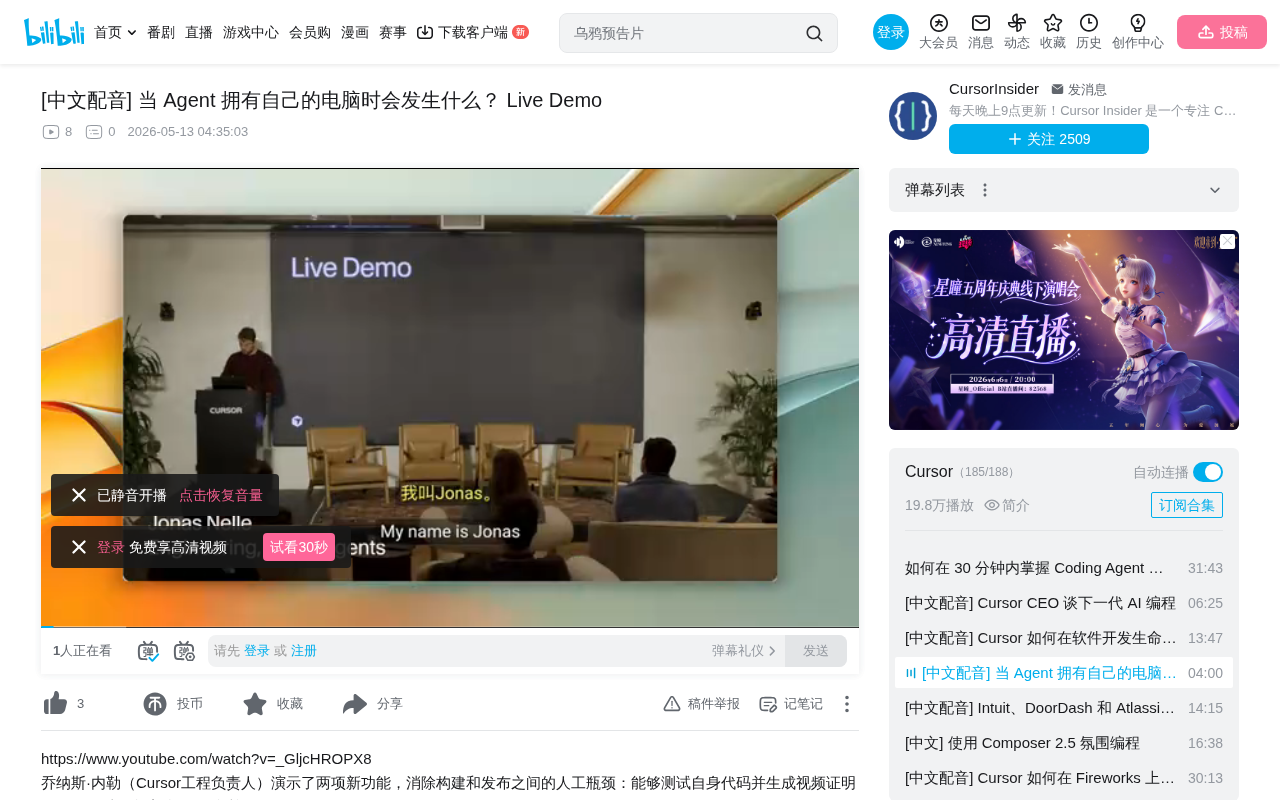
Cursor Cloud Agent Demo: Eliminating Bottlenecks Across the Entire Software Development Lifecycle
Deep analysis of Cursor's Cloud Agent demo showing how cloud VMs, automated test artifacts, and a full-chain control plane systematically eliminate human bottlenecks across the software development lifecycle.