Deep Dive into AGGO Framework: A New Go-Based Choice for Enterprise AI Agents

AGGO is an enterprise AI Agent framework built on Go and CloudWeGo Eino
AGGO is an open-source project filling the gap for Go-native AI Agent frameworks. Built on ByteDance's CloudWeGo Eino framework, it provides four core modules: conversational AI, RAG knowledge management, memory systems, and tool calling. Compared to mainstream Python frameworks, AGGO leverages Go's advantages in compiled deployment, concurrency performance, and seamless integration with existing Go backend ecosystems, making it suitable for high-concurrency AI services, Go-stack enterprises, and resource-constrained edge deployments—though the project remains in its early stages.
What is AGGO: A Go-Native AI Agent Framework
In the AI Agent framework landscape, the Python ecosystem holds an almost absolute dominant position—mainstream frameworks like LangChain, AutoGen, and CrewAI are all built on Python. Since its release in late 2022, LangChain has rapidly become the de facto standard for AI Agent development. Its core advantage lies in Python's most comprehensive AI/ML library support (such as transformers, numpy, pandas, etc.), along with major model providers prioritizing Python SDKs. AutoGen, developed by Microsoft Research, focuses on multi-Agent collaboration scenarios, while CrewAI emphasizes role-playing-style Agent orchestration. These frameworks share a common reliance on Python's dynamic type system and rich third-party package ecosystem, but they also inherit Python's inherent limitations in performance, deployment complexity, and type safety.
However, for enterprise backend teams that heavily use Go, a natively implemented Go AI Agent framework has been a genuine technical need. AGGO emerged precisely to fill this gap.
AGGO is an enterprise-grade AI Agent framework built on Go and the CloudWeGo Eino framework, offering complete capabilities for conversational AI, knowledge management, memory systems, and tool calling. Although the project is still in its early stages (36 Stars on GitHub), its architectural design and technology choices demonstrate significant potential, making it worth continued attention from Go developers.
Technical Architecture and Four Core Modules
Foundation: The CloudWeGo Eino Framework
AGGO chose the Eino framework from ByteDance's open-source CloudWeGo ecosystem as its foundation—a forward-thinking technical decision. CloudWeGo is a collection of cloud-native middleware projects officially open-sourced by ByteDance in 2021. Its core components include: Kitex (a high-performance RPC framework supporting Thrift and gRPC protocols, handling over hundreds of billions of requests daily internally), Hertz (an HTTP framework inspired by Gin and fasthttp), Netpoll (a high-performance networking library), and more. These components are widely used in China's Go community and have been thoroughly validated under ByteDance's massive internal traffic.
As a newer AI-focused component in the CloudWeGo ecosystem, Eino provides foundational capabilities such as LLM call abstraction, Chain orchestration, and Tool definition—similar to a Go version of LangChain's core layer. Choosing Eino as the foundation means AGGO can leverage ByteDance's battle-tested networking, service governance, and observability capabilities from large-scale distributed systems, with natural integration into ByteDance's microservices architecture.
For teams already using the CloudWeGo tech stack, AGGO can integrate seamlessly into existing infrastructure without introducing heterogeneous Python services to handle AI-related business logic.
Module One: Conversational AI
Conversational AI is the most fundamental and critical capability layer of an Agent framework, responsible for managing interactions with large language models. This encompasses key aspects such as prompt engineering, context management, and multi-turn dialogue control. Go's natural advantages in concurrency handling enable more stable performance for conversational services under high-concurrency scenarios.
Module Two: RAG Knowledge Management
Enterprise AI applications cannot do without private knowledge base support. AGGO provides a complete knowledge management module supporting the full pipeline of document import, text chunking, vectorized storage, and Retrieval-Augmented Generation (RAG).
Retrieval-Augmented Generation is a technical paradigm proposed by Meta AI in 2020. Its core idea is to retrieve relevant document fragments from an external knowledge base as contextual input before the LLM generates an answer. The complete RAG pipeline involves multiple engineering steps: document parsing (supporting PDF, Word, HTML, and other formats), text chunking (balancing semantic completeness and retrieval granularity, with common strategies including fixed-length splitting, recursive character splitting, and semantic splitting), vectorization (converting text into high-dimensional vectors through Embedding models), vector storage and indexing (typically using vector databases like Milvus, Pinecone, or Weaviate), similarity retrieval, and reranking. In the Go ecosystem, the maturity of vector database clients and local inference support for Embedding models are key integration points to monitor.
Whether building enterprise internal intelligent Q&A systems or document assistant products, this RAG capability is indispensable infrastructure.
Module Three: Memory System
An Agent's memory capability directly determines the coherence and intelligence of interactions. AGGO's memory system supports not only short-term conversational memory but also provides long-term memory management, enabling Agents to accumulate and leverage contextual information across multiple sessions for more personalized and precise responses.
Modern AI Agent memory systems typically draw from cognitive science memory classification models, organized into multiple levels: perceptual memory (immediate context of the current conversation), short-term working memory (dialogue history within a single session, typically constrained by the model's context window length), and long-term memory (cross-session persistent user preferences, historical interaction summaries, etc.). Long-term memory implementation typically involves memory compression and summarization (preventing unlimited growth), memory retrieval and activation (recalling relevant historical information at appropriate moments), and forgetting mechanisms (discarding outdated or low-value information). This field is still evolving rapidly, with research projects like MemGPT exploring more sophisticated memory management strategies.
Module Four: Tool Calling (Function Calling)
Tool calling is the core feature that distinguishes modern AI Agents from traditional chatbots. AGGO supports encapsulating external APIs, database queries, and business logic as callable tools, enabling Agents to perform actual business operations rather than remaining at the text generation level.
Function Calling was introduced by OpenAI in June 2023 and has since been widely adopted by major model providers. Its working mechanism is: developers describe available tools' names, parameters, and functional descriptions to the model in JSON Schema format; the model determines during inference whether tool calling is needed and, if so, outputs structured calling instructions (including tool name and parameters); the framework layer parses instructions, executes actual calls, and feeds results back to the model for continued reasoning. The advantage of implementing this mechanism in Go is that the strong type system can verify the correctness of tool definitions at compile time, reducing runtime errors. This capability is the key to Agents evolving from "able to chat" to "able to get things done."
Unique Advantages of Building Agent Frameworks in Go
Performance and Deployment Efficiency
Go's characteristic of compiling to a single binary makes deployment extremely simple—no need to configure Python virtual environments or deal with dependency conflicts. In containerized deployment scenarios, a typical Python AI service Docker image (based on python:3.11-slim with common dependencies) usually ranges from 800MB to 1.5GB, while an equivalent Go service image (based on scratch or alpine) typically ranges from 10-50MB—a difference of tens of times. Regarding startup time, Python services need to load the interpreter and import numerous modules, with cold starts typically taking 2-10 seconds, while Go compiled binaries start in milliseconds. For enterprises needing to deploy AI Agent services at scale, this translates to significantly reduced operational costs and faster startup speeds, turning into substantial infrastructure cost differences when deploying at scale in Kubernetes clusters.
Additionally, Go's goroutine concurrency model offers lower memory consumption and more predictable latency compared to Python's async solutions when handling large numbers of concurrent Agent requests. A goroutine's initial stack size is only 2KB (dynamically growable), while Python's thread stack defaults to 8MB, and although asyncio is lighter, it still has significant event loop overhead.
Seamless Integration with Existing Go Backend Ecosystems
A large number of internet companies in China build their backend services on Go, especially in technology-driven companies like ByteDance, Tencent, and Bilibili, where Go has become the primary development language. When these teams need to integrate AI Agent capabilities into their business systems, using a Go-native framework avoids the cross-language call overhead, serialization costs, and additional operational complexity that come with introducing Python microservices.
The engineering cost of cross-language integration is often underestimated. When Go backend teams need to integrate Python AI services, they typically have several options: inter-process communication via gRPC/HTTP (introducing network latency and serialization overhead, where Protobuf serialization/deserialization can become a performance bottleneck in high-frequency call scenarios), calling Python C API via CGo (complex implementation with GIL lock contention issues), or asynchronous communication via message queues (adding system complexity and latency). Each approach introduces additional failure points, monitoring blind spots, and debugging difficulty. Furthermore, maintaining two tech stacks means teams need both Go and Python operational capabilities, including different dependency management, testing frameworks, CI/CD pipelines, and performance tuning methodologies.
AGGO enables Go teams to build AI applications using familiar languages, toolchains, and deployment processes, significantly reducing the cost of tech stack switching.
Project Status and Use Case Analysis
Objective Assessment of Early Stage
It should be honestly noted that AGGO is still in a very early stage. The 36 Stars and 8 Forks indicate that community attention is still quite limited. Compared to mature Agent frameworks in the Python ecosystem, AGGO still has a long way to go in terms of feature completeness, documentation richness, third-party integrations, and community ecosystem.
Moreover, the core challenge of AI Agent frameworks lies not only in engineering implementation but also in broad integration with various LLM APIs, vector databases, and tool ecosystems. The Python ecosystem has accumulated enormous first-mover advantages in this regard, and the Go ecosystem will need time and sustained community investment to catch up.
Best-Fit Use Cases
Nevertheless, AGGO represents an important technical direction—building production-grade AI Agent services with systems programming languages. AGGO may offer unique value in the following scenarios:
- High-concurrency AI online services: Real-time business scenarios requiring handling of large volumes of concurrent Agent requests
- Go tech stack enterprises: Organizations with mature Go infrastructure that want native AI capability integration rather than introducing heterogeneous Python services
- Edge deployment and resource-constrained environments: Deployment scenarios with strict requirements for binary size and memory consumption
- Deep microservices architecture integration: Scenarios requiring Agent capabilities to be seamlessly embedded as microservice nodes within existing CloudWeGo or other Go microservices architectures
Conclusion
AGGO provides the Go community with a brand-new option for building enterprise-grade AI Agents. Although the project is still in its early stages, its technology choices based on CloudWeGo Eino and its complete architectural design covering conversational AI, RAG knowledge management, memory systems, and tool calling demonstrate the real possibilities of Go in the AI Agent domain.
As AI applications move from experimental phases to large-scale production deployment, requirements for performance, reliability, and operational efficiency will continue to rise. Go's natural advantages in these areas may allow frameworks like AGGO to find their ecological niche in enterprise AI infrastructure. For teams seeking Go-native AI Agent solutions, AGGO is worth including in their technology evaluation scope.
Related articles
 Product Reviews
The Programmer's Desk Setup Guide: Building a Workspace That Feels Like Home
Discover how programmers build productive, comfortable workspaces. From multi-monitor setups to ergonomic design, explore the desk philosophy that drives focus and flow.
 Product Reviews
Qoder vs Cursor Real-World Comparison: Which $20/Month AI IDE Is Better?
Hands-on comparison of Qoder vs Cursor AI IDEs: Agent autonomy, human interaction count, and architecture decisions. Qoder needed only 2 interactions vs Cursor's 8.
 Product Reviews
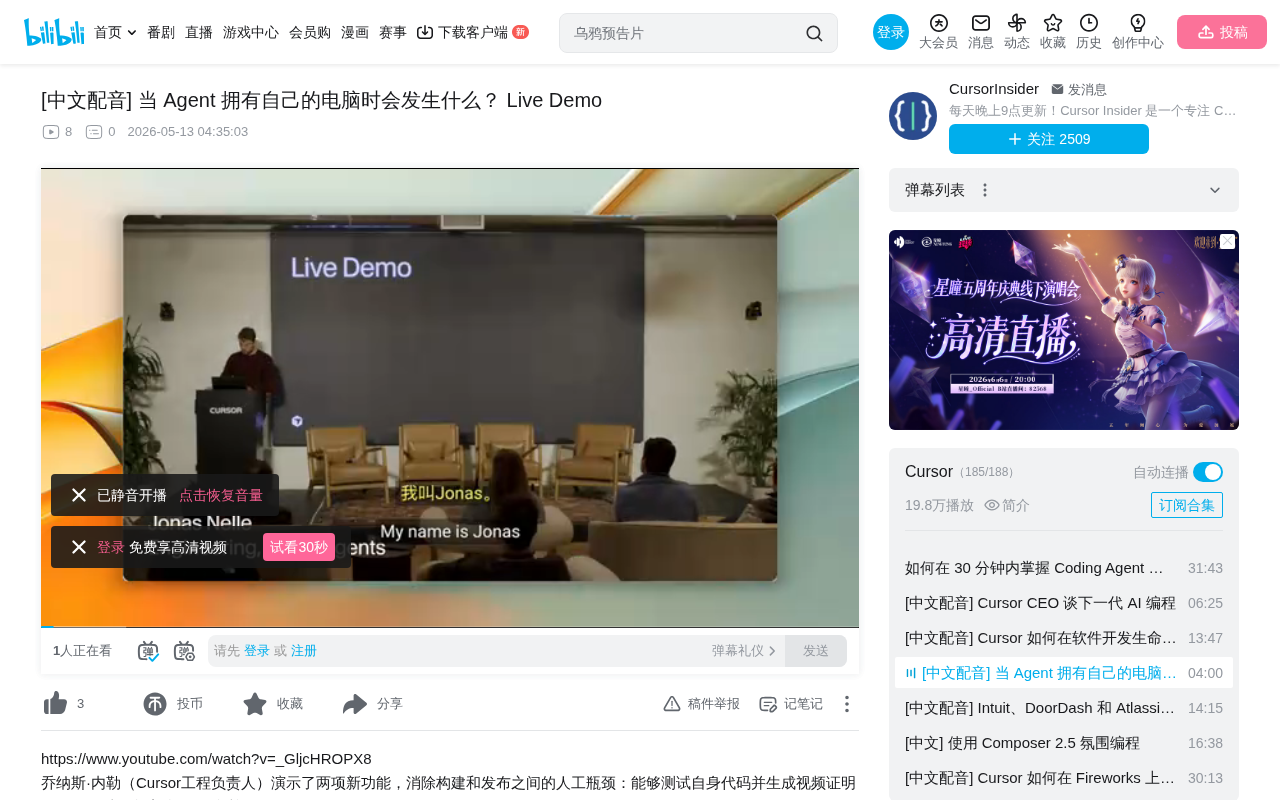
Cursor Cloud Agent Demo: Eliminating Bottlenecks Across the Entire Software Development Lifecycle
Deep analysis of Cursor's Cloud Agent demo showing how cloud VMs, automated test artifacts, and a full-chain control plane systematically eliminate human bottlenecks across the software development lifecycle.