ElevenCreative Flows: In-Depth Review of a Node-Based Multimodal AI Creative Collaboration Tool

ElevenCreative Flows launches real-time collaboration for its node-based multimodal AI creative workflows
ElevenCreative Flows is a multimodal AI creative pipeline tool built on a node-based canvas, supporting visual orchestration across image, video, voice, and music modalities—enabling non-technical users to build complex AI workflows with zero code. Its newly launched real-time collaboration features (including live cursors, shared execution, and synchronized editing) break through the single-user bottleneck of AI tools, truly integrating AI creative production into team collaboration rhythms. The product reflects industry trends of AI creative tools evolving from point solutions to workflow platforms, with collaboration becoming standard.
Product Overview
ElevenCreative Flows is a multimodal AI creative pipeline tool built on a node-based canvas that recently launched real-time collaboration features. It enables creative teams to build, run, and review AI-generated tasks within the same workflow, supporting node operations across multiple modalities including image, video, voice, and music.
The core philosophy behind this tool is to visualize complex AI-generated media workflows. Through node connections, even non-technical creative professionals can build powerful AI processing pipelines.
Core Feature Analysis
Node-Based Visual Orchestration: Zero-Code AI Workflow Building
ElevenCreative Flows adopts a node-based canvas design paradigm, sharing the same design philosophy as tools like ComfyUI and Unreal Engine Blueprints. Users drag and connect different functional nodes to construct complete creative workflows, achieving complex multi-step AI generation tasks without writing any code.
The node-based canvas is a visual programming paradigm originating from signal processing and computer graphics. Its core idea is to decompose complex data processing flows into independent functional units (nodes), defining data flow direction through directed connections to construct a DAG (Directed Acyclic Graph) processing pipeline. This design was first widely adopted in professional audio software (such as Max/MSP) and 3D rendering software (such as Houdini and Blender's Geometry Nodes), later embraced by game engines (Unreal Engine Blueprints) and AI inference tools (ComfyUI). In AI workflow scenarios, each node typically corresponds to a single model inference call or data transformation operation, with data passed between nodes in various formats including text, image tensors, and audio waveforms—this is the technical foundation for multimodal integration.
Supported node types cover the current mainstream generative AI capabilities:
- Image Nodes: AI image generation and editing (interfacing with diffusion models like Stable Diffusion, DALL-E)
- Video Nodes: AI video creation and editing (interfacing with video generation models like Runway Gen series, Kling)
- Voice Nodes: Speech synthesis and processing (interfacing with services like ElevenLabs, Azure TTS)
- Music Nodes: AI music generation (interfacing with models like Suno, Udio)
Notably, data format differences between modalities are significant—images are passed as pixel tensors, audio as waveform sequences, and video as composite structures of frame sequences and audio tracks. The platform layer must define unified serialization protocols and format conversion adapters to enable seamless connection between nodes of different modalities. This is precisely the core technical challenge that distinguishes multimodal node orchestration from single-modality tools, and a key source of competitive moat for such platforms.
This multimodal integration means teams can complete the entire creative process—from copywriting to voiceover, from concept art to final cut—within a unified interface, eliminating the need to constantly switch between multiple AI tools.
Real-Time Collaboration: Making AI Creative Work a True Team Activity
The biggest highlight of this update is the introduction of real-time collaboration capabilities, specifically:
- Live Cursor Presence: Team members can see each other's cursor positions, similar to Figma's multiplayer collaboration experience
- Shared Execution: Workflow execution results are visible to all collaborators in real time
- Synchronized Building & Review: Multiple people can edit the same Flow simultaneously without waiting or taking turns
Real-time collaboration relies on distributed consistency algorithms such as CRDT (Conflict-free Replicated Data Type) or OT (Operational Transformation), designed to resolve conflicts when multiple users edit the same data simultaneously. CRDT's core advantage is achieving eventual consistency without a central arbitration node, making it suitable for offline editing with later resynchronization; OT relies on server-side real-time transformation of operation sequences, offering lower latency but higher architectural complexity—Google Docs and early Figma both adopted OT variants. In a node canvas context, collaboration complexity is particularly pronounced—not only text content needs to be synchronized, but also node positions, connection relationships, execution states, and other structured data. Live cursor display is typically implemented via WebSocket persistent connections for low-latency position broadcasting, while shared execution requires maintaining a unified workflow runtime state on the server and pushing execution progress and results to all online collaborators via event streams. This is one of the technical reasons why such features have been slow to gain widespread adoption in AI tools.
The significance of this feature for creative teams cannot be overlooked. In the past, most AI tools operated in single-user mode, with team collaboration requiring asynchronous communication through screenshots and exported files. Real-time collaboration breaks through this bottleneck, truly integrating AI creative production into team work rhythms.
Use Cases and Target Users
From a product positioning perspective, ElevenCreative Flows primarily targets three scenarios: design tools, social media, and marketing. Target user groups include:
- Brand Marketing Teams: Rapidly generating marketing assets across multiple platforms, covering graphics, short videos, and voiceover content
- Social Media Operations: Batch-producing creative content adapted for different platforms
- Design Studios: Embedding AI capabilities into existing creative workflows
The product offers a free tier, lowering the barrier for team adoption and making it suitable for small and medium teams to quickly validate the feasibility of AI workflows. This pricing strategy aligns with the PLG (Product-Led Growth) model widely adopted by AI workflow platforms—the free tier handles acquisition and retention, while paid tiers typically charge based on node execution count, GPU compute consumption, or collaboration seats. As the platform accumulates sufficient workflow templates and user data, it can also build a Workflow Marketplace, creating an ecosystem flywheel through template transactions and model distribution. This evolution path is highly similar to automation platforms like Zapier and Make (formerly Integromat), but AI workflow platforms have significantly higher per-execution costs than traditional API integration tools. How to balance compute costs with user growth is the core commercial challenge for such products.
Industry Trends in AI Creative Tools
The emergence of ElevenCreative Flows reflects several important trends in the AI creative tools landscape:
From point solutions to workflow platforms. The market doesn't lack single-function AI generation tools, but platforms that can chain multiple AI capabilities into complete workflows remain scarce. Node-based orchestration provides an intuitive and flexible solution. From a technical architecture perspective, multimodal integration platforms are essentially an Aggregation Layer for AI capabilities, interfacing with various model providers through a unified API scheduling layer while defining standardized data format conversion protocols between nodes. This architecture allows platforms to flexibly integrate new models without restructuring the entire workflow engine—a key factor enabling such platforms to keep pace with rapid AI model iterations. Another strategic value of the aggregation layer architecture: when underlying model capabilities trend toward homogenization, the workflow template libraries, user operation data, and ecosystem integrations accumulated at the platform layer become the truly irreplicable moat.
Collaboration is becoming standard in AI tools. In 2016, Figma launched a browser-based real-time collaborative design tool that completely disrupted the local single-machine design software market represented by Adobe XD and Sketch. Its core competitive advantage wasn't the design features themselves, but embedding collaboration capabilities into the product core, transforming design review, version management, and team communication from external to internal parts of the design process. More critically, Figma's collaboration mechanism naturally possesses viral distribution properties—every shared link is a user acquisition action, and every stakeholder invited to view a design becomes a potential user. If AI tools can replicate this path by embedding collaboration into the core AI generation process, then every instance of teams jointly reviewing AI output reinforces product stickiness and drives organizational purchasing decisions—essential for the leap from individual users to enterprise customers. This "collaboration-first" product strategy is becoming the common choice for next-generation AI productivity tools breaking through growth plateaus.
Related articles
 Product Reviews
The Programmer's Desk Setup Guide: Building a Workspace That Feels Like Home
Discover how programmers build productive, comfortable workspaces. From multi-monitor setups to ergonomic design, explore the desk philosophy that drives focus and flow.
 Product Reviews
Qoder vs Cursor Real-World Comparison: Which $20/Month AI IDE Is Better?
Hands-on comparison of Qoder vs Cursor AI IDEs: Agent autonomy, human interaction count, and architecture decisions. Qoder needed only 2 interactions vs Cursor's 8.
 Product Reviews
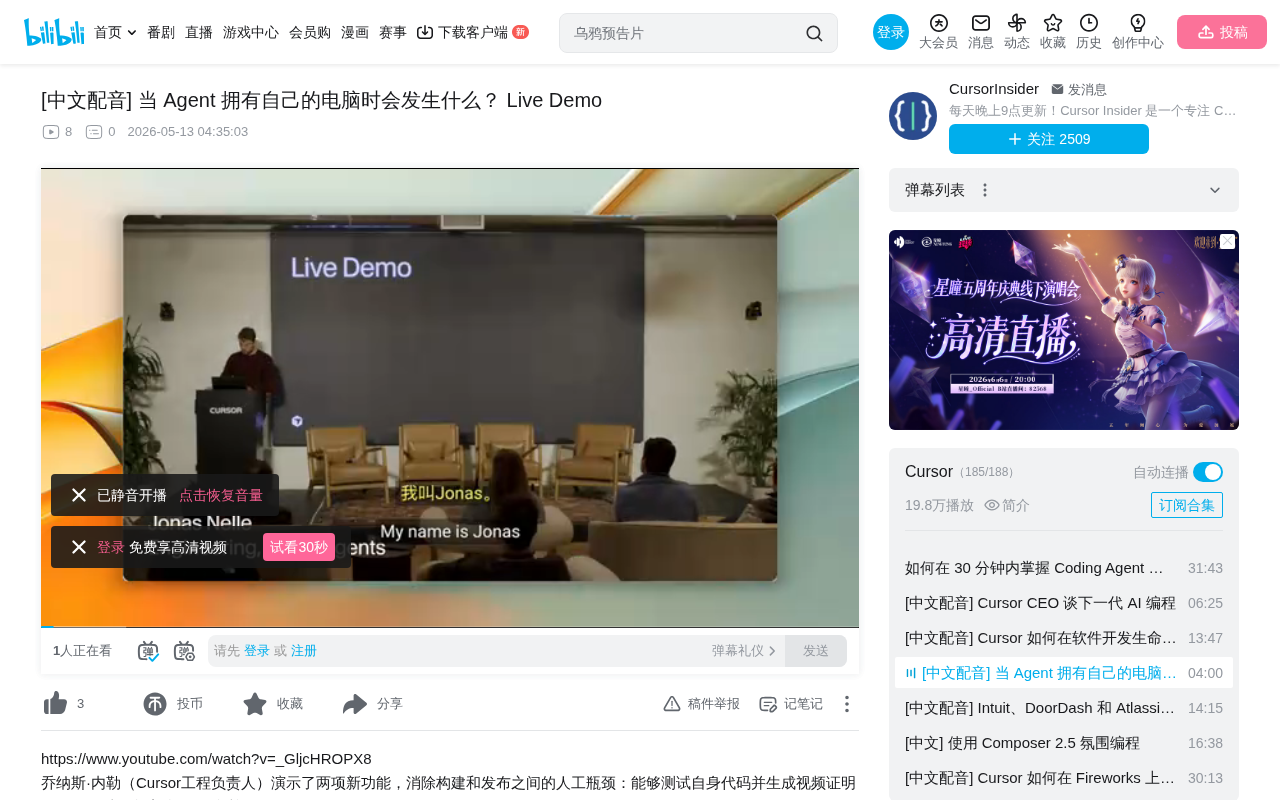
Cursor Cloud Agent Demo: Eliminating Bottlenecks Across the Entire Software Development Lifecycle
Deep analysis of Cursor's Cloud Agent demo showing how cloud VMs, automated test artifacts, and a full-chain control plane systematically eliminate human bottlenecks across the software development lifecycle.