Hachigo Review: Automatically Build Reusable AI Workflows with a Single Sentence

Hachigo builds repeatable AI automation workflows from natural language descriptions
Hachigo is an AI workflow automation tool that lets users describe tasks in natural language to automatically build repeatable, standardized workflows. It uses proactive follow-up questions to ensure accurate requirements and delivers auditable structured outputs. Ideal for multi-channel content distribution and repetitive text processing, it's more AI-savvy than Zapier and more systematic than ChatGPT, representing the evolution of AI tools from conversational to workflow-based.
Still Copy-Pasting into ChatGPT Every Day?
If you find yourself doing the same things daily—rewriting blog posts into LinkedIn posts, tweets, and emails, or repeatedly processing different inputs with the same prompts—you probably need a smarter solution.
Hachigo is a newly launched AI workflow automation tool with a remarkably simple core concept: You only need to describe a task once in natural language, and it builds a reusable, repeatable automated workflow for you.
Hachigo's Core Product Logic
From Natural Language Descriptions to Automated AI Workflow Construction
Hachigo's approach breaks away from the traditional automation tool paradigm of manually dragging nodes and configuring parameters. Users simply describe their desired task in natural language—for example, "Turn each blog post into a LinkedIn post, a tweet, and an email"—and Hachigo automatically understands the intent and builds the corresponding workflow.
This process isn't a one-step black box operation. Hachigo proactively asks follow-up questions to ensure it accurately understands the details of your requirements. This interactive workflow-building approach both lowers the barrier to entry and ensures output quality.
Technical Background: How Natural Language-Driven Workflow Construction Works
Natural language-driven workflow construction is essentially a three-stage process: "intent understanding → task decomposition → node orchestration." The system first uses a large language model to parse the user's natural language description and extract task intent (Intent Extraction); then breaks complex tasks into multiple sub-task nodes (Task Decomposition); and finally arranges nodes into a workflow in the form of a Directed Acyclic Graph (DAG) based on dependency relationships. Hachigo's "proactive follow-up" mechanism is specifically designed to address the common ambiguity and information gaps in natural language descriptions—an approach known in engineering as "Clarification Dialogue"—and is a key design element for improving workflow construction accuracy.
This technological direction didn't emerge from nowhere. AI Workflow Automation is an emerging field that has grown alongside the commercialization of large language models (LLMs) in recent years. Its core idea is to encapsulate what were previously step-by-step manual AI interactions into reusable "Pipelines." The rise of open-source frameworks like LangChain and AutoGPT laid the technical foundation for this space, while products like Hachigo aim to package these underlying capabilities into user-friendly product interfaces.
Auditable, Trustworthy Structured Outputs
Another design highlight of Hachigo is transparency. Before a workflow officially runs, users can review each step sequentially and confirm the logic is correct before execution. The final results are returned as structured outputs rather than randomly generated text blocks.
This means outputs are consistent and predictable—a critical feature for marketing teams or content creators who need to process content at scale.
Technical Background: The Technical Significance of Structured Outputs
Structured Output is one of the core technical features that distinguishes "AI tools" from "AI workflow systems." Traditional ChatGPT conversations return free-form text that's difficult for downstream systems to consume directly. Structured outputs are typically presented in formats like JSON, Markdown tables, or predefined templates, offering Parsability and Validatability. OpenAI's Function Calling feature launched in 2023, along with the subsequent JSON Mode, were specifically designed to address this issue. For batch content processing scenarios, structured outputs mean that the result format is highly consistent across runs and can directly integrate with CMS (Content Management Systems), CRMs, or email marketing platforms, drastically reducing manual organization costs.
Hachigo Use Case Analysis
Multi-Channel Content Distribution Automation
The most typical use case is content repurposing. After writing an in-depth article, you need to adapt it to different platform formats and styles: LinkedIn requires professional narrative, Twitter demands concise soundbites, and emails need personalized openings. Manual rewriting is time-consuming and tedious—Hachigo can standardize this content distribution process.
Repetitive Text Processing Tasks
Beyond content marketing, any text processing task involving "Input A → Apply fixed rules → Output B" could be applicable: customer feedback classification, extracting action items from meeting notes, multi-language adaptation of product descriptions, and more.
How Hachigo Differs from Zapier and ChatGPT
The market already has automation platforms like Zapier and Make, as well as various AI writing tools. Hachigo's differentiated positioning lies in:
- More AI-savvy than general automation tools: No need to manually configure API calls and prompt templates—workflow construction is done via natural language
- More systematic than using ChatGPT directly: Transforms one-off conversations into repeatable, standardized processes
- More flexible than AI writing tools: Not limited to specific scenarios—any describable task can be automated
Industry Background: The Generational Gap Between Zapier and New AI Automation Tools
Founded in 2011, Zapier represents the first generation of automation tools built around the "Trigger-Action" model. These tools excel at connecting APIs of different SaaS applications but have extremely limited capabilities for processing unstructured content (such as text generation and semantic understanding)—users still need to manually write prompts and configure every parameter node. Second-generation tools represented by Make (formerly Integromat) introduced more complex branching logic but remained fundamentally "rule-driven" rather than "intelligence-driven." The third generation of AI-native automation tools that Hachigo represents uses LLMs as the core processing engine of workflows, replacing rule configuration with semantic understanding—marking a paradigm shift in automation tools from "connectors" to "Intelligent Agents."
Current Stage and Future Outlook
Hachigo currently offers a free option, positioning itself in the AI productivity tools and marketing automation space. As a newly launched product, its core value proposition—"If you can explain it, you can automate it"—addresses a key pain point in current AI applications: most people know AI can help, but they lack the tools to systematize their fragmented AI usage habits.
Industry Trend: AI Tools Evolving from Conversational to Workflow-Based
The explosive adoption of ChatGPT in 2022 led hundreds of millions of users to develop "conversational AI usage habits"—opening a new conversation each time, re-entering context, and manually copying output results. This pattern essentially treats AI as a "one-time tool" rather than a "continuously running system." Industry observers call this the "fragmented stage of AI usage." Between 2023 and 2024, product forms centered on Agents and Workflows began to rise, with representative products including Anthropic's Claude Projects, OpenAI's custom GPTs assistants, and numerous vertical-scenario AI automation SaaS products. The underlying driver of this trend is that enterprise users don't need "occasionally impressive AI answers"—they need "predictable, auditable, and scalable AI outputs."
For content creators and marketers who spend significant time daily on repetitive AI tasks, Hachigo is worth watching. It represents the evolution of AI tools from "conversational" to "workflow-based."
Related articles
 Product Reviews
The Programmer's Desk Setup Guide: Building a Workspace That Feels Like Home
Discover how programmers build productive, comfortable workspaces. From multi-monitor setups to ergonomic design, explore the desk philosophy that drives focus and flow.
 Product Reviews
Qoder vs Cursor Real-World Comparison: Which $20/Month AI IDE Is Better?
Hands-on comparison of Qoder vs Cursor AI IDEs: Agent autonomy, human interaction count, and architecture decisions. Qoder needed only 2 interactions vs Cursor's 8.
 Product Reviews
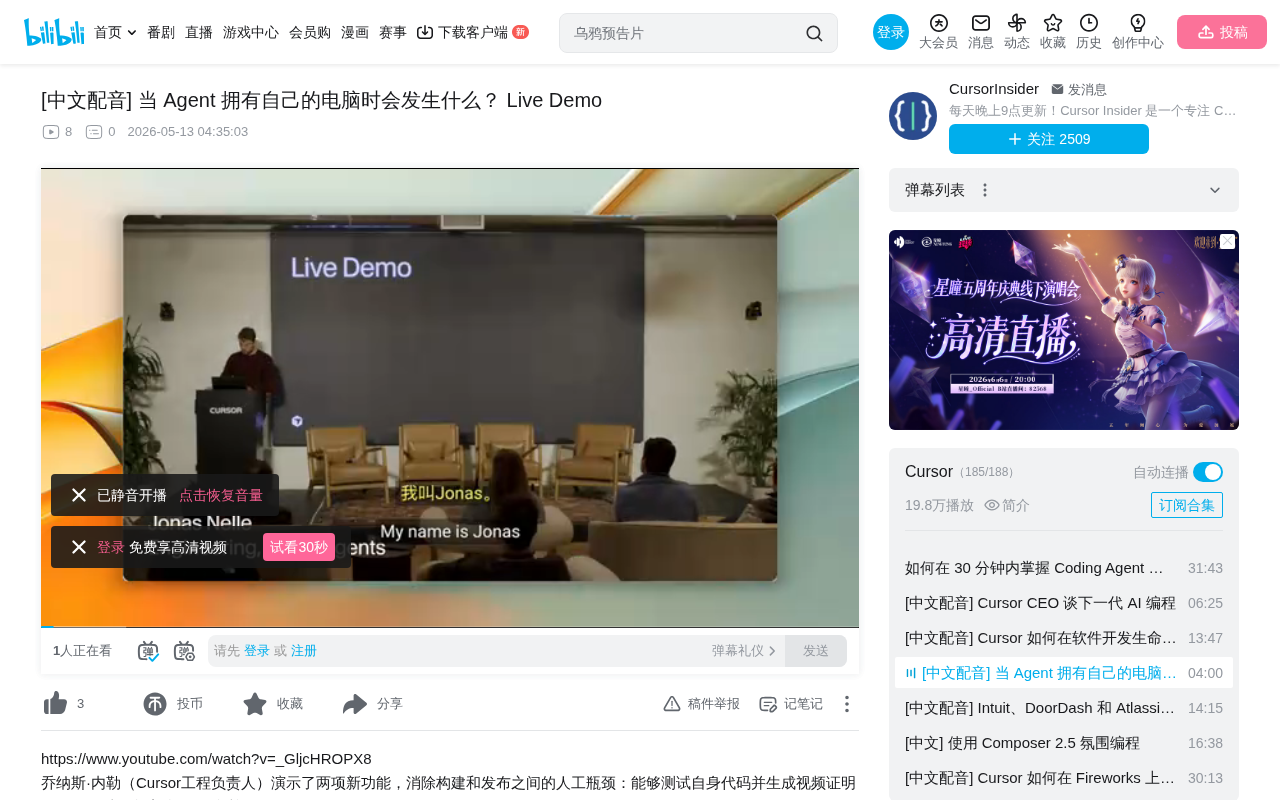
Cursor Cloud Agent Demo: Eliminating Bottlenecks Across the Entire Software Development Lifecycle
Deep analysis of Cursor's Cloud Agent demo showing how cloud VMs, automated test artifacts, and a full-chain control plane systematically eliminate human bottlenecks across the software development lifecycle.