Hugging Face Transformers: A Deep Dive into the AI Open-Source Framework Behind 160K Stars

Hugging Face Transformers has become the industry-standard AI model framework with 160K GitHub Stars.
Hugging Face Transformers is a unified model definition framework covering text, vision, audio, and multimodal domains. With ultimate ease of use (out-of-the-box Pipeline API), comprehensive pretrained model coverage, powerful ecosystem synergy, and full lifecycle support for both inference and training, it has become the de facto model distribution standard in open-source AI, earning over 160K GitHub Stars from the community.
Introduction
In today's rapidly evolving AI landscape, how to quickly and efficiently leverage cutting-edge machine learning models is a core challenge every AI practitioner must face. Hugging Face's Transformers library, with an astounding 160K+ GitHub Stars, firmly holds its position at the top of AI open-source projects, making it the undisputed benchmark as the "definitive AI model framework."
This article provides a deep dive into this phenomenal open-source project—from core functionality to ecosystem strategy, from code examples to industry impact—giving you a comprehensive understanding of why it stands out in the fiercely competitive open-source landscape.
What Is Hugging Face Transformers?
A Unified Model Definition Framework
Transformers is an open-source Python library developed and maintained by Hugging Face, providing a unified model definition and invocation interface for state-of-the-art machine learning models across text, vision, audio, and multimodal domains. Whether for inference or training, developers can use thousands of pretrained models through a clean, consistent API.
In other words, Transformers accomplishes something incredibly important: delivering the latest academic research to developers worldwide in an engineered, standardized manner. From BERT and GPT-2 to LLaMA and Mistral, virtually all mainstream large models have ready-made implementations available in this framework.
It's worth recalling that the Transformer architecture itself was first proposed by Google's team in the 2017 paper "Attention Is All You Need." Its core innovation is the self-attention mechanism, which allows the model to attend to all positions in the input simultaneously when processing sequential data, rather than processing step by step like RNNs. This architecture fundamentally changed the paradigm of natural language processing and was subsequently extended to computer vision (Vision Transformer), speech recognition, and other domains, becoming the foundational architecture of modern deep learning. Hugging Face's Transformers library is named after this revolutionary architecture and has built a complete engineering ecosystem around it.
Key Metrics at a Glance
| Metric | Data |
|---|---|
| GitHub Stars | 160,253 |
| Forks | 33,107 |
| Primary Language | Python |
| Supported Models | Thousands |
| Coverage | Text, Vision, Audio, Multimodal |
Over 160K Stars and 33K Forks not only represent strong endorsement from the developer community but also reflect the project's widespread adoption in production environments.
Why Has Transformers Become the Industry Standard?
Ultimate Ease of Use: Pipeline API Works Out of the Box
The greatest appeal of Transformers lies in its "works out of the box" design philosophy. With the pipeline API, developers can accomplish complex NLP, CV, or speech tasks in just a few lines of code:
from transformers import pipeline

# Sentiment analysis in just two lines of code
classifier = pipeline("sentiment-analysis")
result = classifier("I love this framework!")
The Pipeline API's design draws inspiration from scikit-learn's pipeline concept but extends it to the deep learning domain. It encapsulates model loading, tokenization, inference computation, and post-processing into a unified calling interface. It currently supports over 30 task types, including text classification, named entity recognition, question answering, text generation, image classification, object detection, speech recognition, and more—each with corresponding default models and preprocessing logic. This design satisfies rapid prototyping needs while allowing advanced users to exert fine-grained control by specifying specific models, devices, and parameters.
This extremely low barrier to entry enables machine learning beginners to get started quickly, without sacrificing advanced users' ability to fine-tune model details.
Comprehensive Pretrained Model Coverage
From its initial focus on NLP Transformer architecture models to now covering computer vision (ViT, DETR), speech processing (Whisper, Wav2Vec2), and multimodal (CLIP, LLaVA) domains, Transformers has far exceeded the scope implied by its name.
More critically, when academia releases new SOTA models, the Transformers team can often complete integration in an extremely short timeframe. This "staying at the frontier" iteration cadence makes it the best bridge connecting academic research with engineering practice.
To clarify, SOTA (State-of-the-Art) refers to models achieving the current best performance on specific benchmarks. In traditional academic workflows, after researchers publish a paper, engineers often need weeks or even months to reproduce it as usable code. Transformers compresses this cycle to just days through direct collaboration with paper authors and establishing standardized model contribution processes (including code review, documentation requirements, and test coverage). This greatly accelerates the industrialization of research outcomes. This efficient academic-to-engineering translation mechanism is the key reason Transformers continues to attract top researchers and engineers.
Powerful Hugging Face Ecosystem Synergy
Transformers doesn't exist in isolation—it creates powerful synergies with other core components in the Hugging Face ecosystem:
- Hugging Face Hub: Hosts over 500,000 pretrained models with seamless Transformers integration
- Datasets: Provides standardized dataset loading and processing tools
- Accelerate: Simplifies distributed training and mixed-precision training configuration
- PEFT: Supports parameter-efficient fine-tuning methods like LoRA, reducing large model fine-tuning costs
- TRL: Provides alignment training tools like RLHF, facilitating safe large model alignment
Among these, LoRA (Low-Rank Adaptation) is a parameter-efficient fine-tuning method proposed by Microsoft in 2021 that deserves deeper understanding. Its core idea is to freeze the pretrained model's original weights and only inject low-rank decomposition matrices at each layer for training. For a 7-billion parameter model, LoRA typically requires training less than 1% of the parameters, reducing memory requirements by over 60% while maintaining performance close to full fine-tuning. This makes fine-tuning large models on consumer-grade GPUs possible, dramatically lowering the hardware barrier for AI development.
RLHF (Reinforcement Learning from Human Feedback) is the core training technique used by OpenAI in ChatGPT. Its process includes three stages: first, supervised fine-tuning (SFT); then training a reward model to simulate human preference judgments; and finally using reinforcement learning algorithms like PPO to optimize the language model's output strategy. The TRL library standardizes this complex process and supports newer alignment algorithms like DPO (Direct Preference Optimization) and KTO, allowing developers to complete model alignment training without implementing from scratch.
This ecosystem approach allows developers to complete the entire workflow—from data preparation and model training to deployment—within a unified technology stack, significantly reducing engineering complexity.
Transformers' Strategic Position in the Large Model Era
The De Facto Release Standard for Open-Source Large Models
Since the large model wave erupted in 2023, Transformers' strategic value has become even more pronounced. Major open-source models like Meta's LLaMA series, Mistral AI's Mistral/Mixtral, and Google's Gemma have almost universally chosen to release through the Hugging Face platform in Transformers format.
This means Transformers has evolved from a "utility library" into the de facto model distribution standard in the open-source AI field. When a new model is released, "whether it supports Transformers format" has become virtually the first criterion for measuring its usability.
Dual Support for Inference and Training
Notably, Transformers covers both core scenarios of inference and training:
- Inference side: Deep integration with high-performance inference engines like vLLM and TGI (Text Generation Inference), meeting production-grade deployment requirements
- Training side: Through the built-in
TrainerAPI and integration with DeepSpeed and FSDP, supporting everything from single-GPU fine-tuning to thousand-GPU pretraining at various scales
On the inference side, vLLM is a high-performance large model inference engine developed at UC Berkeley. Its core innovation is PagedAttention technology—borrowing the paged memory management concept from operating system virtual memory, it divides KV Cache into fixed-size blocks for dynamic allocation, solving memory fragmentation and waste issues in traditional inference. Compared to naive implementations, vLLM can improve throughput by 2-24x and is one of the most popular LLM inference solutions in production today. Transformers as the model definition layer forms a natural division of labor with vLLM's inference optimization layer.
On the training side, DeepSpeed is a distributed training optimization library developed by Microsoft. Its ZeRO (Zero Redundancy Optimizer) technology breaks through single-GPU memory limitations by sharding optimizer states, gradients, and model parameters across multiple GPUs. FSDP (Fully Sharded Data Parallel) is a similar native PyTorch solution contributed by Meta. Both support training trillion-parameter models, but FSDP integrates more tightly with the PyTorch ecosystem, while DeepSpeed offers more advanced optimization options like ZeRO-Offload (offloading computation to CPU/NVMe). Transformers' Trainer API provides out-of-the-box support for both, allowing developers to switch training strategies by simply modifying configuration files.
This ability to cover the model's "full lifecycle" is a core advantage that competitors find difficult to match.
Challenges and Future Outlook for Transformers
Despite Transformers' absolute ecosystem advantage, it faces some challenges that cannot be ignored:
- Rising codebase maintenance complexity: As the number of supported models continues to grow, codebase size and maintenance difficulty are escalating rapidly
- Inference performance optimization pressure: Pure Python implementations still lag behind C++/CUDA-specialized inference frameworks in speed
- New architecture adaptation needs: The emergence of non-Transformer architectures like Mamba poses new demands on the framework's flexibility and adaptability
Regarding the third challenge, Mamba is a selective state space model proposed by Albert Gu and Tri Dao in late 2023, representing a significant challenge to the Transformer architecture. Unlike Transformer's quadratic-complexity attention mechanism, Mamba achieves linear-time-complexity sequence modeling through a selective scan mechanism, offering significant speed and memory advantages for long sequence processing. For example, when processing sequences of 1 million tokens, Transformer's computation grows quadratically while Mamba's grows only linearly. The emergence of such architectures means the Transformers library needs to transcend the architectural limitations implied by its name and support more diverse model paradigms—in fact, Mamba models have already been integrated into the Transformers library, demonstrating the team's rapid adaptability.
From current development trends, the Hugging Face team is actively addressing these challenges. Through modular refactoring, deep collaboration with hardware vendors (NVIDIA, AMD, Intel, etc.), and rapid support for new architectures, Transformers is poised to continue consolidating its core position in the AI open-source ecosystem.
Conclusion
160K Stars is not the destination but rather a milestone in Transformers' continuous evolution. In today's rapidly changing AI landscape, the value of an open-source framework that can quickly translate cutting-edge research into usable engineering implementations cannot be overstated.
For any team or individual working in AI development, Hugging Face Transformers is indispensable infrastructure in the technology stack—whether you're a beginner just getting started or a senior engineer building production-grade AI systems.
Key Takeaways
- Hugging Face Transformers has become the most popular AI open-source framework with over 160K GitHub Stars, covering text, vision, audio, and multimodal domains
- Ultimate ease of use, comprehensive model coverage, and powerful ecosystem synergy are the three core advantages that make it the industry standard
- In the large model era, Transformers has evolved from a utility library into the de facto model distribution standard in open-source AI
- Its full lifecycle coverage supporting both inference and training is the key differentiator from competitors
- While facing challenges like rising codebase complexity, inference performance optimization, and new architecture adaptation, its development momentum remains strong
Related articles
 Product Reviews
The Programmer's Desk Setup Guide: Building a Workspace That Feels Like Home
Discover how programmers build productive, comfortable workspaces. From multi-monitor setups to ergonomic design, explore the desk philosophy that drives focus and flow.
 Product Reviews
Qoder vs Cursor Real-World Comparison: Which $20/Month AI IDE Is Better?
Hands-on comparison of Qoder vs Cursor AI IDEs: Agent autonomy, human interaction count, and architecture decisions. Qoder needed only 2 interactions vs Cursor's 8.
 Product Reviews
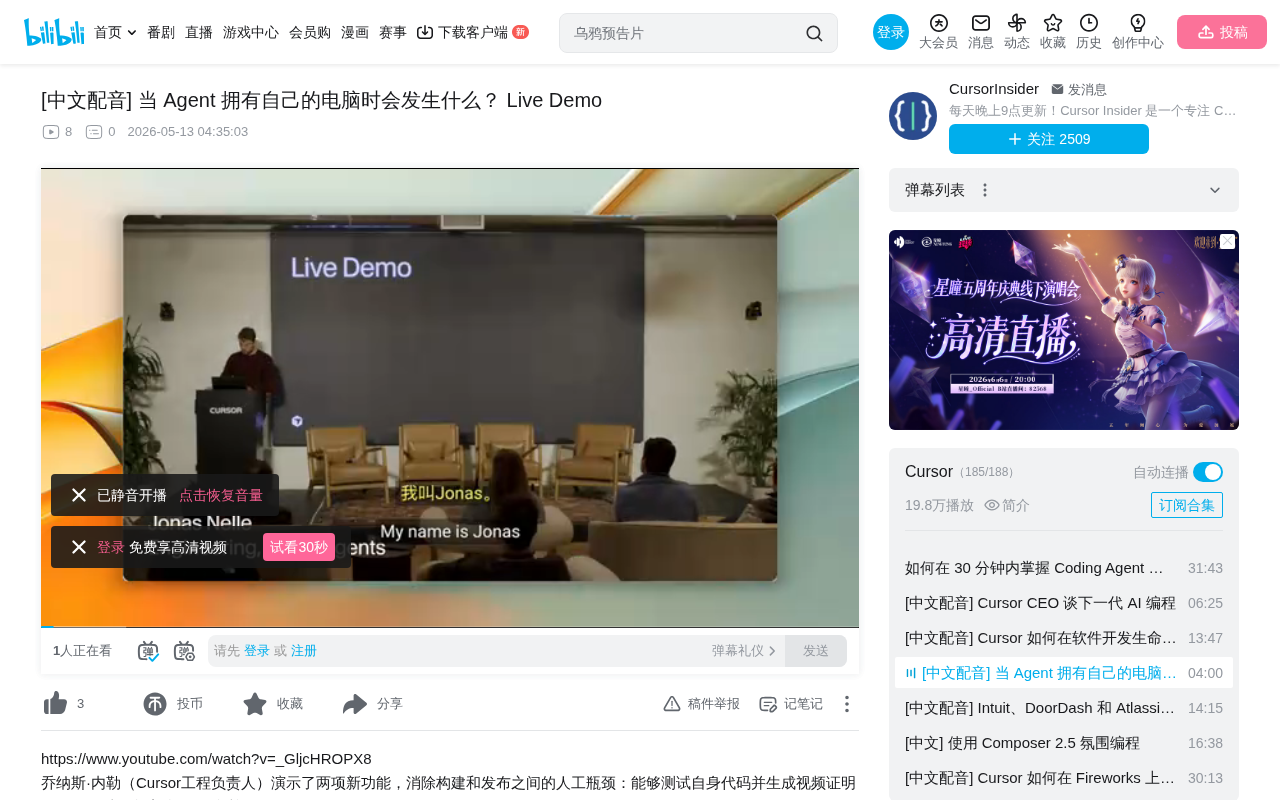
Cursor Cloud Agent Demo: Eliminating Bottlenecks Across the Entire Software Development Lifecycle
Deep analysis of Cursor's Cloud Agent demo showing how cloud VMs, automated test artifacts, and a full-chain control plane systematically eliminate human bottlenecks across the software development lifecycle.