LibreChat: An Open-Source AI Chat Platform Integrating GPT-5/Claude/Gemini

LibreChat is an open-source multi-model AI chat aggregation platform supporting self-hosted deployment.
LibreChat is an open-source AI chat platform with 36,500+ GitHub stars, built with TypeScript and supporting Docker self-hosted deployment. It integrates mainstream AI models including OpenAI, Claude, Gemini, and DeepSeek into a unified interface, featuring advanced capabilities like AI Agents, MCP protocol, code interpreter, and Artifacts, with enterprise-grade multi-user management suitable for individuals, development teams, and enterprise private deployments.
What is LibreChat: Project Overview
LibreChat is a powerful open-source enhanced ChatGPT clone that has earned over 36,500 stars on GitHub, with nearly 7,500 forks, making it one of the most active and feature-complete open-source AI chat platforms available today. Built with TypeScript, it supports self-hosted deployment, providing both individual users and enterprises with a unified multi-model AI interaction interface.
TypeScript is a superset of JavaScript that significantly improves code maintainability and development efficiency for large-scale projects through its static type system. LibreChat's choice of TypeScript as its core development language means the frontend and backend can share type definitions and business logic, reducing the interface inconsistency issues common in full-stack development. The self-hosted model is an alternative deployment approach to SaaS services — users deploy the software on servers they control, maintaining complete ownership of their data without routing it through third-party platforms. This is particularly important for enterprises with strict data sovereignty and privacy compliance requirements, especially as regulations like GDPR and China's Data Security Law become increasingly stringent, making the value of self-hosted solutions ever more apparent.
In today's era of flourishing large language models, users often need to switch back and forth between multiple platforms like ChatGPT, Claude, and Gemini. LibreChat was born to solve this pain point — it integrates mainstream AI models into a single unified interface, allowing you to freely switch between different model services within the same conversation window, eliminating the hassle of jumping between platforms.
Core Feature Highlights: Why Choose LibreChat
Comprehensive Multi-Model Support
LibreChat's greatest competitive advantage lies in its extensive model compatibility, covering virtually all major AI service providers:
- OpenAI Series: GPT-5, o1 reasoning models, Responses API, DALL-E-3 image generation
- Anthropic: Claude model series
- Google: Gemini, Vertex AI
- Open-source models: DeepSeek, Mistral, etc.
- Aggregation platforms: OpenRouter, Groq, Azure OpenAI
- Cloud services: AWS Bedrock
With just a single LibreChat instance deployed, you can connect to virtually all mainstream large language models by configuring API Keys, dramatically reducing the complexity of multi-model management. An API Key is a credential used by cloud service providers for authentication and billing, with each AI service provider having its own independent API system and key management approach. Without a unified platform, developers need to separately manage multiple sets of keys, handle different request formats and error codes, resulting in extremely high operational costs. LibreChat implements a unified adaptation layer on the backend that encapsulates the API differences between providers — users simply fill in each provider's API Key in the configuration file and can call all models through a consistent interface. Aggregation platforms like OpenRouter and Azure OpenAI take this a step further, as they themselves provide unified multi-model access gateways that, when used with LibreChat, can further simplify key management.
It's worth noting that the Responses API is OpenAI's next-generation API interface launched in March 2025, designed to replace the previous Chat Completions API and Assistants API as a unified model invocation endpoint. Compared to legacy APIs, the Responses API natively supports Tool Use, file search, code interpreter, Computer Use, and other capabilities, while introducing a more flexible session state management mechanism. The o1 reasoning model represents another important direction in AI capability — by introducing a "Chain of Thought" mechanism during the inference phase, the model performs multi-step reasoning before delivering its final answer, significantly improving performance on complex tasks like mathematics, programming, and logical reasoning. LibreChat's rapid support for these latest APIs and models demonstrates its development pace in staying at the technological frontier.
AI Agents and MCP Protocol Integration
LibreChat has integrated AI Agents functionality and MCP (Model Context Protocol) support. MCP is a model context protocol proposed by Anthropic, aimed at standardizing the interaction between AI models and external tools and data sources. With MCP, AI agents in LibreChat can connect to various external services and tools, enabling a qualitative leap in AI's practical application capabilities.
MCP was formally proposed and open-sourced by Anthropic in late 2024, with a design philosophy similar to LSP (Language Server Protocol) in web development. LSP standardized communication between editors and language services, allowing any editor to support any programming language; MCP attempts to achieve a similar effect in the AI domain — standardizing the connection between AI models and external tools and data sources. Before MCP, every AI application that needed to integrate external tools (such as database queries, API calls, file operations) required custom integration code, creating a massive M×N integration problem. MCP simplifies this to an M+N pattern: tool developers only need to implement an MCP Server once, AI applications only need to support the MCP Client, and the two can automatically connect. Currently, MCP has gained support from major vendors including OpenAI, Google, and Microsoft, and is becoming the de facto standard for the AI tool ecosystem.
Combined with OpenAPI Actions and Functions capabilities, users can have AI execute more complex task chains, far beyond simple conversational Q&A.
Code Interpreter and Artifacts
LibreChat includes a built-in Code Interpreter that supports running code directly within conversations. Whether it's data analysis, rapid prototype validation, or programming assistance, everything can be accomplished in a single conversation.
The Code Interpreter concept was first introduced by OpenAI in July 2023 with ChatGPT. Its core function is to run user-generated or AI-generated code in a sandboxed environment and return execution results (including text output, charts, files, etc.) to the conversation. The technical key to this feature is security isolation — code must execute in a restricted container environment to prevent malicious code from accessing host system resources. LibreChat's code interpreter implementation is typically based on Docker containers or WebAssembly sandboxes, ensuring safe code execution.
The Artifacts feature is similar to Claude's feature of the same name — AI-generated code, documents, and other content are displayed in independent panels, making the interaction experience more intuitive and efficient. Artifacts draws inspiration from the feature of the same name launched by Anthropic Claude in June 2024. Its design philosophy is to separate structured content generated by AI (code, SVG graphics, HTML pages, Markdown documents, etc.) from the conversation flow and present them in independent, interactive panels. This separated design not only improves content readability but also supports independent editing, version management, and export operations for generated content.
Enterprise-Grade Security and Multi-User Management
As a self-hostable platform, LibreChat provides a secure multi-user authentication system. Teams and enterprises can deploy it as an internal AI tool platform: different users have independent conversation histories and configurations, while administrators can centrally manage API keys and access permissions, balancing flexibility with security.
Technical Architecture and Ecosystem
Tech Stack Analysis
LibreChat is built with TypeScript using a modern full-stack architecture. The backend integrates the LangChain framework, providing powerful chain invocation and tool orchestration capabilities. The frontend replicates a user interface highly similar to ChatGPT, making onboarding virtually effortless.
LangChain is one of the most popular LLM application development frameworks today, originally created by Harrison Chase in 2022 and now evolved into a complete ecosystem (including LangChain, LangGraph, LangSmith, and other components). LangChain's core philosophy is to abstract LLM calls, prompt management, memory mechanisms, and tool invocation into composable "Chains," allowing developers to build complex AI workflows like building blocks. In LibreChat, LangChain primarily handles backend model call orchestration: it's responsible for routing user requests to the correct model provider, managing conversation context passing, and coordinating the tool-calling flow of AI Agents. This architectural design means that when adding new model support, LibreChat only needs to write the corresponding LangChain adapter without modifying core business logic.
Practical Features for Enhanced Efficiency
Beyond core multi-model conversation capabilities, LibreChat includes a suite of practical features:
- Message Search: Quickly locate key information across massive conversation histories
- Presets: Save commonly used model configurations and system prompts, switching between different use cases with one click
- Real-time Model Switching: Change AI models at any time within the same conversation, making it easy to compare response quality across different models
Docker Deployment and Typical Use Cases
LibreChat supports one-click Docker deployment, allowing developers with basic operational experience to quickly set it up. Docker is a containerization technology that packages an application and all its dependencies into a standardized container, ensuring consistent execution in any environment. For a full-stack application like LibreChat that involves frontend, backend, database (typically MongoDB), cache (Redis), and other components, Docker Compose can define all services and their dependencies through a single YAML configuration file, achieving truly one-click startup. Compared to traditional manual installation (which requires separately configuring the Node.js environment, installing databases, resolving dependency conflicts, etc.), Docker deployment reduces environment configuration complexity by an order of magnitude. Additionally, Docker's image version management mechanism makes upgrades and rollbacks simple and controllable, which is particularly practical for users who need to continuously follow LibreChat's frequent updates.
Here are three typical use cases:
- Individual Users: Centrally manage API Keys for multiple AI services and use all models — GPT-5, Claude, Gemini, etc. — from a single interface
- Development Teams: Build an internal AI tool platform with unified management of team AI usage and permissions
- Enterprise Private Deployment: Combine with open-source models like DeepSeek to build a secure, controllable enterprise AI assistant where data never leaves the premises
Project Activity and Community Ecosystem
Looking at GitHub data, LibreChat maintains an extremely high level of development activity. The 36,500+ stars and nearly 7,500 forks clearly demonstrate that this is a widely recognized and used project. The project description specifically notes "Active," with the maintenance team continuously tracking the latest AI technology developments — from GPT-5 and Responses API to MCP protocol, LibreChat consistently stays at the technological frontier.
An active community also means a rich plugin ecosystem and timely issue responses, which is crucial for long-term use and enterprise-level deployment.
Summary: Who Should Use LibreChat
In today's increasingly fragmented AI tool landscape, LibreChat provides an elegant integration solution. It's not just an open-source ChatGPT alternative — it's a fully-featured multi-model AI aggregation platform.
If you fall into any of the following categories, LibreChat is worth serious consideration:
- You want to use multiple AI models from a single interface, eliminating platform switching
- You prioritize data privacy and prefer self-hosting over relying on third-party services
- You need to deploy and manage AI tools uniformly across a team or enterprise
- You want to leverage MCP protocol and AI Agents to build more complex automated workflows
LibreChat is undoubtedly one of the most noteworthy open-source AI projects available today.
Related articles
 Product Reviews
The Programmer's Desk Setup Guide: Building a Workspace That Feels Like Home
Discover how programmers build productive, comfortable workspaces. From multi-monitor setups to ergonomic design, explore the desk philosophy that drives focus and flow.
 Product Reviews
Qoder vs Cursor Real-World Comparison: Which $20/Month AI IDE Is Better?
Hands-on comparison of Qoder vs Cursor AI IDEs: Agent autonomy, human interaction count, and architecture decisions. Qoder needed only 2 interactions vs Cursor's 8.
 Product Reviews
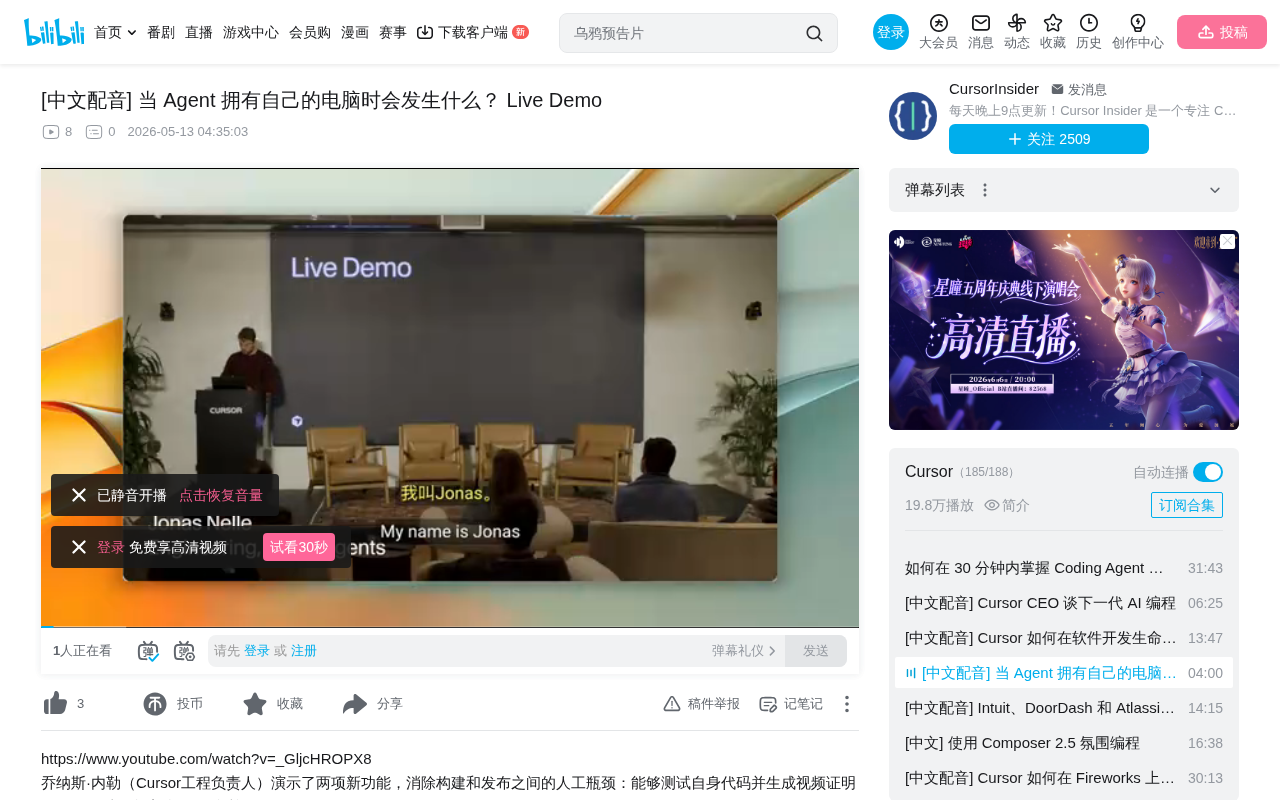
Cursor Cloud Agent Demo: Eliminating Bottlenecks Across the Entire Software Development Lifecycle
Deep analysis of Cursor's Cloud Agent demo showing how cloud VMs, automated test artifacts, and a full-chain control plane systematically eliminate human bottlenecks across the software development lifecycle.