zaiis2api: An Open-Source API Solution for Free Unlimited Access to Gemini and Claude AI Models

Open-source project zaiis2api claims free unlimited AI model access but carries naming issues and risks.
The GitHub open-source project zaiis2api claims to offer unlimited free access to AI models including Nano Banana, Gemini 3 Pro Preview, and Claude Opus 4.5. The project is essentially a reverse API proxy that converts free AI services into standard API endpoints. However, the "Claude Opus 4.5" naming doesn't match Anthropic's official versions, and reverse proxies face ongoing countermeasures from providers—users should evaluate carefully.
Project Overview
A recently emerged open-source project on GitHub called zaiis2api, published by developer Futureppo, claims to offer unlimited free access to several mainstream AI models, including Nano Banana, Nano Banana Pro, Gemini 3 Pro Preview, and Claude Opus 4.5. Written in Python, the project has already garnered 137 Stars and 26 Forks, attracting considerable attention in the open-source community.
For developers on a tight budget who still want to experience cutting-edge AI capabilities, these free AI API proxy projects are certainly appealing. However, before using them, it's essential to understand the underlying technical principles and potential risks.
Supported AI Models in Detail
Nano Banana Series
Nano Banana and Nano Banana Pro are the foundational models supported by this project. Based on the naming, these are likely lightweight AI model services offered by a particular platform, and zaiis2api enables unlimited access to them through API conversion.
Gemini 3 Pro Preview
Google's Gemini series has been a focal point of the industry. The Gemini family of large language models is the core product of Google's AI strategy, developed by the Google DeepMind team. The model family has undergone multiple iterations from 1.0 to 2.0 to 2.5, employing a multimodal-native architecture capable of simultaneously processing text, image, audio, and video inputs.
Gemini models are divided into three tiers by capability—Ultra, Pro, and Flash—targeting high-performance reasoning, general-purpose tasks, and low-latency scenarios respectively. Google provides API access through two platforms: Google AI Studio and Vertex AI, with Google AI Studio offering developers a certain free usage quota. However, Gemini's API has access restrictions in some regions, which is one of the key reasons driving the creation of reverse proxy projects.
This project claims to support free access to the Gemini 3 Pro Preview version, which is quite attractive for developers who want to experience Google's latest AI capabilities but are limited by quotas or regional restrictions. It's worth noting that the Preview version means the model itself may still be under iteration, and output quality and stability may differ from the official release.
Claude Opus 4.5
The naming "Claude Opus 4.5" mentioned in the project raises questions. Anthropic is an AI safety company founded in 2021 by former OpenAI Research VP Dario Amodei and Daniela Amodei. Their Claude series of models is known for its "Constitutional AI" training methodology, emphasizing model safety and controllability.
The Technical Essence of Constitutional AI: Constitutional AI is an AI alignment training method proposed by Anthropic in 2022. Its core idea is to provide the model with a set of explicit "constitutional" principles (such as harmlessness, honesty, and helpfulness), allowing the model to internalize these guidelines through self-criticism and revision processes, rather than relying entirely on human-annotated preference data. This approach significantly reduces dependence on large-scale Reinforcement Learning from Human Feedback (RLHF) while making the model's value alignment process more transparent and interpretable. As a result, Claude models can provide more logical explanations when refusing harmful requests, rather than simple refusals—a key distinguishing feature from other models.
Claude's version naming follows a "generation + capability tier" system: The Claude 3 series includes Haiku (lightweight), Sonnet (balanced), and Opus (flagship) tiers; Claude 3.5 Sonnet became widely popular after its mid-2024 release due to its exceptional cost-performance ratio; the Claude 4 series further improved reasoning and programming capabilities in 2025. Anthropic provides model access through its own API platform and cloud service channels such as Amazon Bedrock and Google Cloud Vertex AI, with pricing based on separate input/output Token billing.
As of now, Anthropic's officially released model versions do not include an "Opus 4.5" designation (known versions include Claude 3.5 Sonnet, Claude 4 Sonnet/Opus, etc.). This may be a non-standard naming convention used by the project maintainers, or a reference to some intermediate version. Users should independently verify the actual model capabilities and output quality.
Technical Implementation Analysis
From the project name "zaiis2api," we can infer that this is a typical reverse API proxy project—converting a platform's free AI services into standard API endpoints for developer use.
How Reverse API Proxies Work
Reverse API Proxy is a common tool category in the open-source community. The core approach is to transform services originally designed for end-user web interfaces or client applications into standardized programmatically-callable APIs through protocol analysis and interface simulation.
The ancestors of such projects can be traced back to early ChatGPT reverse engineering projects (such as acheong08/ChatGPT), which captured the communication protocol between browsers and servers to reproduce complete authentication and conversation flows. As AI vendors continuously strengthen anti-scraping and risk control mechanisms (such as introducing Cloudflare Turnstile verification, dynamic Token refresh, device fingerprinting, etc.), the maintenance cost of these projects continues to rise, often resulting in a "cat-and-mouse game" dynamic.
Common technical implementation approaches include:
- Session Reuse: Bypassing official API rate limits by simulating user sessions
- Multi-Account Rotation: Load balancing across multiple free accounts' quotas to achieve "unlimited" access
Related articles
 Product Reviews
The Programmer's Desk Setup Guide: Building a Workspace That Feels Like Home
Discover how programmers build productive, comfortable workspaces. From multi-monitor setups to ergonomic design, explore the desk philosophy that drives focus and flow.
 Product Reviews
Qoder vs Cursor Real-World Comparison: Which $20/Month AI IDE Is Better?
Hands-on comparison of Qoder vs Cursor AI IDEs: Agent autonomy, human interaction count, and architecture decisions. Qoder needed only 2 interactions vs Cursor's 8.
 Product Reviews
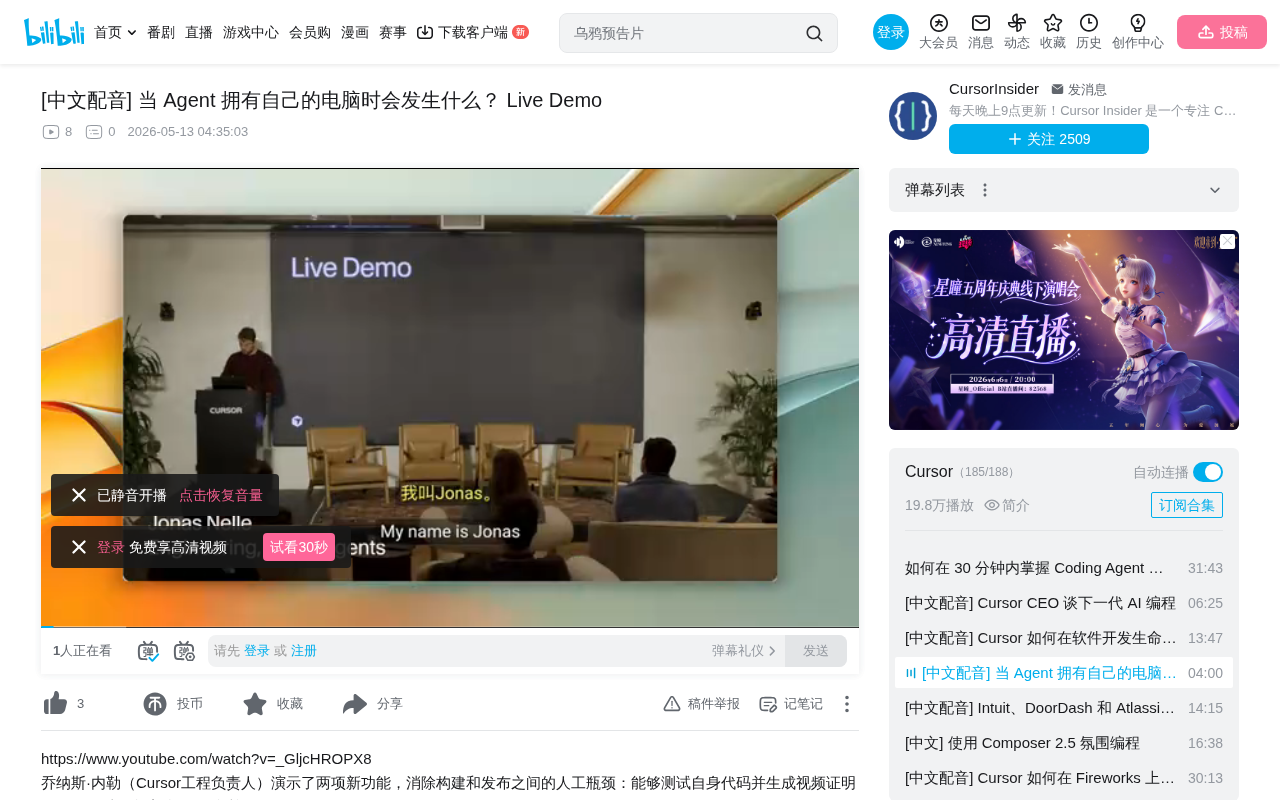
Cursor Cloud Agent Demo: Eliminating Bottlenecks Across the Entire Software Development Lifecycle
Deep analysis of Cursor's Cloud Agent demo showing how cloud VMs, automated test artifacts, and a full-chain control plane systematically eliminate human bottlenecks across the software development lifecycle.