10万级纯电Smart实测:底盘质感越级,但两个缺点很真实

Pure electric Smart #1 tested: chassis quality exceeds expectations, but touchy throttle and insufficient rear axle damping are real drawbacks.
A Bilibili automotive UP主 put the pure electric Smart #1 through gymkhana, highway, mountain run, and charging tests. This sub-3-meter car features MacPherson struts and five-link rear suspension, mid-mounted battery, ~1.1 ton weight, and 39,000 body-in-white torsional rigidity—chassis quality rated above Smart's gasoline era. Aggressive real-world consumption came in under 11 kWh with 91 kW peak charging for a 35.8 kWh pack. Drawbacks include touchy Comfort-mode throttle with noticeable nose-lift at low speed, and insufficient rear axle initial compression damping causing inadequate dynamic response under limit conditions. The UP主 sees this car as selling a lifestyle rather than mere transport, with drawbacks not affecting the purchase decision—if you know what you're buying.
Title
10万级纯电Smart实测:底盘质感越级,但两个缺点很真实
Meta Description
B站UP主实测10万级纯电Smart:车长不到3米,底盘质感越级、抗扭刚度39,000,实测电耗不到11度、充电峰值91千瓦;但也存在油门窜、后轴初段阻尼不足等真实缺点。适合谁买?一文说清。
Article Content
A pure electric compact car under 3 meters long with an extremely short wheelbase can reverse into a corner in Hangzhou's narrowest alley and also post a gymkhana lap time at a driving school course—these are the real-world test scenarios a Bilibili automotive UP主 put the Smart #1 (referred to in the original as Smart 4-3) through. The line repeated throughout the video is: "Sitting in this car, you can't help but feel your mood lift."
But the value of a review isn't in praise—it's in laying out both strengths and weaknesses. This UP主 ran gymkhana on a closed course, drove on elevated highways, did a midnight mountain run, and conducted charging tests. The conclusion is far more nuanced than the "cute little car" label suggests.
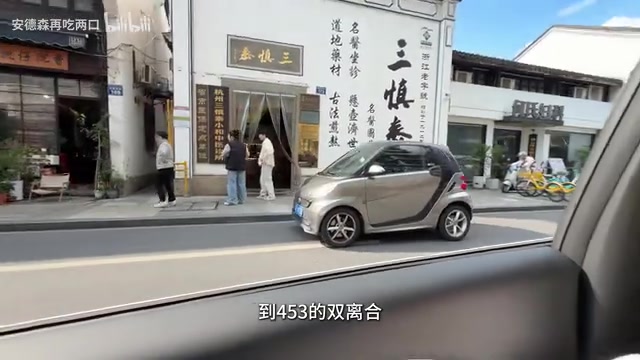
Small in size, but chassis quality exceeds expectations
Smart provided a "road book" marking Hangzhou's narrowest spots. The UP主 drove in and reversed into a corner, visually demonstrating the car's size advantage—"With a size this small, your travel patterns, traffic efficiency, and route choices are completely different from driving a normal-sized car."
The real surprise is the chassis. This generation of the pure electric Smart uses MacPherson struts up front and a five-link rear, with the battery placed in the middle to lower the center of gravity, bringing total weight to about 1.1 tons. The UP主's assessment on the elevated highway was that "the chassis quality is very premium," with "a sense of isolation and very supple" handling over dips and continuous undulations—even better than Smart's own gasoline-era chassis.
On the data side, the body-in-white torsional rigidity reaches 39,000—the UP主 joked, "With torsional rigidity this high, it'd be a waste not to make a convertible." Lightweighting is good news for engineers: "1.1 tons puts so much less pressure on engineers."
Body-in-white torsional rigidity is a metric measuring a car body structure's ability to resist torsional deformation, expressed in newton-meters per degree (N·m/°). The higher the value, the less the body twists under load. Ordinary passenger cars typically fall in the 20,000–30,000 N·m/° range, while 39,000 N·m/° is a considerably high level, usually found on sports cars or luxury vehicles. The direct benefits of high torsional rigidity are more precise chassis response, more stable suspension geometry under dynamic conditions, reduced body squeaks and rattles, and improved crash safety. For convertibles, torsional rigidity is especially critical due to the lack of a roof structure—which is exactly why the UP主 quipped "it'd be a waste not to make a convertible": a high-rigidity body is the prerequisite for building a convertible version.
Three iterations of the powertrain—this generation is pure electric
The UP主 traced the evolution of Smart's powertrain: from the 451's EMT, to the 453's dual-clutch, to this generation's pure electric. "Watch this lane change—it just goes"—the immediacy of power response is a structural change brought by electrification.
For range, this generation is rated at over 400 kilometers. In real-world testing, driving from 88% charge at pickup down to 8% at charging time covered about 210 kilometers under aggressive driving conditions, fully loaded, without air conditioning, using just over 8 kWh—overall consumption under "pedal-to-the-metal" conditions came in under 11 kWh. Peak charging power reaches 91 kW, corresponding to a 35.8 kWh battery pack. The UP主 considers this charging speed "perfectly acceptable" for users without private charging piles who live in older residential complexes.
Price is an unavoidable reference point. The UP主 repeatedly mentioned this car costs around 100,000 RMB and compared it to low-speed EVs at the same price: "It is indeed more expensive than those, but the extra cost is justified."
Gymkhana is a small-scale motorsport event where a complex course is laid out with cones on a closed surface and completed in the shortest time possible, including hard acceleration, heavy braking, slalom, and U-turns. It places high demands on steering response, suspension support, and linearity of power delivery. Unlike track driving, speeds are low but the rhythm is intense, concentratedly exposing a vehicle's dynamic characteristics under limit conditions. In the article, the UP主 discovered insufficient initial compression damping on the rear axle precisely through gymkhana's heavy braking scenario—a defect that's hard to notice in daily driving and only manifests during rapid weight transfer. Gymkhana is therefore often used by reviewers as a "magnifying glass" for chassis tuning.
Two real drawbacks: touchy throttle and insufficient rear axle initial damping

The first drawback is that throttle calibration in Comfort mode is somewhat touchy—during low-speed stop-and-go, the body exhibits noticeable nose-lift. The UP主 noted that Eco driving mode improves this feel: "The touchiness is considerably reduced." Brake pedal feel during the initial braking force buildup also has a "control amount dropping a step" sensation, but the UP主 said he can accept it.
The second drawback appears under limit conditions. During a heavy braking scenario in gymkhana, the rear axle's initial compression damping proved insufficient—"When it lifts up and then compresses down, there isn't enough (damping)—it really should have held."

This judgment was echoed during the midnight mountain run. Beyond the front-rear rhythm mismatch caused by the short wheelbase, the UP主 pointed out that each axle's dynamic response to road undulations is insufficient. However, his attitude was clear: "Even if it bounces around, it doesn't affect my confidence driving mountain roads." Because this car was never designed for mountain runs—"You absolutely are not buying it because of mountain runs."
There's also a minor gripe: the sun visor, when pulled over, blocks your head and can't be extended. The UP主 suggested improving this in the next model year.
Highway stability and steering effort trade-offs
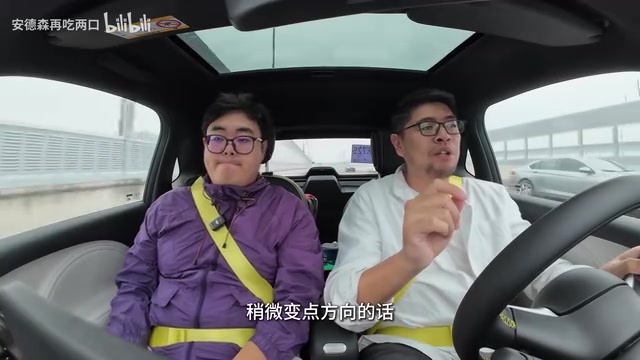
In highway scenarios, the heavy steering effort setting suits this car's highway character; but in Comfort steering effort mode, the center region is somewhat sensitive—"with a slight steering change, the body will sway a bit"—showing that response is prompt, but when stable feel is needed for highway cruising, switching to Heavy mode is more appropriate.
The UP主 also made a point of showing the rear wiper: "Even a car this small needs a rear wiper—this is the most proactive safety." The in-car camera clearly captured the rear wiper working, and he closed with: "What is safety? The greatest luxury."
Steering effort modes refer to the different levels of steering wheel feedback provided by the electronic power steering system, with common settings including Comfort, Standard, and Sport. In Comfort mode, the steering wheel is lighter, making parking and low-speed maneuvering easier, but the center region (the response zone during small steering inputs) tends to be more sensitive—during highway cruising, slight steering corrections may cause body sway. Heavy mode increases self-centering torque and center dead zone, providing a heavier feel and more stable highway tracking. This "light at low speed, stable at high speed" contradiction is a classic challenge in electric power steering tuning. Most vehicles compromise with speed-sensitive variable assist, while offering manual mode switching gives the choice back to the driver.
It's not selling a car—it's selling a lifestyle
The UP主 was blunt about this car's positioning: "Driving this means enjoying life—you're a trendsetter in the city. This is a lifestyle, this is a fashion icon. This isn't a car, comrades."
He also addressed stereotypes like "a car for young women": "People with taste aren't defined by gender." This generation of the pure electric Smart retains the most classic and essential parts of the old Smart—"taking paths others dare not take, then thinking of things others dare not do."
On version choice, the UP主's preference is clear: since you're not buying it for mountain runs, "then I should definitely buy the convertible version." But he also acknowledged that no single formula works for everyone—"Cars are wonderful precisely because they have different characters. The world is diverse."
For a 100,000 RMB-class pure electric compact car, the UP主's overall verdict is: the drawbacks exist but don't affect the purchase decision—provided you know exactly what you're buying.
One-line Summary
Pure electric Smart #1 real-world test: chassis quality punches above its class, but touchy throttle and insufficient rear axle damping are genuine drawbacks.
Paragraph Summary
A Bilibili automotive UP主 subjected the pure electric Smart #1 to closed-course gymkhana, highway, mountain run, and charging tests. This sub-3-meter car features MacPherson struts front and five-link rear, a mid-mounted battery layout, weighs about 1.1 tons, and achieves 39,000 body-in-white torsional rigidity—chassis quality rated better than Smart's own gasoline era. Under aggressive real-world conditions, consumption came in under 11 kWh, with peak charging power of 91 kW for a 35.8 kWh pack. On the downside, Comfort-mode throttle calibration is touchy with noticeable nose-lift at low speed, and insufficient initial rear axle compression damping leads to inadequate dynamic response under limit conditions. The UP主 believes this car sells a lifestyle rather than mere transportation, and the drawbacks don't affect the purchase decision—provided you know what you're buying.
Related articles

The AI Agent Era: Building a New Product Paradigm with Evals
AI Agents are becoming the next users of products. This article explains how to use Evals to observe Agent usage behavior, test changes before launch, and compare new model performance, helping product teams establish a development methodology for the Agent era.

Microsoft Global Email Outage Leads to Chlorine Leak at German Hotel, Injuring 15
A Microsoft 365 and Outlook global outage prevented a chlorine safety alert from reaching a German Phantasialand hotel, injuring 15 guests and exposing the fragility of cloud-dependent safety systems.
iPhone Duo to Support Face Unlock Using Only the Front Camera
Apple is developing front-camera-only face unlock for the iPhone Duo, now testing in the iOS 27.3 beta. We analyze the technical approach, user experience, and security trade-offs.