198K GitHub Stars in Two Weeks: What Do Stars Actually Measure?

198K GitHub Stars in two weeks reveals stars measure hype, not maturity — here's how to tell the difference.
A viral open-source project hit 198K GitHub Stars in just two weeks — yet it hasn't shipped a single stable release. This article examines what star counts actually measure (attention, not quality), why the real signal is the market shift from models to Agent shells, and offers a practical 20-second framework using version numbers, feedback channels, and Star-to-Watch ratios to assess any hyped project's true readiness.
An Open-Source Project That Broke Common Sense
When a hot open-source project pops up on your feed, most people's first instinct is to check the star count — more stars must mean more reliable. This simple heuristic has worked for years, but this month's hottest repo shattered it on the spot.
This project launched just two weeks ago and has already rocketed to 198K GitHub Stars, surpassing the combined total that two sibling star models (widely speculated to be DeepSeekAd V3 and R1) accumulated over more than a year. Keep in mind, those two caused a stir across all of Silicon Valley when they dropped — they were the company's hottest projects in history.
But open the README, and right at the top it says: "Developer preview — breaking changes may happen at any time." The version number sits at rc.2 — not a single stable release has ever shipped. All four published versions are release candidates, pushed out over just five days, with the architecture still undergoing major changes.
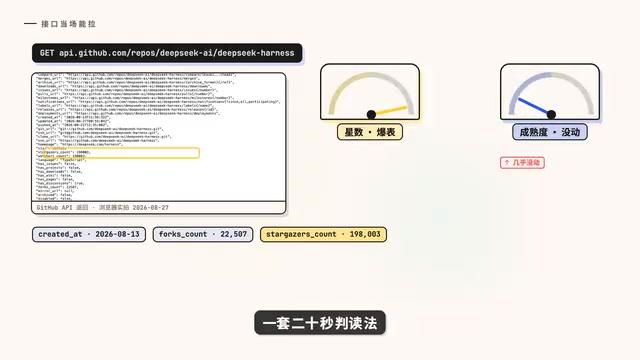
This creates a seemingly contradictory picture: on one side, unprecedented hype; on the other, the author's own stamp saying "not ready yet." Both facts are true — they're just measuring completely different things.
GitHub Stars Aren't a Quality Seal — They're a Record of Excitement
Why don't these two facts conflict? Because the act of starring a repo has absolutely nothing to do with whether the project is actually usable.
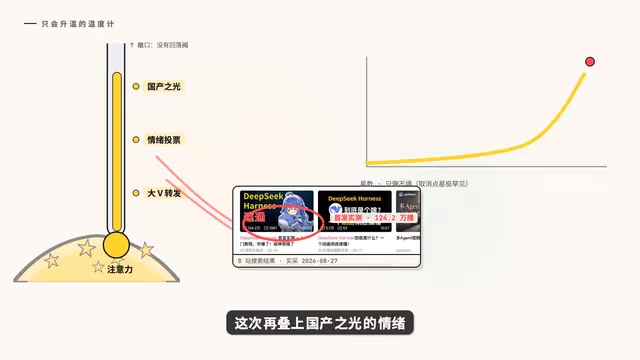
Clicking Star is a zero-cost action — no commitment, click and forget, you don't even need to install anything. All it records is the moment you felt a spark when you scrolled past it — like applause at a concert. Everyone's clapping, but nobody signs a contract over applause.
What's more subtle is that this "star mountain" almost never shrinks. People who've starred a project rarely come back to unstar it, so star count is essentially a thermometer that only goes up, measuring the cumulative total of attention. When you layer on the emotional momentum of "national pride" this time around, the curve goes vertical.
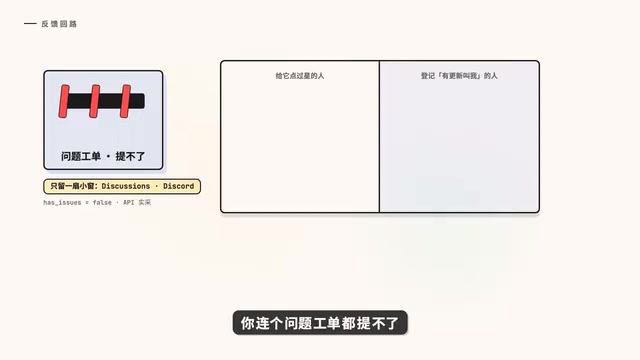
What truly reveals a project's maturity is a different set of numbers. This repo's feedback channels are essentially closed — you can't even file an Issue; feedback is redirected to forums and chat groups. Out of 198K people who starred it, only 860 have subscribed to Watch notifications ("notify me of updates").
The hype is real. The unreadiness is also real. These two sets of numbers don't conflict, because they measure entirely different dimensions: Stars measure excitement; Watch subscriptions measure genuine intent to use.
What's Being Voted For Isn't the Model — It's the Agent "Shell"
If 198K stars can't tell us about maturity, are they useless? Quite the opposite — they reveal a signal far more valuable than maturity, one that almost nobody online has articulated clearly.
This project isn't a model itself. It's the entire shell wrapped around the model: the architecture that manages context, orchestrates tools, and handles tasks for the model (commonly known in the industry as an Agent framework or tool orchestration layer).
This year, the capability gap between major LLMs is closing fast. What truly differentiates the experience is precisely this shell around the model. So 198K people cast their stars for an Agent shell, not for a model itself — and that's the real signal:
What the market is chasing is shifting from "models" to "shells."
Stars aren't a quality seal, but they are a top-tier directional vote. They tell you where capital and developer attention are flowing, and that flow itself is extremely valuable intelligence.
Something else you might have missed: this shell also completed a critical move. Starting from the previous release candidate, two of the hottest overseas coding assistants can now be "plugged in" as extensions within its ecosystem — competitors became its plugins. This means the shell is pluggable: in the future, you won't be choosing a specific model, but rather an architectural foundation where you can swap models at any time.
The 20-Second Assessment: Quickly Evaluating Open-Source Project Maturity
So the next time you encounter a viral project, how do you determine in 20 seconds whether it's genuinely mature or just noisy? Here's a simple assessment framework.
1. Check the Version Number
The version number and release cadence are the author's most honest self-assessment. Stuck at rc, alpha, or beta? Four releases in five days with major structural changes? That's telling you: it's still early. A proper semantic version number (e.g., v1.0+) means the author considers it stable.
2. Check the Feedback Channels
See whether feedback channels are open and whether maintainers respond. Whether Issues are enabled and whether maintainers engage directly determines if anyone will be there to help when you hit a wall. A project with closed feedback channels means you're facing every pitfall alone.
3. Check the Star-to-Watch Ratio
Stars come from passersby; Watch subscribers are the people who actually plan to use it. Comparing the Star count to the Watch count quickly reveals an "attention bubble" — 198K Stars against 860 subscriptions is an absurdly lopsided ratio, showing that the vast majority of excitement has yet to convert into real usage.

Only when all three check out should you consider bringing the project into a production environment.
Conclusion: Stars Are Applause, Not a Contract
Back to that project with 198K stars in two weeks — it's absolutely worth keeping an eye on, because it marks the industry's next battleground: models are commoditizing, and the Agent shell architecture is becoming the new high ground for value.
But worth watching doesn't mean worth going all-in on immediately. Stars are applause, not a contract. Once you understand that distinction, you gain a new piece of gear: the next time any viral open-source project crosses your path, you'll be a little less swayed by the hype and a lot more grounded in your judgment.
Related articles

Chain of Thought Isn't Just for AI: How Humans Can Use CoT to Improve Thinking Quality
Chain of Thought isn't just a prompt trick for large models. Starting from a Hacker News discussion, this article analyzes why CoT works for human thinking too, breaks down actionable ways to transfer it, and highlights the key differences between human CoT and machine CoT.
Cloudflare Teams Up with OpenAI: Closi…
Cloudflare Teams Up with OpenAI: Closing the Loop from Vulnerability Discovery to Defense with AI
Cloudflare uses OpenAI Daybreak to investigate security vulnerabilities and generate reviewable remediation plans, while developers use Codex to boost coding efficiency and quality.

Orca Multi-Agent Orchestration in Practice: A Guide to Parallel Collaboration with Claude and Codex
Orca is Stable AI's free open-source agent workbench supporting 34 agents like Claude Code and Codex in parallel. Learn its Git worktree isolation, multi-model orchestration, and mobile management.