2026 AI Development Tool Selection Guide: From Cost Control to Compliance

Three key changes in the AI development tool stack: usage-based billing, stage-appropriate tools, and EU AI Act compliance.
Based on Boom Devs' video, the article argues that the AI tool selection dilemma is about fit, not quantity. Three changes stand out: flat rates replaced by usage-based billing requiring model routing; MVP builds with Lovable but production work in Cursor; and EU AI Act compliance mandating synthetic output labeling and bot disclosure. The author recommends standardizing tool selection, cost control, and compliance into a stable framework.
The number of AI development tools has exploded over the past two years, but the real problem was never "not enough tools" — it's "picked the wrong tools, burned through the budget, and the product still isn't live." The YouTube channel Boom Devs recently released a short video (titled "Best AI Development Tools & Platforms in 2026") that quickly walks through the three most critical changes in the current AI development tool stack — worth serious attention from every team building AI products.
Usage-Based Billing Replaces Flat Rates: The Cost Logic of AI Tools Has Changed
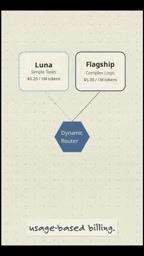
In the video, Boom Devs makes a blunt call: flat-rate AI pricing is dead, replaced by usage-based billing. This trend isn't surprising — when inference costs scale directly with call volume, it's hard for tool providers to cover all users with a single monthly fee.
For development teams, this means cost control must shift from "pick a cheap subscription" to "design a smart calling strategy." The specific approach offered in the video: route simple tasks to lightweight models (such as low-cost models like Luna), and only escalate to flagship models when handling complex logic.
This idea is essentially a simplified version of a model routing strategy. In practice, you can preset routing rules based on task type — text classification, formatted output, and simple summaries go to cheap models; code generation, multi-step reasoning, and tasks requiring contextual understanding go to flagship models. The problem for many teams is using the most expensive model for the cheapest tasks — naturally, the bill spirals out of control.
Model Routing is an architectural pattern that dynamically decides at the application layer which model handles a request. Its core idea: task complexity varies enormously, and there's no need to route every request through the most expensive flagship model. The routing layer is typically driven by a rule engine or classifier — for example, using a small model to first determine task type, then deciding the forwarding target.
From an engineering perspective, the benefits of model routing are very direct: lightweight tasks go to small models, and per-call costs may be a fraction of flagship models, while quality loss in simple scenarios is nearly imperceptible. But it also introduces new complexity — you need to maintain multiple sets of prompts, handle output format differences across models, and monitor quality metrics for each routing branch. For teams just starting cost optimization, it's advisable to begin with the most clearly defined task types (such as classification, extraction, formatting) and gradually expand routing coverage, rather than pursuing fully automated intelligent routing from the start.
From MVP to Production: Different Stages Need Different Tools

The second key point mentioned in the video is tool-stage fit. When building a rapid MVP, generators like Lovable can help you quickly build a prototype; but once you enter the production code phase, you should switch to a true AI editor, such as Cursor.

This advice hits a pain point for many teams. Generator-type tools excel at rapid zero-to-one builds, but often fall short in code maintainability, version control, and test integration. Using MVP-stage tools directly in production causes technical debt to accumulate rapidly. Editors like Cursor are closer to engineering practice — they don't generate an entire project from scratch for you, but instead provide completion, refactoring, and debugging support within your existing codebase.
When choosing tools, the key isn't "which is best" but "which matches the current stage." Early on, you pursue speed; later, you pursue quality — and your tool stack should switch accordingly.
The EU AI Act Takes Effect: Compliance Is No Longer Optional
The third point mentioned at the end of the video may be the most easily overlooked but has the most severe consequences: the EU AI Act has officially taken effect. Boom Devs points out that you must clearly label synthetic outputs and disclose your bot's identity to users, or face substantial fines.
This isn't a "deal with it later" issue. If your AI product targets EU users, compliance requirements apply right now. Specifically, labeling synthetic content, disclosing chatbot identity, and retaining relevant documentation all need to be considered during the product design phase — not remedied after regulators come knocking.
For startup teams with limited resources, compliance costs are indeed a real pressure. But from another angle, building compliance infrastructure early also clears obstacles for entering the European market, avoiding forced takedowns or rework later due to violations.
The EU AI Act is the world's first comprehensive regulatory law targeting artificial intelligence, formally adopted in 2024 and taking effect in phases. It adopts a risk-tiered approach, classifying AI systems into four levels: unacceptable risk, high risk, limited risk, and minimal risk, with different compliance obligations for each level. Chatbots and deepfake content generation typically fall under the "limited risk" category, with the core requirement being transparency — users must be informed they are interacting with AI, and synthetic content must be identifiable.
Notably, the act has extraterritorial effect: as long as your AI product provides services to EU users, regardless of where the company is registered, it may fall within regulatory scope. Maximum fines can reach 7% of global annual turnover or €35 million (whichever is higher). For startup teams, the most pragmatic approach is to embed compliance checkpoints during the product design phase — adding synthetic content labels at the output layer, disclosing bot identity at interaction entry points, and retaining necessary audit logs.
Standardizing the Tool Stack: A Prerequisite Before Scaling
Boom Devs' advice ultimately points to one core action: standardize your tool stack and lock down your AI infrastructure. This includes unifying the interface layer for model calls, clarifying tool selection criteria for different stages, and embedding compliance requirements into the development process.

The more tools there are, the harder the choice — but what really matters is building your own evaluation framework: what model to use for what task, what tool to use at what stage, and which compliance requirements must be met. Once these decisions are standardized, tool turnover won't shake the foundation of your product.
The AI development tool market will continue to change rapidly; today's optimal solution may be replaced tomorrow. But the three principles of cost control, stage fit, and compliance awareness won't become obsolete because of tool changes.
The "interface layer abstraction" of AI infrastructure is the technical prerequisite for standardization. When your product needs to call models from multiple providers like OpenAI, Anthropic, and Google simultaneously, hardcoding each vendor's SDK directly into business code leads to extremely high migration costs — switching a model means rewriting business logic. Mature teams typically add a unified interface layer between business code and model APIs, consolidating cross-cutting concerns like model calls, retries, rate limiting, and billing statistics into this layer.
The value of this abstraction layer is especially evident in today's era of rapid model iteration: when a new model is released, you only need to add an adapter at the interface layer, and the business side barely notices. At the same time, unified call logs provide a data foundation for cost analysis and routing optimization. For teams with limited resources, you can start with lightweight wrappers — there's no need to pursue a full gateway solution from the start — but the principle that "business logic doesn't directly depend on specific models" should be established early.
One-line Summary
Three key changes in the AI development tool stack: usage-based billing, stage-appropriate tools, and EU AI Act compliance.
Paragraph Summary
Based on Boom Devs' video, the article points out that the dilemma in choosing AI development tools isn't quantity but fit. The current tool stack has three changes that can't be ignored: flat rates are being replaced by usage-based billing, and teams need model routing to control costs; the MVP stage is suited for rapid builds with generators like Lovable, while production environments should switch to AI editors like Cursor; the EU AI Act has taken effect, making synthetic output labeling and bot identity disclosure mandatory requirements. The author recommends standardizing tool selection, cost control, and compliance requirements into a stable evaluation framework to cope with the rapid turnover of the tool market.
Related articles

How Big Can Stars Really Get? The Physical Limits of the Largest Stars
Red supergiants are the largest stars by volume, with radii up to 2,000 times the Sun, engulfing the inner solar system. But there is no precise upper limit on stellar size—models predict up to 15,000 solar radii. The most massive blue stars are far smaller than red supergiants—biggest and heaviest are two different things.

Apple HomeView Smart Display Full Feature Breakdown: Wall-Mount or Desktop, $299
Apple launches HomeView, a $299 smart display with wall-mount and desktop options, 12MP camera for facial recognition, smart home control, music playback, and recipe step-by-step cooking. Full breakdown of watch faces, apps, privacy, and cooking integration.

Where Did the Promised New Studio Go? Craft Computing Answers After Five Years
Craft Computing's host responds to viewer questions: the new studio promised five years ago was shelved as construction costs soared from $30,000 to $75,000, and was replaced by a 168-square-foot garage conversion.